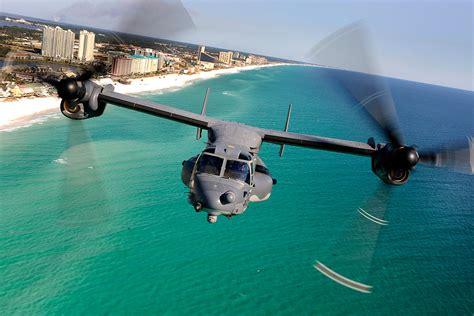
The CV-22 Osprey is one of the most technologically advanced and operationally flexible aircraft in the U.S. military arsenal. It defies conventional classification, raising the enduring question: Is the CV-22 Osprey a helicopter or a plane? The answer lies in its cutting-edge tiltrotor design, a revolutionary hybrid configuration that combines elements of both helicopters and fixed-wing aircraft.
The CV-22 Osprey is a vertical takeoff and landing (VTOL) aircraft that uses tiltrotor technology to achieve the lift of a helicopter with the speed and range of a turboprop plane. As a result, the Osprey represents a new class of airframe entirely—neither fully a helicopter nor purely a plane, but something altogether more complex and mission-capable.
The Dual Nature of the CV-22 Osprey
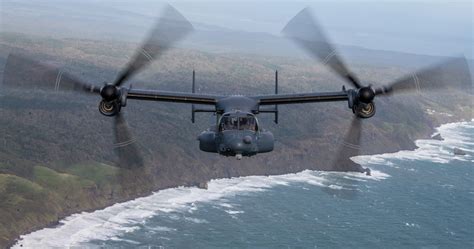
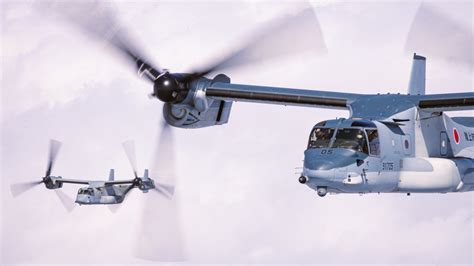
From the outside, the CV-22 Osprey’s most striking feature is its rotating nacelles, which house large, three-bladed propellers capable of swiveling from vertical to horizontal alignment. During vertical takeoff or landing, the rotors face upward, functioning like those on a helicopter. Once airborne, the nacelles tilt forward, allowing the aircraft to transition into horizontal flight like a plane.
This dual functionality means the CV-22 can operate in environments where conventional runways are unavailable, yet it can still fly at speeds and altitudes comparable to fixed-wing transport aircraft.
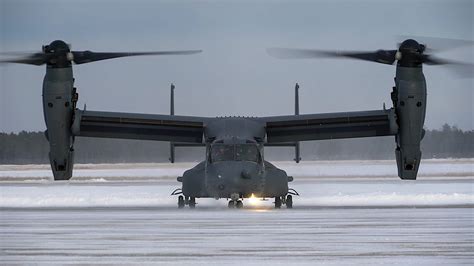
Technically, the CV-22 belongs to a class of aircraft called tiltrotors, and this distinction is not just semantic. Tiltrotor aircraft are designed from the ground up to be both VTOL-capable and high-speed cruise-efficient, something helicopters and planes each excel at individually but fail to combine.
Engineering Breakthrough: The Tiltrotor Mechanism
The brilliance of the tiltrotor mechanism lies in its mechanical complexity and aerodynamic ingenuity. The entire engine and rotor assembly, housed in the aircraft’s nacelles, rotate on a pivot, allowing for seamless transition between vertical and horizontal flight modes. This design enables the CV-22 to achieve forward speeds exceeding 275 knots (approx. 316 mph)—far faster than any conventional helicopter.
Yet the rotor system still generates sufficient lift for hovering, low-speed maneuvering, and vertical landings, all critical in combat or search-and-rescue operations. This capability makes it irreplaceable in scenarios where other aircraft would be forced to choose between speed or vertical access.
Origins in Experimental Tiltrotor Development
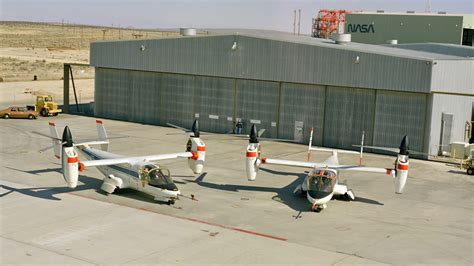
The CV-22 Osprey did not emerge in a vacuum. Its story begins with Bell Helicopter’s experimental programs in the 1950s, notably the Bell XV-3, an aircraft that proved the viability of transitioning between rotary and fixed-wing flight.
Bell’s efforts continued over the decades with other testbeds such as the X-14, X-22, and most recently the V-280 Valor. These prototypes paved the way for modern tiltrotor advancements by tackling the challenges of stability, transition dynamics, and power-to-weight ratios. The culmination of this research ultimately led to the development of the V-22 program, with the CV-22 being the U.S. Air Force’s variant, tailored specifically for long-range special operations.
Mission Profile: Built for the Toughest Operations
Designed by Bell and Boeing, the CV-22 Osprey is not simply a flying curiosity; it’s a mission-critical asset for U.S. Special Operations Command (SOCOM). It can transport 18 fully equipped troops, or carry 10,000 pounds of internal cargo, or sling-load heavier payloads beneath its fuselage. Its combat radius exceeds 500 nautical miles, and aerial refueling further extends its operational envelope.
The CV-22 is used for:
- Long-range infiltration and extraction of special forces
- Personnel recovery in hostile territories
- Tactical resupply in combat zones
Its rugged airframe, retractable refueling probe, and integrated radar and electronic countermeasure systems make it suitable for low-altitude penetration missions, often under the cover of night.
Helicopter-Like Capabilities
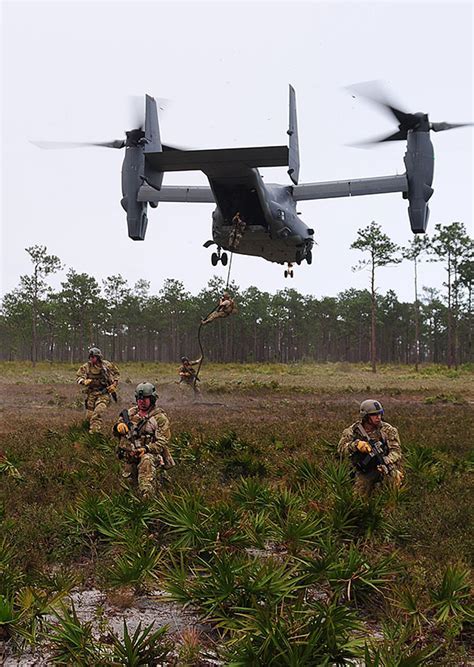
In helicopter mode, the CV-22 excels in hovering, vertical landing, and takeoff operations. It can operate in confined spaces such as mountain ranges, dense forests, or urban rooftops, just like a traditional rotorcraft. It can also perform hover-hold positions during fast-rope insertions or extractions.
Unlike most helicopters, however, the Osprey’s rotors are tilted outward in helicopter mode, giving it greater aerodynamic stability but also requiring a larger footprint for landing.
Plane-Like Performance
Once in airplane mode, the CV-22 behaves very differently from any rotary-wing aircraft. It cruises at altitudes of up to 25,000 feet and offers a level of fuel efficiency and speed that helicopters cannot match. Its wing-borne lift significantly reduces energy expenditure compared to continuous rotor lift, allowing for much longer operational ranges.
It is also more stable and faster in straight-line flight than helicopters, which is crucial for missions where time and stealth are paramount.
The CV-22 vs. MV-22: What’s the Difference?
The CV-22 is the Air Force variant of the more commonly known MV-22 Osprey, which is used by the U.S. Marine Corps. While both share the same airframe, the CV-22 includes upgrades tailored to special operations, such as:
- Advanced terrain-following radar
- Enhanced electronic warfare and threat avoidance systems
- Extended-range fuel tanks
These additions enable the CV-22 to operate autonomously in denied or contested airspace, where enemy radar and missile threats are a constant concern.
Military Classification: What Does the Pentagon Say?
Despite its hybrid nature, the U.S. Department of Defense classifies the CV-22 as a fixed-wing aircraft, not a helicopter. This designation is based on its predominant flight characteristics and its ability to operate under the rules and flight profiles of a plane for most of its mission profile.
However, in field operations, it often serves as a helicopter substitute due to its vertical lift and hover abilities. This duality is what makes it strategically invaluable, especially when an operation demands rapid insertion and extraction without relying on airfields.
Strategic Advantages and Limitations
Advantages:
- Speed and range far superior to helicopters
- Vertical takeoff and landing from unprepared sites
- Reduced need for forward airbases
- Low-level flight with terrain masking
Limitations:
- Complex maintenance due to moving nacelles
- Larger rotor footprint limits landing zone options
- Vulnerability during transition phase if under attack
These factors make the Osprey both a technological marvel and a logistical challenge, requiring highly trained crews and specialized infrastructure.
Final Verdict: Neither Helicopter Nor Plane—But Both
The CV-22 Osprey transcends traditional aircraft categories. It is not simply a hybrid—it is a paradigm shift. With the ability to take off vertically and then cruise at high speed across vast distances, the CV-22 performs missions that would traditionally require two or more different aircraft.
Its tiltrotor technology grants it operational flexibility, while its rugged military adaptations allow it to succeed in the harshest combat conditions. In essence, the CV-22 is the future of vertical lift aviation, combining the accessibility of a helicopter with the performance of a plane.
So is it a helicopter or a plane? The most accurate answer is: it’s a tiltrotor—and that means it’s both, and yet entirely something new.