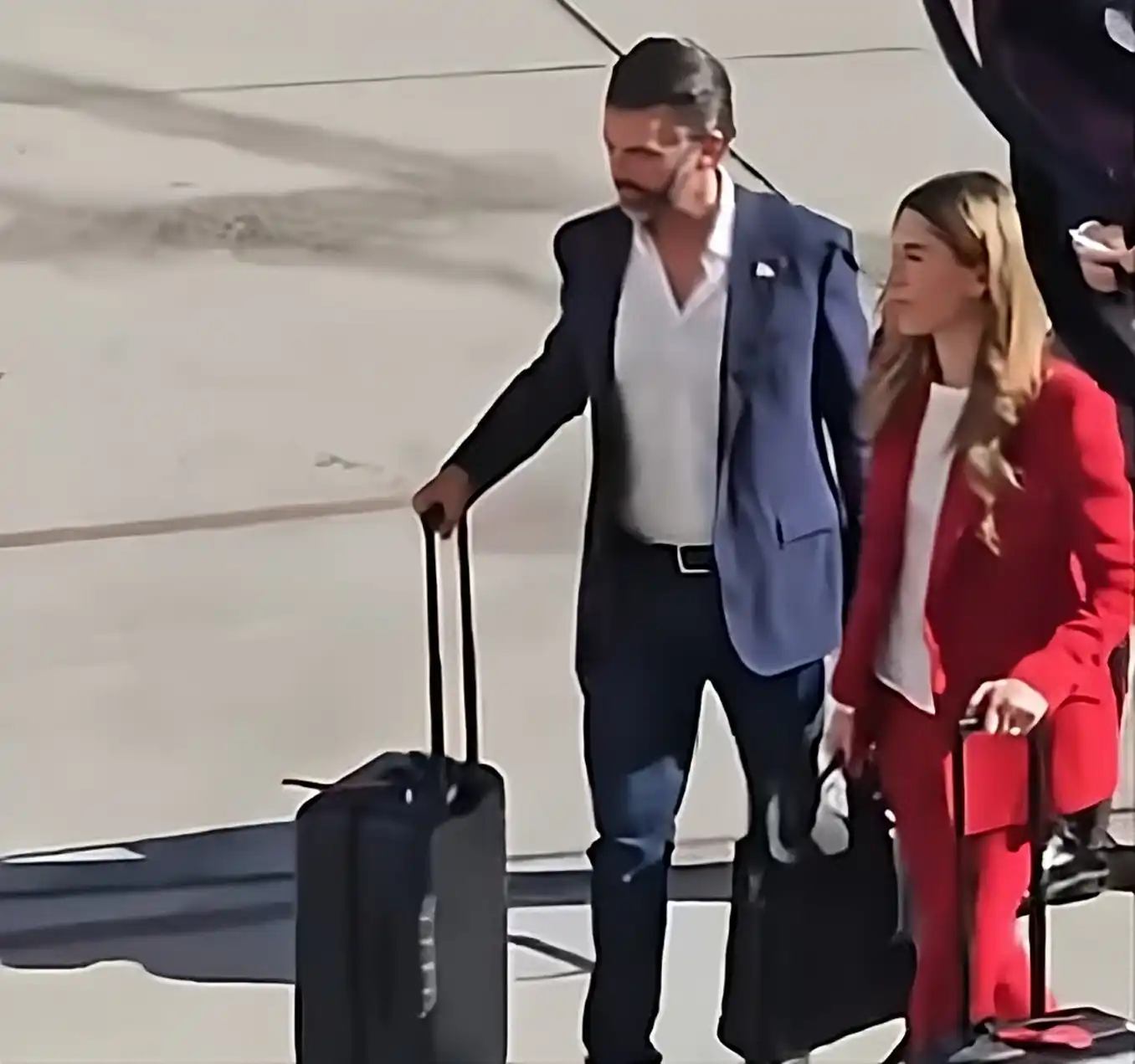
On December 24th, travelers at Phoenix Sky Harbor International Airport (PHX) witnessed an unusual scene on the tarmac: Donald Trump Jr., son of the U.S. President, bypassed the terminal and boarded a Southwest Airlines commercial flight using a private staircase. This unconventional moment, captured on video by a fellow passenger, immediately sparked public intrigue and social media conversation about the optics and implications of such a move.
While the image of Trump Jr. climbing aboard a budget airline may seem out of step with his family’s history of luxury travel, this moment reflects a blend of pragmatism, optics management, and political theater—each playing into the narrative as his father, Donald J. Trump, enters his second presidential term.
Behind the Scenes: A Presidential Son and Secret Service Protocol
The video shows Trump Jr. being escorted by a motorcade of black SUVs, stepping out onto the tarmac under the close watch of the United States Secret Service. These highly visible security precautions are consistent with his status as an immediate family member of the sitting President. It’s a stark contrast to the average Southwest Airlines passenger experience—famously informal, open seating, and no first-class cabin.
Yet, despite the routine protection detail, Trump Jr.’s appearance in this setting is intentionally visible. The choice of Southwest, a low-cost carrier known for its democratic seating policies, raises questions about messaging. Is this a public relations move designed to evoke relatability? Or simply a matter of logistics and proximity?
Regardless, the private boarding via stairs—a procedure normally reserved for airline crew or high-ranking VIPs—underscores that even when flying economy, the presidential bubble remains unbroken.
Trump Family’s Unconventional Airline Choices
This isn’t the first time a member of the Trump family has flown commercial:
- Ivanka Trump was famously spotted flying JetBlue, prompting a wave of both criticism and praise.
- In 2018, Trump Jr. flew United Airlines in standard economy class, as documented by aviation blogger Matthew Clint, who noted his surprise at seeing the political figure seated in front of him mid-cabin.
- Just last summer, Trump Jr. posted a TikTok video showcasing his Emirates First Class experience, juxtaposing his luxury choices with more modest public sightings.
These sporadic forays into commercial air travel appear calculated. Each instance ignites commentary about elitism, access, and populism—echoing themes central to Trumpian political messaging.
@donaldjtrumpjr Not bad…
Skipping the Terminal: A Common Practice for the Elite
Although visually striking, the act of skipping terminal procedures isn’t exclusive to political figures. Many VIP services at international hubs, including Frankfurt Airport’s Lufthansa First Class Terminal or Air France’s La Première Suite at Charles de Gaulle, offer discrete transportation from luxury lounges to the aircraft in chauffeured Mercedes or Porsche vehicles.
What differentiates Donald Trump Jr.’s tarmac scene, however, is not the luxury—it’s the security.
The presence of Secret Service agents, government Suburbans, and minimal interaction with airline personnel highlights how high-level political figures operate within a separate sphere of aviation security protocols. And while many celebrities might enjoy VIP boarding for convenience, Trump Jr.’s private stairway access is fundamentally about protection, not privilege.
Trump Force One and the Family’s Aviation Legacy
The Trump family’s aviation narrative has long been wrapped in spectacle. Donald Trump Sr. has owned a private Boeing 757, dubbed “Trump Force One,” for years. Famously emblazoned with the family name in gold lettering, the aircraft was a symbol of Trump’s branded opulence.
After lying dormant for a period, the jet—once owned by Paul Allen—was overhauled using donor funds and returned to service in 2022. Since then, it has become a mobile emblem of the Trump campaign machine. Trump Jr. often rides the aircraft for high-profile appearances, including a January 2025 trip to Greenland, which stirred speculation over the U.S. government’s interest in purchasing the territory.
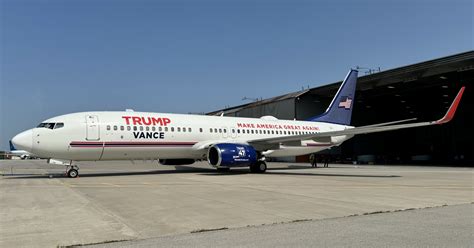
Still, the family’s frequent flyer habits include a mix of Air Force One, commercial flights, and private jets. This diversity in travel choices allows the Trump camp to tailor its message: leveraging luxury for prestige and comfort, while using economy travel to signal humility or relatability.
Security Optics vs. Public Perception
Traveling with the Secret Service inherently separates public officials and their families from everyday passengers. But when those travels happen in public view—on a budget airline, no less—it becomes a media event, whether intentional or not.
The contrast of a high-profile political figure bypassing TSA lines, avoiding the boarding queue, and walking directly onto a commercial flight is a stark one. The optics of privilege within populism are difficult to ignore.
Southwest Airlines, known for its egalitarian boarding and no-assigned seating, rarely finds itself hosting figures of Trump Jr.’s stature. While the airline didn’t comment officially on the event, footage from the incident circulated widely, showing that the aircraft itself had no obvious modifications or exclusivity. Trump Jr. boarded ahead of the general public, but no section of the plane was blocked off or reconfigured for his comfort.
This hybrid display of ordinary travel cloaked in extraordinary security speaks volumes about the modern political landscape—where leaders and their families walk a fine line between projecting accessibility and safeguarding elite status.
The Bigger Picture: VIP Travel in a Politicized Age
As President Donald Trump enters his second term, the dynamics of presidential family travel are back under scrutiny. During his first term, questions often arose over the use of Air Force One, campaign travel expenses, and the blurred lines between private business and public office.
Now, the Trump administration is again exploring additions to the Air Force One fleet, including the 747-8 gifted by Qatar—currently under consideration for retrofit to fill gaps before the VC-25B upgrades are complete. These decisions highlight the intersection of aviation logistics, diplomacy, and image management.
Trump Jr.’s Southwest flight could be interpreted as a symbolic counterbalance to the extravagance associated with government-funded travel. Whether intentional or incidental, the sight of a Trump boarding a commercial plane subtly reinforces a message: We’re not so different. We fly coach too.
Final Thoughts: Manufactured Relatability or Practical Necessity?
In the end, Trump Jr.’s trip aboard a Southwest Boeing 737 raises more questions than answers. Was it a matter of proximity, cost-efficiency, or a deliberate attempt to project humility amid rising campaign rhetoric? Whatever the case, the decision to bypass the terminal and walk up a crew service staircase on one of America’s most no-frills carriers didn’t go unnoticed.
In a political climate where every gesture becomes symbolic, the image of a Trump navigating commercial air travel—shielded by security, yet surrounded by everyday citizens—delivers a complicated, layered narrative. It is both strategic and spontaneous, reinforcing the notion that in modern politics, how you fly is just as telling as where you’re going.