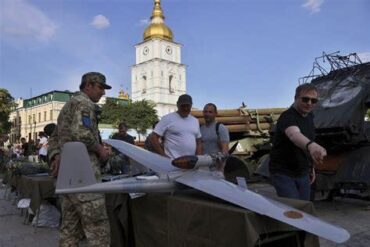
The old military maxim holds true: tactics win battles, logistics win wars. When a superpower begins moving tankers, cargo aircraft, field hospitals, and air defense systems across continents, professionals stop debating rhetoric and start studying supply chains. That is precisely what is unfolding across the Middle East today.
Washington’s current military posture represents the largest concentration of U.S. air and naval power in the region since the 2003 Iraq invasion. Unlike last June’s limited “Operation Midnight Hammer,” when seven B-2 stealth bombers struck three Iranian nuclear facilities in a tightly controlled raid, this buildup signals preparation for something far more sustained. The difference is not merely scale. It is structure.
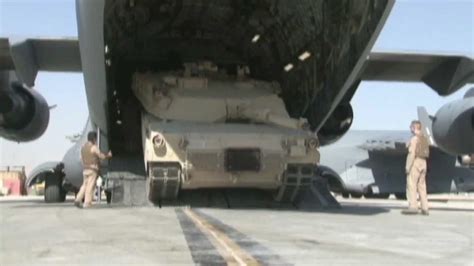
Logistics has taken center stage. An intricate transatlantic air bridge is now operational, ferrying thousands of tons of munitions, air defense batteries, specialized aircraft, and support equipment into U.S. Central Command’s theater. When logistics expands first, history suggests combat plans are no longer hypothetical.
The Air Bridge: How the U.S. Built a War-Ready Supply Network
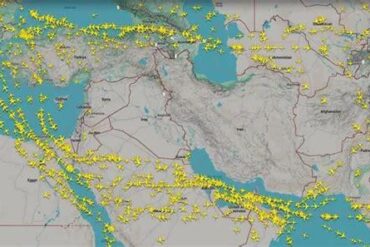
Open-source intelligence analysts have tracked nearly 160 C-17 Globemaster III cargo flights, along with multiple C-5 Galaxy and C-130 Hercules sorties, streaming into regional bases. These aircraft are not symbolic gestures. They are flying warehouses capable of delivering armored vehicles, missile interceptors, precision-guided munitions, and deployable medical infrastructure.
Fuel is the lifeblood of air war, and the United States has deployed more than 85 aerial refueling tankers, including KC-135s and KC-46s. These aircraft extend the operational reach of fighters across thousands of miles, transforming the Atlantic into a continuous refueling corridor. Fighters no longer need to hop between bases; they can cross oceans in coordinated waves.
This matters because sustained air campaigns require rhythm. Precision munitions must be replenished. Damaged aircraft must be rotated. Crews must be relieved. The scale of these movements indicates preparation for weeks—potentially months—of continuous operations rather than a one-night strike package.
Forty to Fifty Percent of Deployable U.S. Air Power
Security experts estimate that the current deployment accounts for 40–50% of America’s deployable air power worldwide. That is an extraordinary figure. The concentration includes:
- F-22 Raptors and F-35 stealth fighters
- F-15 Eagles and F-16 multirole aircraft
- A-10 Thunderbolt ground-attack jets
- EA-18 Growlers for electronic warfare
- E-3 Sentry AWACS surveillance aircraft
- RC-135 intelligence platforms
- WC-135R nuclear detection aircraft
This is not merely an attack formation. It is an ecosystem of warfighting capability. AWACS aircraft provide long-range radar coverage. Electronic warfare jets suppress enemy air defenses. Signals intelligence planes map adversary communications in real time. Specialized aircraft such as the E-11A Battlefield Airborne Communications Node act as airborne data relays, ensuring seamless command connectivity across dispersed forces.
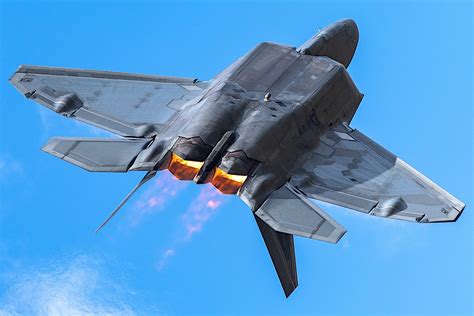
Such a configuration is designed to dominate contested airspace, dismantle integrated air defense networks, and sustain operational tempo under retaliatory pressure.
Carrier Strike Groups: Sea-Based Power Projection
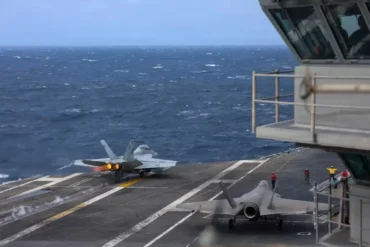
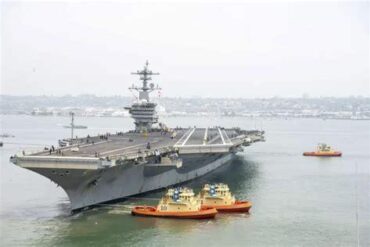
The deployment of the USS Abraham Lincoln and the USS Gerald R. Ford carrier strike groups dramatically expands American reach. Each carrier carries dozens of strike aircraft, electronic warfare platforms, and surveillance assets. Together, they represent over 200 aircraft at sea, backed by destroyers armed with Tomahawk cruise missiles and ballistic missile defense systems.
The U.S. Navy currently maintains 13 ships in the region, including multiple guided-missile destroyers and submarines. These vessels extend strike capability inland while providing layered missile defense against potential Iranian retaliation.
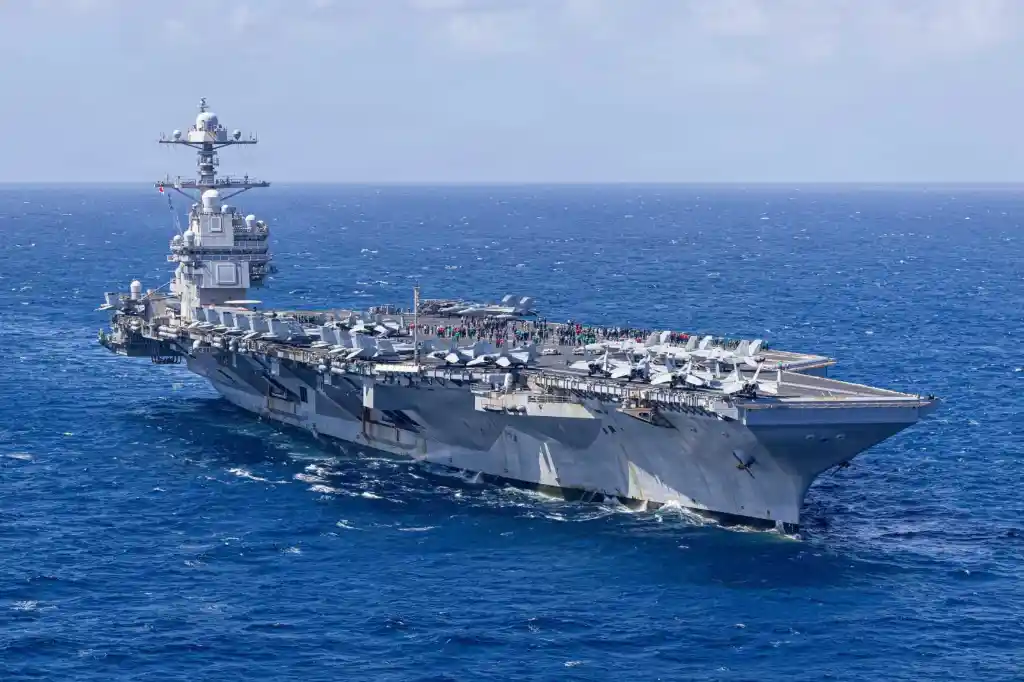
Sea-based aviation offers strategic flexibility. Aircraft carriers can reposition without relying on host-nation basing permissions, reducing political friction while maintaining offensive pressure.
Defensive Posture: Preparing for Iranian Retaliation
Iran possesses one of the largest ballistic missile arsenals in the Middle East. Any U.S. strike would likely trigger retaliatory barrages against American bases and Israeli targets. Anticipating this, Washington has reinforced regional installations with Patriot and THAAD air defense systems, capable of intercepting short- and medium-range missiles.
The deployment of the WC-135R nuclear detection aircraft to the United Kingdom adds another layer of contingency planning. This aircraft monitors atmospheric radioactivity, typically used to detect nuclear detonations or accidents. Its presence suggests that escalation scenarios—including worst-case contingencies—are being quietly modeled.
This is not improvisation. It is layered preparation.
No Ground Surge: An Air War by Design
Despite the magnitude of the buildup, there has been no corresponding surge in ground forces. Approximately 50,000 U.S. troops are present in the broader region, including carrier personnel, but there is no evidence of mass infantry deployment reminiscent of Iraq in 2003 or Desert Storm in 1991.
The implication is clear: any forthcoming conflict would be primarily an air and naval campaign. This aligns with President Donald Trump’s longstanding aversion to large-scale ground wars. Precision airpower, cyber operations, and missile strikes would form the backbone of strategy.
Yet airpower alone has limitations. Strategic bombing can degrade infrastructure, neutralize missile sites, and damage nuclear facilities. It is less effective at forcing regime change without sustained internal destabilization.
Washington’s Four Strategic Objectives
The United States appears to be pursuing four broad goals regarding Iran:
- Dismantling Iran’s nuclear program
- Degrading ballistic missile capabilities
- Forcing Tehran to abandon regional proxy networks
- Pressuring or destabilizing the Iranian regime
Each objective carries distinct military implications. Destroying hardened nuclear facilities requires deep-penetration munitions and sustained strike cycles. Neutralizing missile forces demands persistent intelligence surveillance and rapid-response targeting. Weakening proxy networks extends conflict geography to Lebanon, Syria, Iraq, and Yemen.
Regime change, however, is not an airpower objective. It is a political outcome that military pressure may influence but cannot guarantee.
Why Logistics Signals Intent
Military history offers sobering lessons. Napoleon’s invasion of Russia collapsed under logistical strain. Hitler’s Operation Barbarossa faltered as supply lines stretched and froze. Tactical brilliance cannot compensate for inadequate sustainment.
By contrast, the current U.S. mobilization emphasizes supply depth and redundancy. Fuel, spare parts, precision-guided munitions, electronic warfare support, communications nodes, and layered missile defenses are all being positioned simultaneously.
This suggests planning for endurance. A one-night strike does not require field hospitals and rotational tanker bridges. A prolonged air war does.
Can Airpower Alone Achieve Strategic Transformation?
Here lies the central uncertainty. Air campaigns can cripple infrastructure and impose heavy costs. They can degrade air defenses, missile launchers, and nuclear enrichment sites. But compelling a sovereign state to abandon strategic doctrines often requires leverage beyond bombs.
Iran may compromise on certain nuclear thresholds under pressure. It is far less likely to surrender its missile arsenal or its regional proxy influence without existential threat. And existential threats can spiral beyond controlled escalation.
The presence of Israeli air power in the region further complicates calculations. Joint operations could amplify strike density and intelligence sharing. They could also widen the battlefield.
The Economic and Political Cost of Escalation
Transporting this force has already cost billions of dollars. Precision-guided munitions are expensive; sustained sorties burn through stockpiles rapidly. Domestic political tolerance for prolonged conflict remains an open question, especially in a hyper-connected media environment where every missile launch is instantly broadcast.
At the same time, strategic restraint carries its own risks. If Washington signals mobilization without action, credibility may erode. In deterrence theory, posture and execution must align.
Is War Inevitable?
Military mobilization at this scale narrows the margin for de-escalation. Assets in theater create momentum. Pilots are briefed. Target folders are updated. Intelligence flows continuously. The infrastructure of conflict is in place.
Yet inevitability in geopolitics is a dangerous word. Strategic signaling can aim to coerce rather than ignite. A buildup may be designed to extract concessions without firing a shot. But the larger and more complex the deployment, the harder it becomes to reverse without visible outcome.
The present configuration strongly indicates preparation for a sustained, high-intensity air campaign, should political authorization be granted. The only unresolved variable is timing.
History teaches that wars often begin not with surprise but with visible preparation that observers hope will remain unused. When logistics surges to this degree, professionals understand that contingency planning has matured into operational readiness.
The coming weeks will determine whether this mobilization becomes a chapter in deterrence theory—or the opening phase of the largest U.S. air war since Iraq in 2003.