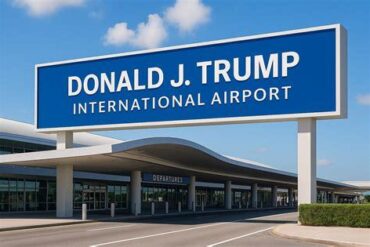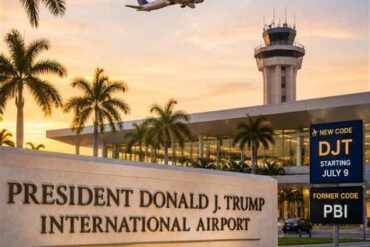
The legal battle over the proposed renaming of Palm Beach International Airport (PBI) into Donald J. Trump International Airport has intensified, transforming what began as a symbolic political gesture into a high-stakes dispute over aviation safety, governance authority, and taxpayer cost. At the center of the controversy stands FAA-licensed pilot George Poncy Jr, whose lawsuit argues that the decision is not only questionable in principle but potentially unlawful in execution.
Poncy, a regular operator in and out of the Florida airport, has taken direct aim at the legal framework behind the renaming. His claim rests on the concept of home rule authority, which grants local governments control over county-owned assets. According to the lawsuit, even if state lawmakers approved the change, Palm Beach County’s jurisdiction over the airport cannot be overridden without violating established governance norms. This argument reframes the issue from political preference to constitutional interpretation, placing the courts in a decisive role.
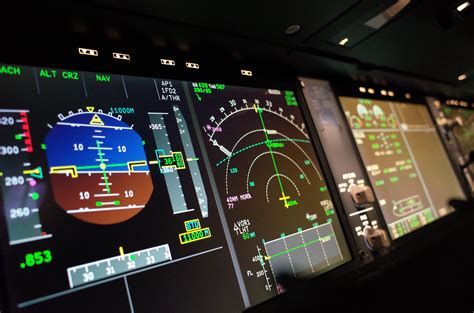
Beyond legality, the pilot’s concerns extend into the operational realm. Aviation depends on precision, and even minor discrepancies in naming conventions can ripple across navigation systems, flight planning charts, and pilot communication protocols. During transitional periods, when old and new identifiers may coexist, the risk of misidentification or confusion increases sharply, particularly for pilots relying on outdated or partially updated systems.
Poncy’s warning is rooted in practical experience rather than abstract theory. As he explained in a statement, the aviation ecosystem is deeply interconnected: pilots depend on synchronized data across avionics, charts, and air traffic control systems. A sudden or poorly coordinated name change could introduce inconsistencies that compromise situational awareness, especially in high-traffic or adverse weather conditions. In aviation, where margins for error are razor-thin, even small lapses can carry outsized consequences.
The financial dimension of the renaming effort adds another layer of tension. Current estimates place the cost at $5.5 million, covering everything from signage and branding to digital infrastructure updates. Critics argue that this figure may only represent the initial expenditure, with additional costs emerging as systems are updated and unforeseen complications arise. For taxpayers, the concern is straightforward: whether the symbolic value of the renaming justifies a multi-million-dollar outlay.
Supporters of the change, largely aligned with Florida’s Republican leadership, present a different narrative. They frame the renaming as a tribute to a sitting president with strong ties to the region, noting that Donald Trump frequently travels to his Mar-a-Lago estate via PBI. The presence of Air Force One and Trump’s personal aircraft at the airport has reinforced the symbolic association, fueling arguments that the renaming could enhance the airport’s profile and potentially stimulate local economic activity.
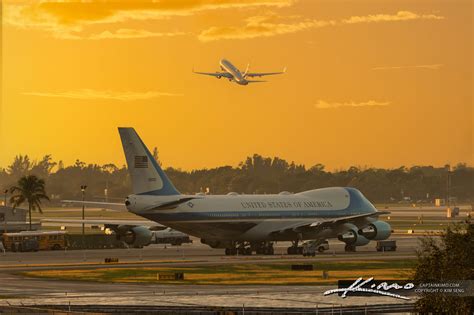
Yet the economic argument has not gone unchallenged. Critics describe the move as politically motivated branding, suggesting that any projected economic benefits remain speculative. They also question whether public funds should be allocated toward a change that may deepen political polarization rather than serve a clear operational or infrastructural need. In this context, the lawsuit becomes a focal point for broader debates about public resource allocation and political influence.
Complicating matters further is the role of the Federal Aviation Administration (FAA), whose approval is required before the renaming can be finalized. The FAA has so far declined to comment due to the ongoing litigation, but its eventual decision will carry significant weight. Approval would signal federal alignment with the state’s initiative, while rejection could halt the process entirely, reinforcing the importance of federal oversight in aviation naming conventions.
The timeline for the proposed change adds urgency to the dispute. With a target implementation date of July 1, stakeholders across the aviation and political spectrum are watching closely. For airlines, airport staff, and pilots, the prospect of a rapid transition raises logistical questions about system updates, staff training, and communication protocols. For legal observers, the case represents a test of how state authority interacts with local governance rights in the management of critical infrastructure.
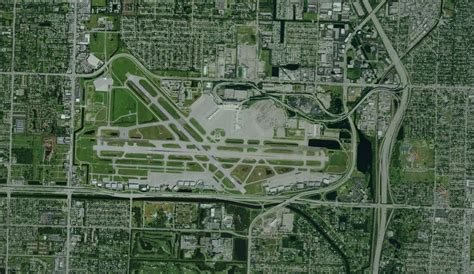
Amid the controversy, it is easy to overlook the operational significance of Palm Beach International Airport itself. As the third-busiest airport in the Miami metropolitan area, PBI plays a vital role in regional connectivity. With over 8.6 million passengers and 159,000 aircraft movements recorded in 2025, the airport is far more than a symbolic asset—it is a critical transportation hub supporting both commercial and general aviation.
Its infrastructure reflects this importance. The airport features a single terminal with 32 gates across three concourses, supported by customs and immigration facilities that handle international arrivals. Three runways—each with distinct lengths and configurations—enable a wide range of aircraft operations, from regional jets to larger commercial planes. Major carriers, including JetBlue, Delta Air Lines, and American Airlines, maintain a strong presence, with popular routes connecting to key hubs like Atlanta, Newark, and New York LaGuardia.
This operational complexity underscores why even a seemingly straightforward name change can have far-reaching implications. Every element of the aviation system—from booking platforms to cockpit displays—must align precisely. Any disruption, however temporary, introduces a layer of uncertainty that the industry typically works hard to eliminate.
As the legal process unfolds, the case of Palm Beach International Airport has become a microcosm of larger tensions: between state and local authority, symbolism and practicality, and political ambition and operational integrity. Whether the renaming proceeds or is halted, the outcome will likely set a precedent for how similar initiatives are approached in the future.
For now, the airport remains PBI, but the debate surrounding its identity has already taken flight—carrying with it questions that extend well beyond a name on a terminal sign.