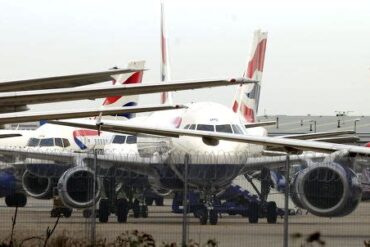
The global aviation industry has moved swiftly to reduce exposure in the Middle East after U.S. President Donald Trump warned that a U.S. military “armada” was heading toward Iran, triggering renewed fears of a fast-escalating regional confrontation. Within hours, major international airlines suspended flights, adjusted routings, and issued advisories to crews and passengers, underscoring how geopolitical signals can ripple instantly through commercial aviation.
Air France, KLM, Lufthansa, SWISS, and United Airlines were among the first carriers to halt or restrict services, citing airspace safety concerns rather than commercial demand. The decisions followed Trump’s sharply worded remarks suggesting overwhelming military retaliation if Iran escalates further, language that aviation risk analysts interpret as a meaningful increase in the probability of miscalculation or kinetic activity near civilian flight corridors.
The immediate response reflects a hard-learned lesson in aviation: when rhetoric hardens, risk tolerance collapses. Airlines do not wait for missiles to fly. They act when warning indicators stack up—military mobilization, heightened air defenses, and public threats that compress decision timelines for actors on all sides.
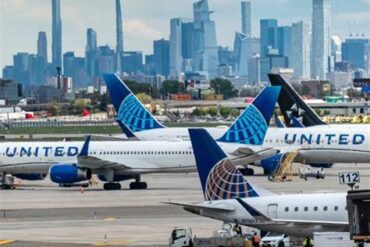
By early Monday, KLM had suspended all flights to Israel, Saudi Arabia, and the United Arab Emirates, while also instructing dispatchers to avoid flying through the airspace of Iran, Iraq, and neighboring states on long-haul services. Air France followed by pausing operations into Dubai International Airport (DXB), one of the world’s busiest hubs. Other carriers, including British Airways, Air Canada, and United Airlines, suspended services to Ben Gurion Airport (TLV), effectively isolating Israel from several major long-haul markets.
Lufthansa Group adopted a more calibrated approach, restricting flights to Israel to daytime operations only through the end of January, a move designed to limit exposure during hours when military activity and identification risks tend to increase. These decisions are not symbolic. They are rooted in granular threat modeling that weighs radar saturation, surface-to-air missile readiness, and the density of military flights sharing corridors with civilian traffic.
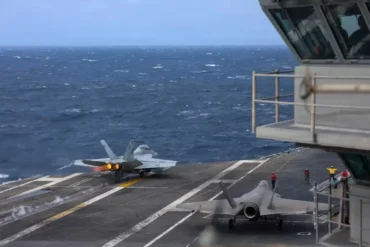
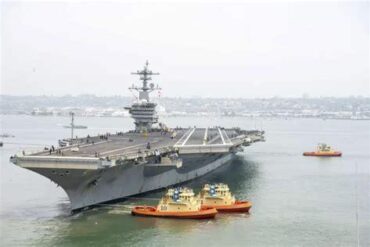
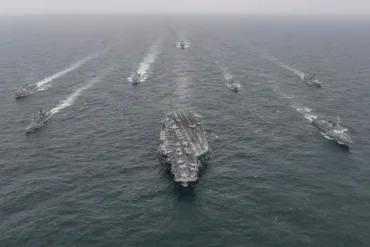
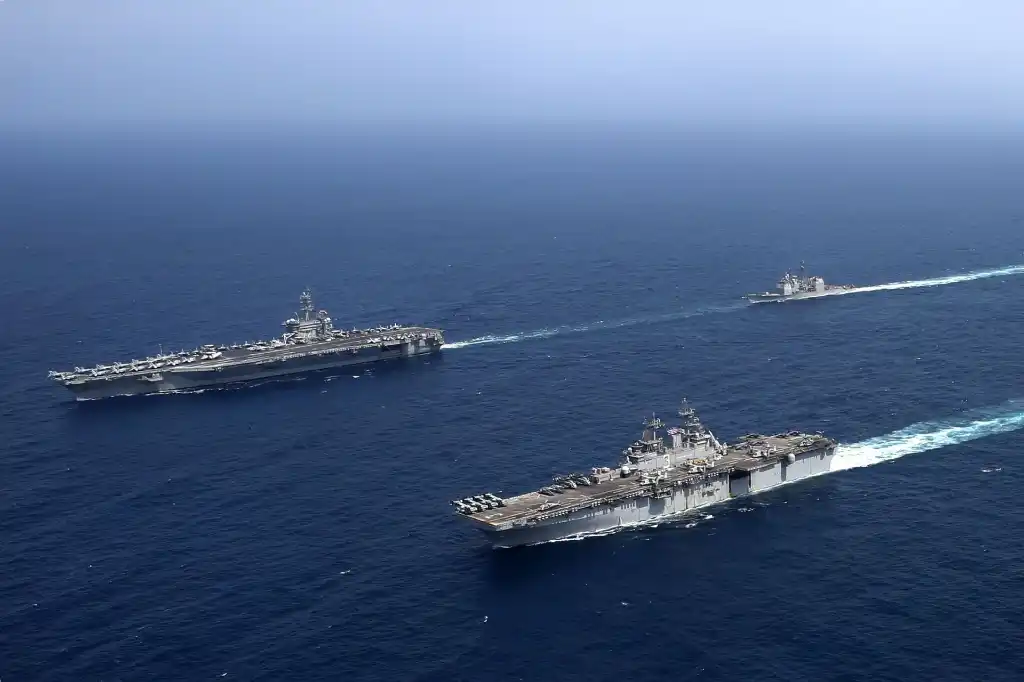
Trump’s comments intensified those calculations. His assertion that an American naval force, reinforced with additional firepower, was moving toward the region injected strategic ambiguity into an already volatile environment. For airlines, ambiguity is the enemy. Civil aviation depends on predictability—clear airspace rules, stable coordination with civil aviation authorities, and the assumption that commercial aircraft will not be mistaken for hostile targets.
History explains the industry’s caution. Recent tragedies remain fresh in corporate memory. Ukraine International Airlines Flight 752, shot down in 2020, and Azerbaijan Airlines Flight 8243 in late 2024 both involved civilian aircraft caught in the fog of military alertness. In both cases, heightened defenses, compressed decision windows, and human error proved fatal. Airlines now treat similar signals as non-negotiable red flags.
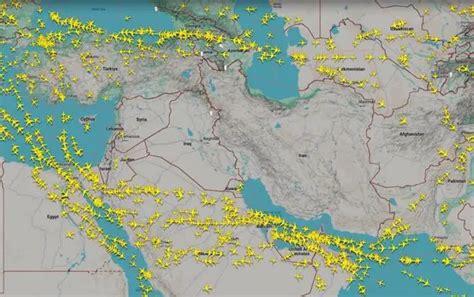
The Middle East’s strategic geography compounds the challenge. The region serves as a critical overflight bridge between Europe and Asia, funneling hundreds of long-haul flights through narrow corridors each day. Avoiding Iranian airspace alone is manageable. Avoiding multiple adjacent states simultaneously is not. With Russian airspace still closed to most Western carriers, rerouting options shrink dramatically, forcing airlines to choose between longer paths over Central Asia or southern detours that strain aircraft range and crew limits.
The financial implications are immediate and severe. Longer routings mean significantly higher fuel burn, extended duty times for flight crews, and cascading schedule disruptions across an airline’s network. Routes that once operated on thin margins can turn unprofitable overnight, adding tens of thousands of dollars in incremental costs per flight. For some carriers, the math no longer works, prompting outright suspensions rather than temporary detours.
Passengers feel the shock as well. Thousands have been stranded at Middle Eastern hubs as airlines scramble to rebook travelers, secure hotel accommodations, and manage missed onward connections. Aircraft range limitations further complicate recovery, forcing airlines to redeploy longer-range jets from other routes, amplifying disruption far beyond the region itself.
What makes this episode particularly stark is how words alone triggered such a broad response. No airspace was formally closed. No missiles were launched. Yet the industry reacted as if the clock had already started. That is the quiet power of strategic signaling in a world where civilian aviation flies through the seams of military posture.
For now, airlines are signaling patience rather than panic. Most carriers describe the suspensions as temporary and reversible, contingent on de-escalation and clearer guarantees of airspace safety. But the message is unmistakable: when global powers posture at close range, commercial aviation becomes one of the first sectors to step back, not out of fear, but out of disciplined respect for risk.
In modern air travel, geopolitics is no longer background noise. It is a primary operational variable, capable of grounding fleets, redrawing global routes, and reshaping passenger journeys within hours.