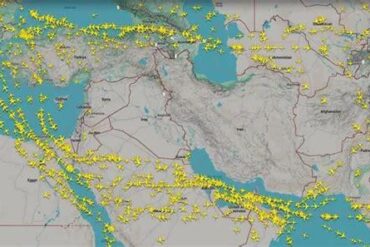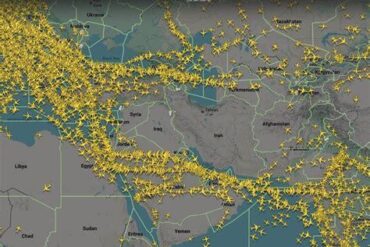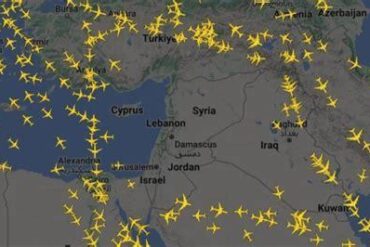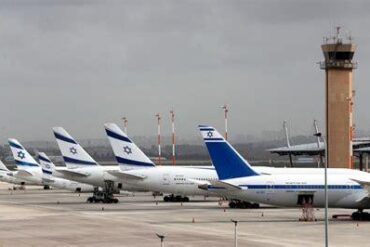
The Middle East is once again drifting into a familiar and ominous rhythm, where official restraint coexists uneasily with unmistakable preparations for war. In Washington, public language has softened, even flirted with de-escalation. At sea and in the air, however, the United States is assembling the kind of force posture that rarely appears without purpose. Aircraft carriers are moving quietly. Bombers, tankers, and fighters are repositioning. Missile defenses are multiplying across desert bases. The gap between rhetoric and reality is widening, and history suggests that such gaps tend to close violently.
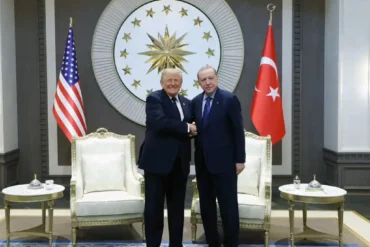
For days, threats of imminent U.S. strikes on Iran appeared to crest and then recede. Statements from President Donald Trump hinted at caution, even reluctance, and global markets briefly exhaled. Yet the calm was superficial. Beneath it lies a strategic pattern Washington has employed before: public ambiguity paired with overwhelming military readiness. The result is a region bracing for impact, unsure whether deterrence will hold or whether another war is quietly being set in motion.
The roots of this moment lie in the violent suppression of protests inside Iran earlier this month. As demonstrations spread, the Iranian regime responded with force that shocked even seasoned observers of the country’s internal politics. Thousands were reportedly killed. Washington’s response oscillated between threats, encouragement to protesters, and sudden silence. That oscillation, far from random, has precedent. It mirrors earlier episodes in which the United States appeared to step back, only to strike when adversaries relaxed their guard.
Trump’s public posture has often been read as impulsive, even transparent. That reading underestimates him. During the 2025 Iran-Israel war, Washington executed a carefully choreographed deception campaign before launching Operation Midnight Hammer. Statements about delays and diplomacy lulled Tehran into a false sense of time. Two days later, B-2 Spirit bombers were already en route to Iranian nuclear facilities. Decoy flights and misdirection compounded the surprise. The lesson for Iranian planners was stark: American words are not always a reliable indicator of American intent.
Against that backdrop, the current U.S. military buildup takes on sharper meaning. The language may be cautious, but the logistics are not. Over the past two weeks, the United States Central Command has overseen a steady inflow of naval, air, and ground assets into the broader Middle Eastern theater. Officially, these deployments are defensive and precautionary. Strategically, they resemble the prelude to options rather than the posture of restraint.
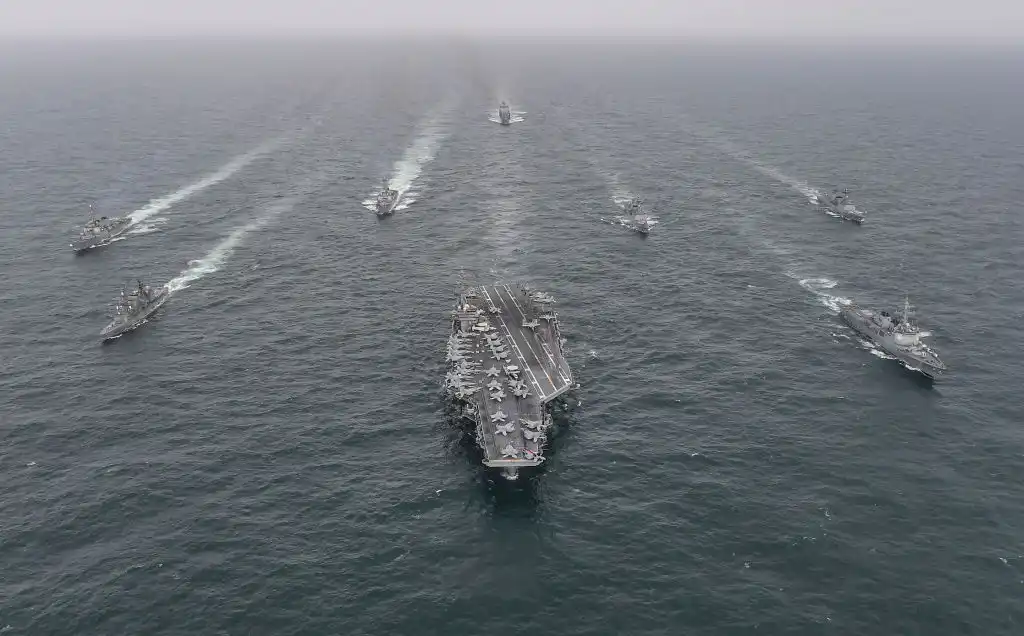
The naval picture alone tells a compelling story. The USS Abraham Lincoln Carrier Strike Group has transited from the Pacific through the Strait of Malacca and into the Indian Ocean, its destination clearly aligned with the Persian Gulf. Carrier strike groups are not symbolic gestures. They are floating airbases, intelligence hubs, and strike platforms rolled into one. Once positioned, they give the White House an immediate menu of options, from signaling and limited strikes to sustained air campaigns.
Notably, the Abraham Lincoln group has gone dark, switching off its AIS transponder. This is a classic operational security measure, but it also signals seriousness. When carriers disappear from public tracking, they are no longer performing theater; they are preparing for contingencies. At the same time, the USS George H.W. Bush has left Norfolk, its ultimate destination unannounced. Whether bound for Europe or the Middle East, its movement adds strategic depth and flexibility to U.S. naval planning.
Inside the Persian Gulf itself, U.S. destroyers equipped with advanced air-defense and precision-strike systems are already operating alongside mine-countermeasure vessels. This configuration speaks directly to one of Washington’s core concerns: Iran’s ability to disrupt shipping through the Strait of Hormuz. By hardening defenses and preparing for mine warfare, the United States is quietly neutralizing Tehran’s most effective asymmetric lever.
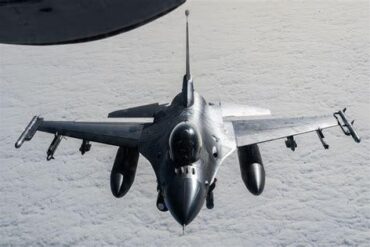
Airpower movements reinforce the same conclusion. The redeployment of F-15E Strike Eagles from RAF Lakenheath to bases in Jordan, supported by KC-135 refueling aircraft, dramatically extends U.S. strike reach. These are not symbolic deployments. Strike Eagles are designed for deep penetration, precision attack, and sustained operations in contested airspace. Their presence, combined with tanker support, recreates the aerial architecture used during Operation Midnight Hammer.
Refueling aircraft deserve particular attention. During last year’s strikes on Iran, tankers were the invisible backbone of the operation, enabling bombers to fly intercontinental missions and fighters to escort them. The renewed surge in tanker activity, alongside increased C-17 cargo flights, suggests not just readiness but endurance. Washington is preparing for scenarios that last longer than a single night of strikes.
On the ground, defensive preparations are accelerating. Additional Patriot missile batteries and THAAD systems are being rushed into the region, reflecting an expectation of retaliation. Any U.S. or Israeli strike on Iran would almost certainly trigger missile and drone barrages against Israel and American bases. By reinforcing air defenses now, Washington is not merely protecting assets; it is signaling acceptance of escalation risks.
These measures dovetail with Israel’s own calculations. Israeli officials have been unusually candid about their willingness to absorb significant missile fire if it leads to strategic transformation in Tehran. From Jerusalem’s perspective, Iran’s recent vulnerabilities present a rare opportunity. The cost-benefit analysis has shifted, and tolerance for short-term pain has increased. This alignment between U.S. capability buildup and Israeli strategic appetite is not coincidental.
Yet the central question remains unresolved: what is the endgame? Limited punitive strikes would degrade Iranian military infrastructure and perhaps set back its nuclear program, but they would not resolve the deeper confrontation. Regime change, whispered openly by some and implicitly by others, would require far more than airpower. It would demand sustained internal pressure, elite defections, and potentially ground involvement, a prospect fraught with risk.
The figure of Reza Pahlavi looms over this debate. As Iran’s exiled crown prince, his name has reappeared in protest slogans and diaspora discussions. The idea of a post-Islamic Republic Iran, led by a familiar yet distant figure, is emotionally potent. Strategically, however, translating that vision into reality would require conditions that airstrikes alone cannot create. History offers little comfort to those who believe external force can reliably engineer internal political outcomes.
Tehran, for its part, is not misreading the moment. Statements from IRGC commanders emphasize readiness and warn against miscalculation. This is not mere bravado. Iran has spent years refining missile forces, drone swarms, and proxy networks precisely to complicate U.S. and Israeli decision-making. Any strike would test those systems, and the response would be calibrated to impose costs without inviting total war, at least initially.
The danger lies in misalignment. Washington may believe its buildup deters Iran while preserving freedom of action. Tehran may interpret the same buildup as proof that war is inevitable, encouraging preemptive or asymmetric responses. Israel may see a closing window of opportunity. In such an environment, accidents matter less than perceptions. A single misjudged move could tip the balance.
What makes this moment particularly volatile is its familiarity. The choreography of denial, deception, and deployment has played out before. Each time, it has carried the promise of control and the risk of catastrophe. The massive U.S. military presence now converging on the Middle East does not guarantee war, but it makes peace fragile.
The war clouds hanging over Iran have not dispersed; they have thickened, reshaped by strategy and silence rather than overt threats. The armada moving quietly across oceans is a reminder that decisions may already be closer than they appear. In the Middle East, history rarely announces its turning points in advance. It whispers them through logistics, deployments, and the uneasy stillness before motion.