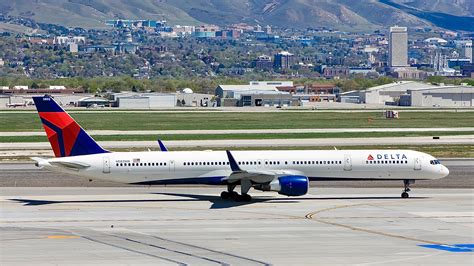
Delta Air Lines operates one of the most unusual fleets in modern commercial aviation, and at the center of this curiosity sits the Boeing 757-300. Known affectionately among aviation enthusiasts as the “flying pencil,” this aircraft stretches longer than any other narrowbody ever placed into regular service. Its proportions are striking, its performance distinctive, and its operational role increasingly rare. Yet despite its ability to fly far beyond US borders, Delta keeps every scheduled Boeing 757-300 flight firmly domestic, a decision shaped by economics, brand philosophy, and the realities of an aging airframe.
The Boeing 757-300 occupies an odd space in aviation history. Designed as a stretched evolution of the successful 757-200, it promised airlines widebody-like capacity with narrowbody efficiency. Only 55 were ever built, and most have already left passenger service. Delta Air Lines remains one of the final major operators, treating the aircraft less like a globe-trotter and more like a high-capacity workhorse for dense US routes where range is secondary to seat count and reliability.
By January 2026, Delta is scheduled to operate 1,398 flights with the Boeing 757-300, and every one of them remains within the borders of the United States. That domestic confinement is not accidental. It reflects a deliberate strategy where aircraft capability matters less than passenger experience consistency, network simplicity, and long-term brand positioning.
Detroit: The Operational Heart of Delta’s 757-300 Fleet
Detroit Metropolitan Wayne County Airport stands as the most important hub for Delta’s Boeing 757-300 operations. More than a quarter of all scheduled flights with the type originate here, making Detroit the aircraft’s single most significant base. The airport’s role as a Midwest connector, paired with strong leisure demand to Florida and the Southwest, creates an ideal environment for the long, slim jet.
Florida dominates Detroit’s 757-300 route map. Orlando alone accounts for well over a hundred departures in January 2026, sometimes reaching five daily flights. Fort Lauderdale, Tampa, and Fort Myers follow closely, turning the aircraft into a sunshine shuttle during winter months when demand spikes and capacity matters more than premium amenities.
Beyond Florida, Detroit also sees concentrated deployments of the 757-300 to Atlanta, Minneapolis, and Phoenix. These flights appear in clusters, often tied to seasonal demand rather than year-round scheduling, highlighting the aircraft’s role as a tactical solution rather than a network cornerstone.
A Domestic Network Built for Density, Not Distance
While Detroit leads the charge, Minneapolis–St Paul forms the second major pillar of Delta’s Boeing 757-300 network. From the Twin Cities, the aircraft shuttles passengers to Orlando nearly three times a day on average, underscoring Florida’s importance across multiple hubs. Phoenix and Las Vegas also see frequent service, reinforcing the jet’s niche as a high-capacity carrier between major population centers and leisure destinations.
Florida once again emerges as a central theme. Fort Myers, Fort Lauderdale, and Tampa round out a dense web of winter-focused routes where the 757-300’s long fuselage allows Delta to move large volumes of travelers efficiently without upgauging to widebodies that would be operationally excessive.
Other routes appear sparingly. Atlanta sees occasional 757-300 flights to Phoenix, Las Vegas, and Fort Myers, often limited to specific dates. This irregularity reflects how carefully Delta manages the aircraft, inserting it only where its unique capacity profile provides a clear advantage.
Brand Strategy and the Narrowbody Line Delta Will Not Cross
The absence of international Boeing 757-300 flights is not a technical limitation. The aircraft has the range to reach parts of Europe from the US East Coast. Instead, the decision stems from brand considerations. Delta’s leadership has been explicit about avoiding narrowbody aircraft on transatlantic routes, citing product consistency and premium expectations.
Delta positions its long-haul offering as best-in-class, with widebody cabins that support lie-flat seats, advanced inflight entertainment, and a sense of space aligned with international travel norms. The 757-300, configured primarily for domestic comfort, lacks the cabin flexibility to meet those standards without significant investment. Rather than compromise, Delta draws a firm line between domestic efficiency and international refinement.
Inside the Cabin of the Flying Pencil
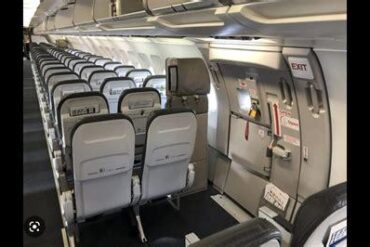
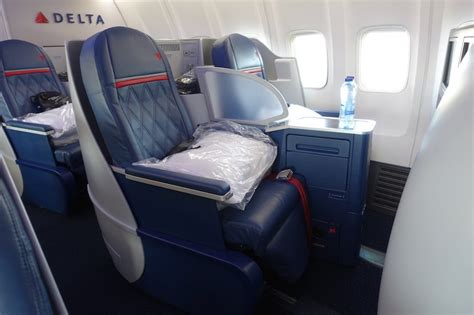
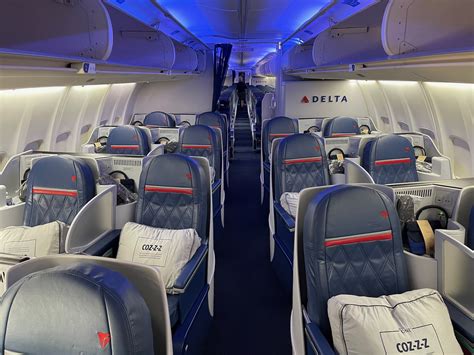
Delta’s Boeing 757-300s are configured with 234 seats across two classes. The forward cabin features 24 domestic first-class seats, designed around recliner-style comfort rather than long-haul luxury. Behind them sit 210 economy seats, including a subset with extra legroom that helps offset the aircraft’s narrowbody feel on longer domestic sectors.
The average age of Delta’s 757-300 fleet now exceeds 23 years, making these aircraft among the oldest in regular service at the airline. Age alone does not ground an airplane, but it influences everything from maintenance costs to cabin modernization potential. For Delta, the math favors keeping these jets on domestic routes where expectations are calibrated differently and utilization can be tightly controlled.
Why the World’s Longest Narrowbody Stays Home
The Boeing 757-300 remains an impressive machine, but its era is clearly defined. At Delta, it fills a specific, carefully managed role: moving large numbers of passengers on high-demand domestic routes with efficiency and reliability. International flying would demand compromises the airline is unwilling to make, both in product quality and brand perception.
In that sense, the aircraft’s confinement to US skies is not a limitation but a final expression of its purpose. The flying pencil was built to stretch boundaries, yet its legacy now lies in doing one thing exceptionally well. Within the United States, on dense routes where capacity reigns supreme, Delta’s Boeing 757-300 still earns its keep, quietly proving that sometimes the smartest strategy is knowing exactly where not to fly.