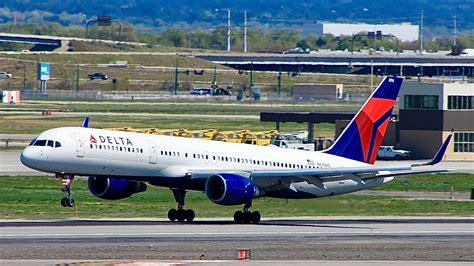
The Boeing 757 remains one of the most fascinating aircraft in commercial aviation history. Decades after production ended, airlines, pilots, and aviation enthusiasts still praise its extraordinary performance, impressive range, and ability to operate from challenging airports. Yet one question continues to generate debate: why didn’t Boeing develop a modern replacement for the 757 when the aircraft appeared perfectly positioned for today’s aviation market?
At first glance, creating a new-generation 757 seems like an obvious decision. The modern airline industry has shifted toward larger narrowbody aircraft with longer range capabilities, exactly the market segment where the original 757 once excelled. Airbus successfully captured this demand with the A321neo, A321LR, and A321XLR, while Boeing struggled to provide a direct competitor. However, the decision not to revive the 757 was not simply an oversight. The aircraft’s unique strengths also created major economic challenges that made a clean-sheet successor difficult to justify.
The story of the 757 is ultimately about timing, changing airline priorities, and the difficult balance between performance and efficiency. While the aircraft was ahead of its time in many ways, building a new version today would not necessarily deliver the commercial success many aviation fans imagine.
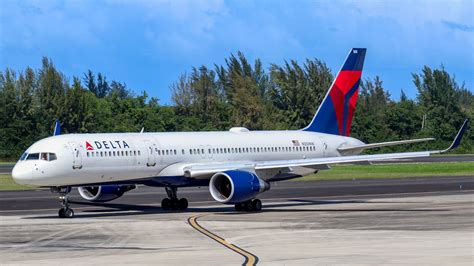
The Boeing 737’s Growing Market Problem
For decades, the Boeing 737 dominated the narrowbody aircraft market because it matched what most airlines needed. Originally introduced in the 1960s as a compact regional jet, the 737 evolved through multiple generations, becoming larger, more efficient, and increasingly capable.
The 737 Classic series expanded the aircraft’s capabilities during the 1980s, while the 737 Next Generation (NG) family introduced in the late 1990s became one of the most successful commercial aircraft programs ever built. The 737-800 became a global airline favorite because it offered excellent reliability, competitive fuel efficiency, and enough capacity for thousands of routes worldwide.
However, the aviation market gradually moved toward larger narrowbody aircraft. Airlines discovered that operating bigger single-aisle jets on medium-range routes could reduce costs by spreading expenses across more passengers. This trend created a major opportunity for Airbus with the A321neo, which offered greater capacity and longer range than previous narrowbody aircraft.
Boeing’s problem became clear. The 737 MAX 9, designed as a larger member of the MAX family, inherited many of the limitations of the earlier 737-900ER. It could carry more passengers than smaller 737 variants, but it struggled against the A321neo in both range and efficiency.
The later 737 MAX 10 attempted to close this gap by stretching the 737 platform further. While the aircraft attracted significant interest from airlines, it arrived after Airbus had already established the A321neo family as the market leader. Boeing found itself competing against an aircraft category it once could have addressed with a new 757 derivative.
Why Boeing Ended 757 Production in 2004
Boeing officially ended 757 production in 2004, closing the chapter on one of its most capable narrowbody aircraft. The decision was based largely on sales performance rather than technical limitations.
The 757 was an exceptional aircraft, but it occupied a difficult position in the market. It was larger and more powerful than many airlines needed for typical short-haul operations, yet smaller than aircraft used for traditional long-range routes.
During its production life, the 757 sold fewer units than many other Boeing commercial aircraft programs. Boeing delivered approximately 1,050 757 aircraft, including the popular 757-200 and the larger but less successful 757-300. By comparison, aircraft such as the 737-800 achieved thousands of deliveries because they matched broader airline requirements.
The 757 was originally developed as a replacement for the aging Boeing 727, which had been a dominant three-engine aircraft during the 1970s. Boeing designed the 757 with powerful engines and a large wing to maintain the 727’s excellent takeoff and landing performance while carrying more passengers.
That design philosophy created the aircraft’s greatest advantage and its biggest weakness. The 757 could operate from short runways, climb quickly, and fly long distances, but those capabilities added weight and complexity that many airlines did not need.
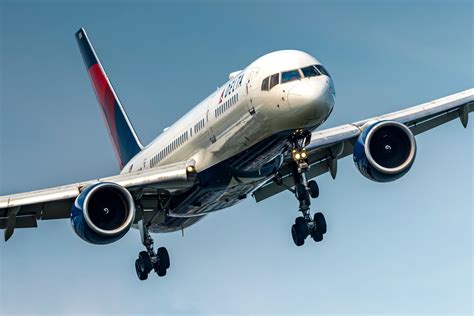
The 757 Was Built For A Different Aviation Era
The modern popularity of the 757 can sometimes make it appear that Boeing abandoned a perfect aircraft too early. However, the market conditions of the 1980s and 1990s were very different from today.
When Boeing launched the 757, airlines were replacing older aircraft such as the 727, Boeing 707, and early-generation jets. The goal was to create a more efficient aircraft that could carry large passenger loads while maintaining operational flexibility.
But airlines increasingly preferred aircraft optimized around fuel efficiency rather than maximum performance. The Airbus A320 and Boeing 737-800 became highly successful because they delivered lower operating costs on the majority of airline routes.
The 757’s large wing and powerful engines were impressive engineering achievements, but they also made the aircraft heavier than competitors. For airlines flying shorter routes, carrying that extra structure meant paying higher fuel costs without always gaining enough revenue.
The aircraft eventually found a strong niche with airlines operating high-demand routes, especially transcontinental flights in North America and long-distance narrowbody services across the Atlantic. However, niche success was not enough to support a completely new aircraft program.
Could Boeing Have Created A Modern 757 Replacement?
Technically, Boeing could have developed a new aircraft inspired by the 757. A modern version could have used advanced composite materials, next-generation engines, and improved aerodynamics to reduce fuel consumption.
The challenge was economics.
A re-engined 757 would still have faced a fundamental problem: the original aircraft was heavy. Even with modern engines such as the CFM International LEAP or Pratt & Whitney GTF, the aircraft structure would remain larger and heavier than newer competitors.
The A321neo demonstrates why this matters. The Airbus aircraft can carry a similar number of passengers as the 757-200 while using a more efficient design optimized for today’s airline networks.
A redesigned 757 would likely require major structural changes, effectively creating a new aircraft rather than a simple update. Boeing would need to invest billions of dollars into development while competing in a market already served by successful aircraft families.
The result could have been an aircraft that was technically impressive but commercially difficult to justify.
The Long-Range Narrowbody Market Was Not Large Enough
One reason aviation enthusiasts often argue for a new 757 is its modern role on long-distance narrowbody routes. Airlines such as United Airlines and Icelandair demonstrated that the 757 could successfully operate transatlantic services that previously required larger aircraft.
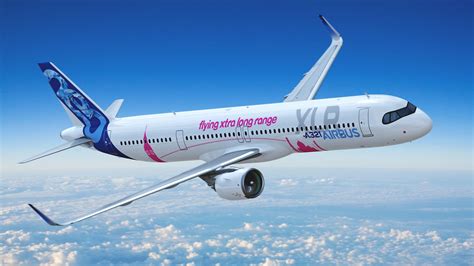
Today, Airbus has captured this segment with the A321LR and A321XLR. These aircraft allow airlines to connect smaller cities with long-range routes while avoiding the cost of larger widebody jets.
A new 757 could potentially outperform the A321XLR in payload and range. However, the size of this market remains limited.
Long-range narrowbody aircraft are attractive because they open new routes, but they do not generate the same passenger volume as larger aircraft. For a manufacturer, developing a dedicated aircraft for several hundred possible orders is far less attractive than producing a family of aircraft capable of thousands of sales.
Airbus succeeded with the A321XLR partly because it was built on an existing platform. The company did not need to create an entirely new aircraft program. Boeing would have faced a much larger investment if it attempted to create a standalone 757 replacement.
Why Boeing’s Decision To Avoid A New 757 Was Logical
Although many aviation enthusiasts regret Boeing’s decision, the company’s strategy made commercial sense. The 757 was a remarkable aircraft, but its success depended on a very specific combination of performance requirements.
Most airlines did not need an aircraft with the 757’s extreme capabilities. They wanted lower operating costs, efficient engines, flexible capacity, and the ability to serve a wide range of routes.
The A321neo became successful because it delivered exactly what airlines wanted. It was large enough for high-demand routes, efficient enough for shorter flights, and adaptable enough to support long-range variants.
Boeing attempted to answer this market shift through the 737 MAX 10 rather than a new 757. While the MAX 10 does not match the 757’s range or airport performance, it offers competitive economics and fits into Boeing’s existing production system.
Launching a new 757 replacement would have created another aircraft family requiring new manufacturing facilities, certification efforts, pilot training, and airline support networks. The financial risk would have been enormous.
The 757’s Legacy Continues Despite Its Retirement
The Boeing 757 remains one of the most respected aircraft ever produced. Its combination of power, range, reliability, and operational flexibility gave it a reputation unlike almost any other narrowbody jet.
Its retirement was not caused by poor engineering. Instead, the aircraft was a victim of changing market demands. Boeing built a machine that was exceptionally capable, but airlines eventually prioritized efficiency over capability.
The modern aviation industry still needs aircraft with some of the 757’s characteristics, which is why the A321XLR has become so successful. Yet creating a new 757 today would require solving the same challenge Boeing faced decades ago: how to build an aircraft that is powerful enough for demanding missions without becoming too expensive for everyday operations.
The Boeing 757 may have disappeared from production lines, but its influence remains visible. Every discussion about long-range narrowbody aircraft, the future of the 737 family, and Boeing’s next-generation airplane strategy continues to return to the same question: what if Boeing had built a new 757?
The answer is complicated. The aircraft might have been impressive, but the market that made the original 757 special was never as large as it appeared.