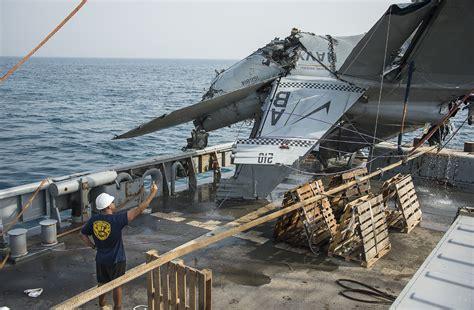
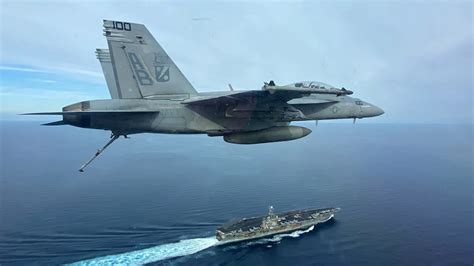
In a world where military technology defines global power balances, the depths of the ocean are no longer safe havens for secrets. When two U.S. Navy aircraft—an MH-60R Seahawk helicopter and an F/A-18F Super Hornet fighter—crashed into the South China Sea on October 26, 2025, what followed was not just a salvage operation. It was a strategic imperative to keep national security assets from falling into adversarial hands.
Strategic Waters, Strategic Stakes
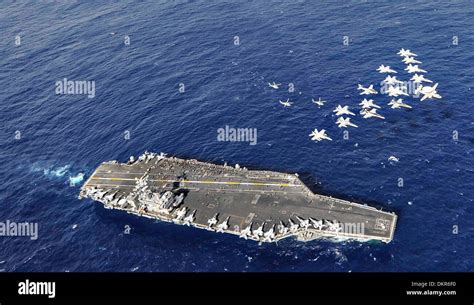
The aircraft were part of the air wing aboard the USS Nimitz, the Navy’s oldest carrier, operating in one of the most hotly contested regions in the world. While the crashes were non-fatal, the implications were far-reaching. The South China Sea is not just a vital economic corridor—it is China’s maritime backyard, a surveillance-heavy zone fiercely monitored by the People’s Liberation Army Navy (PLAN).
Allowing advanced American military equipment to remain exposed on the seafloor in such a theater of tension would risk handing technological gold to adversaries eager to analyze, mimic, or exploit it. In this context, the mission was clear: recover the wreckage before anyone else could.
Why These Aircraft Couldn’t Be Left Behind
At a glance, neither the F/A-18F Super Hornet nor the MH-60R Seahawk appears revolutionary. Both platforms have been in service for over two decades. In a world of stealth drones and fifth-generation fighters, these aircraft seem like legacy tools. However, appearances deceive.
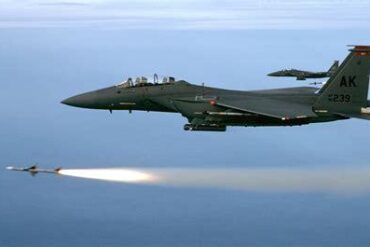
The Super Hornet, a refined successor of the original Hornet, carries high-value electronic warfare systems, including the AN/APG-79 active electronically-scanned array (AESA) radar. This radar not only enables target tracking and engagement at long ranges, but also supports multi-role strike capabilities, real-time data sharing, and stealth-enhanced operational awareness.
The MH-60R Seahawk, the backbone of the Navy’s anti-submarine and anti-surface warfare operations, features mission systems that can be exploited for sonar mapping, radar jamming, and sensor networking. These aircraft, though not bleeding-edge, contain enough digital DNA to interest any rival military-industrial complex.
A Race Against Time and Depth
The U.S. Navy moved swiftly. Spearheading the retrieval operation were Task Force 73, the Naval Sea Systems Command’s Supervisor of Salvage and Diving (SUPSALV), and an elite Mobile Diving and Salvage Unit. Their mission was not merely logistical—it was tactical counterintelligence under a ticking clock.
This wasn’t the first time the Navy had embarked on such operations. In 2022, they recovered an F-35C Lightning II that had crashed during a botched landing on the USS Carl Vinson. That wreck too had sunk into the South China Sea, and its stealth features made its recovery a top priority.
A History of High-Stakes Salvage
The U.S. Navy has a long tradition of leaving no sensitive asset behind. In 1976, when an F-14 Tomcat armed with an AIM-54 Phoenix missile crashed near Scotland, the Navy executed a complex mission to retrieve both, due to the missile’s advanced guidance tech.
Even more audacious was Project Azorian, a Cold War-era effort in which the CIA and U.S. Navy collaborated to lift a sunken Soviet K-129 submarine from the depths of the Pacific. Disguised as a deep-sea mining operation funded by billionaire Howard Hughes, the salvage ship Hughes Glomar Explorer was built from scratch, costing the U.S. over $800 million in 1970s dollars. Though not entirely successful, the mission demonstrated just how far the U.S. would go to secure technological secrets.
Today’s Technology, Tomorrow’s Threats
While the F/A-18 and MH-60 are not classified platforms in themselves, their subsystems, encrypted communications protocols, and upgrades reflect the Navy’s evolving digital warfighting doctrine. Even small leaks—like circuit designs or electronic countermeasure logs—could offer insight into vulnerabilities, giving adversaries an edge in future conflict scenarios.
Moreover, every crash site represents more than lost hardware; it risks revealing deployment patterns, software architectures, and even fault diagnostics. Data extracted from damaged storage can be reassembled to reverse-engineer tactics, training, and battlefield decision-making algorithms.
Geopolitical Chess Beneath the Waves
The South China Sea is a cauldron of overlapping territorial claims, underwater surveillance, and power projection. Any military activity here—especially one involving sunken U.S. platforms—is not just an operational hiccup. It’s a provocation magnet. By retrieving the aircraft swiftly, the U.S. neutralized potential diplomatic fallout and denied regional rivals a propaganda victory.
Had China retrieved the wreckage, it would have been a technological windfall and a strategic embarrassment for Washington. Salvaging the aircraft ensured that not even the smallest sensor component fell into the wrong hands.
Conclusion: The Sea Doesn’t Hide Everything
In an age where data and hardware are as important as missiles and manpower, the ocean floor has become a contested frontier of secrecy and retrieval. The recovery of the MH-60R Seahawk and F/A-18F Super Hornet in October 2025 was not just about protecting sunk costs—it was a silent assertion of technological sovereignty and strategic intent.
As military platforms become more software-defined and globally deployed, we can expect future conflicts to include not only the skies and cyberspace—but also the unseen depths where secrets sleep and submarines listen.