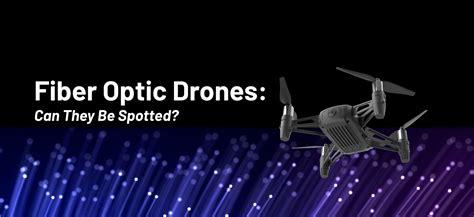
In the shadowy dance of modern warfare, where milliseconds can shift the outcome of entire battles, fiber optic war drones have emerged as one of the most stealthy, resilient, and tactically disruptive tools of the 21st century. They aren’t just flying machines; they are digital ghosts tethered by light, carving silent paths through contested airspace while eluding one of the deadliest threats to modern military operations: radio-frequency jamming.
What Are Fiber Optic War Drones?
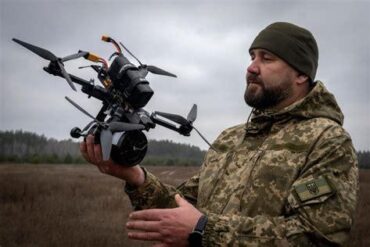
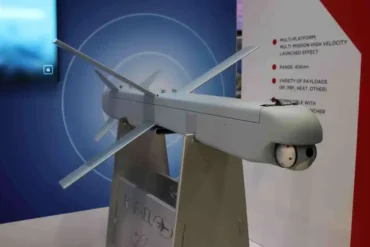
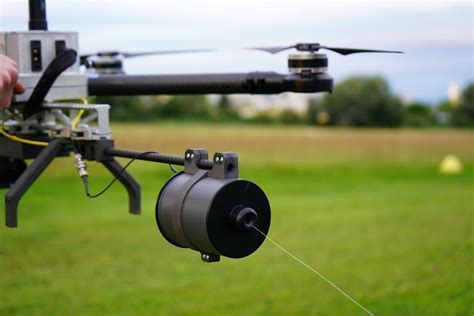
Fiber optic war drones are unmanned aerial vehicles (UAVs) that operate under direct command through a thin, trailing fiber optic cable, rather than relying on radio signals. This cable, which can extend up to several dozen kilometers, acts as both a control link and a live video feed pipeline, creating a near-jam-proof tether between drone and operator.
The fiber optic cable unspools mid-flight, not from a ground station, but from a small, integrated spool mounted onboard the drone itself. This approach solves numerous problems associated with tethered drones, including drag, maneuverability, and cable entanglement. Because the spool travels with the drone, there’s no tension on the wire, and the UAV can weave through tight spaces—even fly into and out of buildings—without being constrained or grounded.
Why Use Fiber Instead of Radio?
The central motivation behind these drones is not their elegance or innovation, but their survivability in the harsh realities of electronic warfare. In places like Ukraine, where Russia’s advanced electronic jamming systems can cripple radio-controlled drones within seconds, fiber optic war drones thrive.
Fiber optics, unlike radio waves, are completely immune to electronic jamming. Since the communication does not propagate through the air but through a physical medium, there is no broadcast signal for the enemy to detect, intercept, or disrupt. This stealth mode of operation reduces latency, increases bandwidth, and removes nearly all electromagnetic vulnerabilities, making them ideal for precision strikes, reconnaissance missions, and forward-positioning operations in jammed or signal-denied environments.
How Do These Drones Operate in Combat?
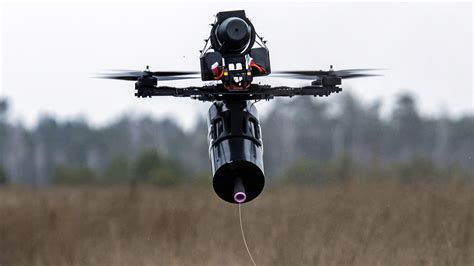
A typical mission begins with the launch of the drone from a concealed position. As it flies, a spool of .25mm-thick fiber optic cable unrolls from its undercarriage, often carrying the signal over 10–40 kilometers or more. The drone feeds real-time high-definition video back to operators, who remain in hidden bunkers or mobile control centers far from the frontline.
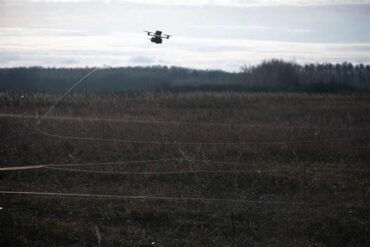
Due to the cable’s fragility, it would seem like a major risk factor—but the opposite is true. The wire is usually wrapped in plastic, Kevlar, or similar materials, offering enough durability for short, high-intensity battlefield service. And unlike radio-controlled drones, their signal cannot be triangulated back to the operator, unless the enemy painstakingly follows the cable itself. That, too, is rarely feasible unless dozens of drones have launched from the same area, leaving a spaghetti mess of cables tracing back to a source.
The Cable: Strength in Fragility
To a civilian eye, dragging a thin strand of glass across the battlefield seems counterintuitive. But remember: these drones are ammunition, not aircraft meant for recovery or maintenance. Their entire design philosophy centers around being expendable, cheap, and tactically effective for mere minutes.
Despite the apparent fragility, the trailing fiber rarely presents a functional problem. It doesn’t need to be taut. In fact, tension would introduce the risk of breakage. Instead, the cable rests gently across terrain, over foliage, around corners. If it catches, the drone often keeps going, thanks to the onboard spool. In high-mobility environments, these UAVs are even able to enter multi-story buildings, conduct indoor reconnaissance, and fly out without issue.
Evolution From Wire-Guided Missiles
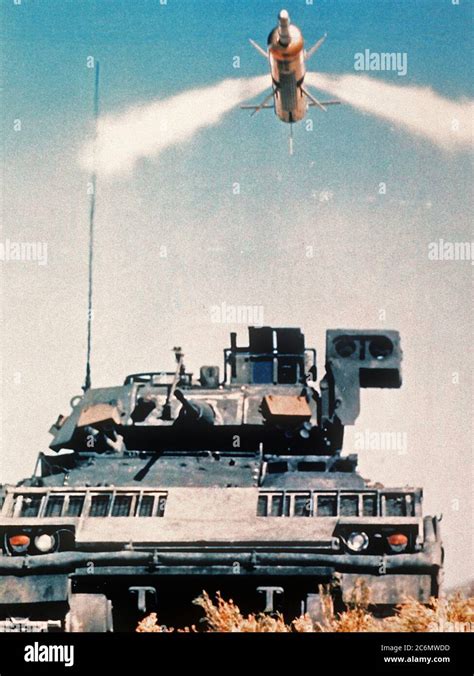
Though they may sound futuristic, fiber optic war drones are not a radical departure from past military tactics. They’re evolutionary descendants of wire-guided missile systems like the TOW (Tube-launched, Optically tracked, Wire-guided) missile, developed in the 1960s. These earlier systems had a similar control mechanism—a thin wire unspooling during flight, guiding the missile toward its target with pinpoint precision.
Unlike the TOW, however, fiber optic drones are reusable in terms of control logic, and their guidance is two-way: transmitting both live visuals and real-time control commands. Instead of a one-shot detonation tool, these drones act as agile, reusable battlefield scouts or precision loitering munitions.
Pros and Cons of Fiber Optic Control
The benefits of using a fiber optic connection in drones are powerful, especially in warzones saturated with electronic warfare (EW) interference:
- Unjammable Communication: Signal is immune to EW attacks.
- Undetectable Command Link: No RF emissions to track.
- High Bandwidth: Allows streaming of high-quality video and rapid control response.
- Reduced Latency: Fiber’s stable bandwidth ensures consistent performance.
But these advantages come at some tactical and logistical costs:
- Limited Range: Drone can only travel as far as the fiber length allows (typically under 50 km).
- Physical Tether: The wire can be traced—eventually—to the launch site if enough drones are used.
- Environmental Hazards: Cable can snag, cut, or degrade in rain, mud, or over rough terrain.
- Disposable Design: These are not high-end surveillance drones; they are cheap, expendable weapons.
Battlefield Realities and Strategic Impact
In Eastern Europe’s embattled terrain, fiber optic drones have played a pivotal role in reconnaissance, artillery spotting, and kamikaze-style attacks. One recorded instance involved a drone flying 42 kilometers into Russian territory, leaving a 42km-long fiber optic trail. This not only showcases the technical prowess but also underlines the massive psychological and tactical impact of such tools.
By operating without radio signals, drones can hover over targets undetected by EW surveillance. They become electronic ghosts—harder to intercept, harder to trace, and vastly more reliable in contested signal environments. As such, they are perfect for asymmetric warfare, where smaller nations or decentralized forces aim to disrupt larger, more technologically entrenched enemies.

Manufacturing and Deployment: Simplicity is Strength
Contrary to the perception that such drones must be high-tech marvels, their construction is surprisingly simple. The fiber spool weighs only 2–5 pounds, and fiber cables used are often as thin as 0.25mm in diameter. A small drone body with modular explosives or a high-resolution camera setup is all it takes to create a battlefield-ready device.
Most of these UAVs are assembled in makeshift workshops, sometimes even in field conditions, allowing for rapid deployment and scalability across an entire front. They do not need to be recovered. Their mission ends in either detonation, destruction, or silent loitering—providing data until the cable or drone is cut.
The Future: Expanding the Ghost Fleet
As the technology matures, we can expect fiber optic drones to become more autonomous, longer-ranged, and capable of swarming behaviors. Already, the presence of multiple cables converging in one area has allowed spotter drones to back-trace and target enemy drone operators—suggesting both the power and the vulnerability of these silent machines.
Yet, for every cable traced, dozens more go unnoticed, their drones completing objectives and exploding miles away from their origin. The fiber optic war drone is not a silver bullet, but a silent knife, invisible to radars, impervious to jamming, and increasingly central to the doctrine of modern remote warfare.
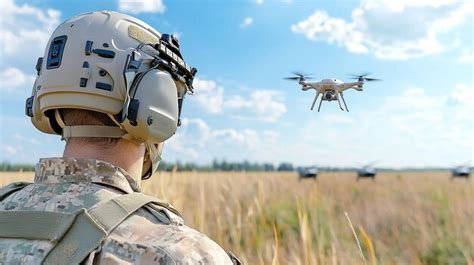
Conclusion: A Warfighter’s Digital Leash
In a battlefield where speed, silence, and security define superiority, fiber optic drones embody the tactical edge of low-cost ingenuity. They are an answer to overwhelming electronic warfare, and a preview of the coming age where cyber-physical systems dominate tactical theaters.
By trading range and recovery for stealth, signal security, and precise control, these UAVs are not just surviving modern war—they’re shaping it. The trailing cable, so often seen as a constraint, becomes their greatest weapon—a leash of light in a war of shadows.