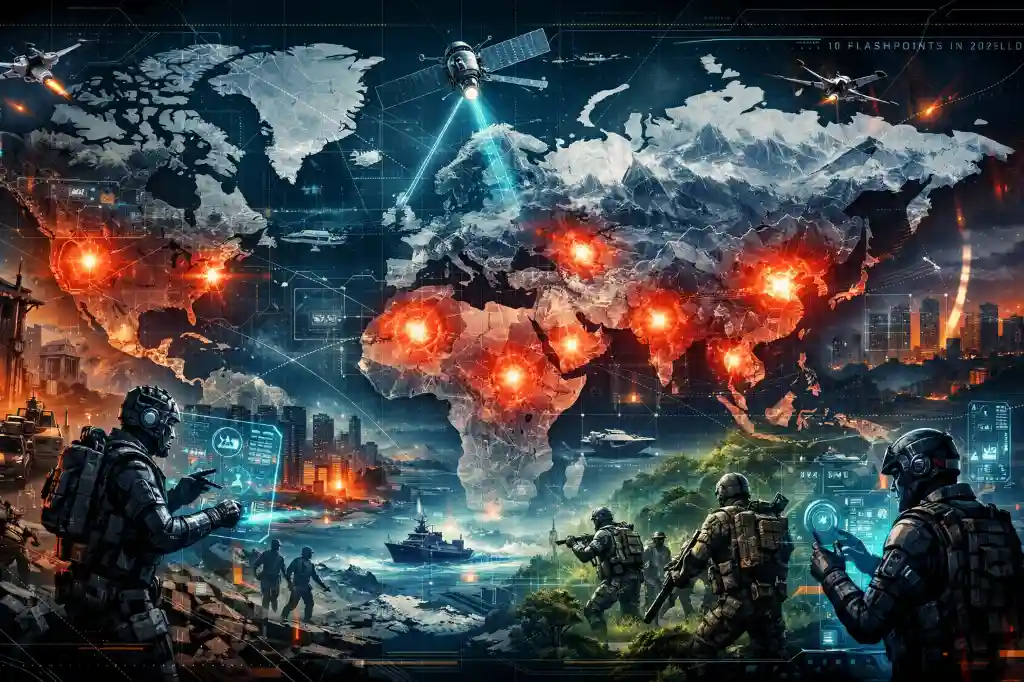
The world enters 2026 not with a clean slate, but with unfinished wars, hardened alliances, and a growing sense that conflict is no longer episodic—it is structural. The strategic shocks of 2025 did not resolve rivalries; they deepened them. What emerged instead is a volatile global system where wars grind rather than conclude, deterrence erodes rather than stabilizes, and technology accelerates decision-making faster than diplomacy can keep pace.
Across capitals and command centers, defense planners are no longer asking whether conflict will erupt, but where escalation will break containment. From the Middle East to Eastern Europe, from the Indo-Pacific to the Americas, 2026 is shaping up as a year defined by persistent flashpoints, high-tech battlefields, and weaponized interdependence that blurs the line between war and peace.
The most consequential lesson carried forward from 2025 is stark: modern conflict is no longer dominated by singular theaters or decisive battles. Instead, wars unfold across land, sea, air, cyber, space, and the electromagnetic spectrum simultaneously, demanding industrial endurance, technological agility, and political resilience. These conditions define the ten flashpoints that will matter most in 2026.
By examining where conflicts are most likely to escalate—and how they will be fought—this analysis maps the pressure points of a world drifting toward permanent strategic competition rather than episodic war.
The Strategic Inheritance of 2025: Why Conflicts Refuse to End
The wars that defined 2025 revealed a critical transformation in global conflict dynamics. Military power alone no longer guarantees resolution. Instead, wars persist because adversaries can absorb punishment, replace losses, and adapt technologically faster than their opponents can impose decisive outcomes. Ukraine became the archetype of the grinding war, while the Middle East illustrated how escalation can be calibrated to avoid total war while still inflicting strategic damage.
Industrial capacity, supply-chain access, and civilian technological ecosystems emerged as decisive factors. States that could rapidly produce drones, secure microchips, protect satellite networks, and defend digital infrastructure proved more resilient than those reliant on legacy platforms alone. The result is a world where wars slow down rather than burn out, creating chronic instability.
This environment sets the stage for the ten flashpoints that will dominate 2026—conflicts where escalation risk is high, resolution is elusive, and technological innovation shapes every engagement.
The Middle East Triangle: Israel, Iran, and Lebanon at the Edge
The most dangerous flashpoint entering 2026 remains the Israel–Iran–Lebanon triangle, where deterrence is fraying under constant pressure. Israel’s confrontations with Hezbollah, Iranian proxies, and Iranian-linked infrastructure have created a landscape of near-daily escalation. Each strike is calibrated, yet cumulative risk grows with every exchange.
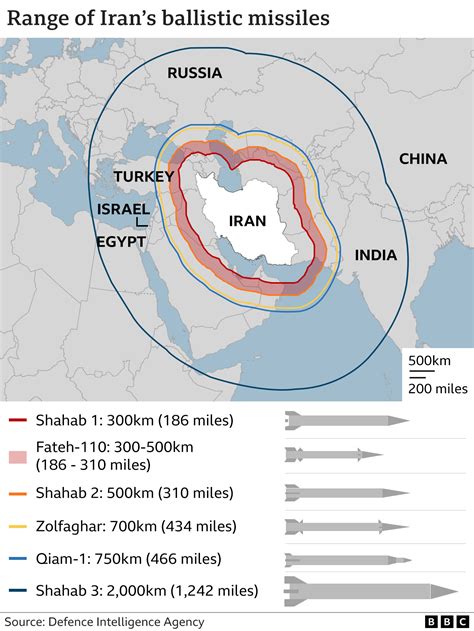
Iran’s strategy hinges on distributed warfare—arming non-state actors, leveraging missile and drone arsenals, and exploiting maritime chokepoints through the Houthis. Israel, in turn, relies on layered air defenses, intelligence dominance, and rapid retaliation. The danger lies not in intent, but in miscalculation. A single mass-casualty strike or failed interception could trigger a regional war drawing in the United States.
Russia–Ukraine: The Prototype of the Grinding War
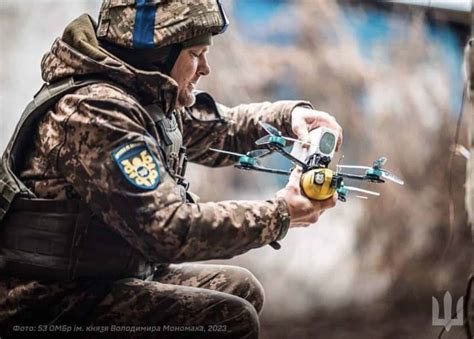
As 2026 begins, the Russia–Ukraine war exemplifies how modern conflicts become wars of endurance. Neither side holds the capacity for decisive breakthrough without unacceptable costs. Instead, the conflict has evolved into a battle of attrition, defined by artillery duels, drone swarms, electronic warfare, and relentless pressure on logistics.
Ukraine’s survival hinges on sustained Western support, particularly in air defense, long-range strike systems, and drone production. Russia, meanwhile, leverages manpower, industrial mobilization, and strategic depth. The likelihood of a ceasefire exists, but any agreement risks freezing territorial gains rather than resolving the conflict—creating a simmering fault line in Europe’s security architecture.
Syria, Israel, and ISIS: A Volatile Triangular Conflict
Syria re-emerges as a flashpoint not because the war ended, but because it never truly stabilized. Iranian forces, Hezbollah units, residual ISIS cells, Turkish interests, and Israeli air operations intersect in a fragmented battlespace. Israel’s continued strikes against Iranian assets risk broader confrontation, while ISIS exploits governance vacuums to regroup.
The Syrian theater illustrates the danger of unmanaged complexity, where multiple actors pursue overlapping objectives without a shared framework for de-escalation. In 2026, Syria remains a trigger zone where localized violence could rapidly internationalize.
Sudan and the Horn of Africa: Proxy Wars and Regional Spillover
Sudan’s civil war stands out as one of the most likely conflicts to intensify in 2026. What began as an internal power struggle has evolved into a proxy-inflected war drawing in Middle Eastern states, regional rivals, and private military networks. The humanitarian catastrophe is immense, but the strategic risk lies in regional destabilization—from Red Sea security to Nile Basin politics.
Nearby, tensions between Ethiopia and Eritrea continue to simmer, fueled by unresolved border disputes and internal fractures. The Horn of Africa illustrates how fragile states become arenas for external competition, amplifying instability far beyond their borders.
Afghanistan–Pakistan: Militancy Without Borders
The Afghanistan–Pakistan frontier reasserts itself as a flashpoint driven by militant mobility and contested sovereignty. Armed clashes along the Durand Line, coupled with the resurgence of groups like the Tehrik-i-Taliban Pakistan, undermine regional stability. Pakistan faces the dual challenge of internal security and economic strain, while Afghanistan’s isolation limits diplomatic pressure.
In 2026, this conflict risks escalation not through conventional war, but through persistent low-intensity violence that erodes state authority and regional trust.
The Indo-Pacific Pressure Cooker: Taiwan and the South China Sea
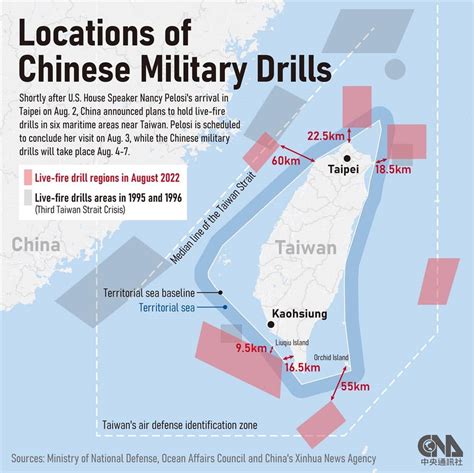
Few flashpoints carry consequences as global as the Taiwan Strait. Analysts increasingly assess the probability of a crisis as no longer remote. China’s sustained military pressure—air incursions, naval exercises, and cyber operations—aims to normalize coercion while avoiding open war. Taiwan’s defense strategy centers on denial, resilience, and asymmetric capabilities.
Simultaneously, the South China Sea remains volatile, particularly around the Philippines. While outright conflict is less likely, persistent gray-zone operations raise the risk of miscalculation involving U.S. allies, potentially triggering alliance obligations.
North Korea: Nuclear Risk Without Warning
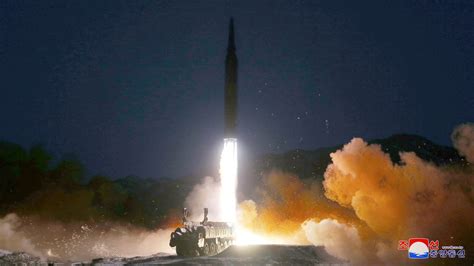
North Korea’s missile and nuclear programs remain a high-impact, low-predictability threat. Advances in hypersonic delivery systems and solid-fuel missiles reduce warning times and complicate missile defense. Any misstep—whether a failed test or perceived provocation—could escalate rapidly, drawing in the United States, South Korea, and Japan.
The danger in 2026 lies not in intent to start war, but in the compression of decision timelines created by advanced weapons.
The Americas: U.S.–Venezuela and Domestic Instability
Closer to home, U.S.–Venezuela tensions persist as a high-impact risk. Political instability, economic collapse, and military posturing create scenarios ranging from internal implosion to external confrontation. While direct war remains unlikely, the consequences of state failure—migration surges, criminal networks, and regional destabilization—are profound.
Equally significant is the warning about U.S. domestic unrest. Rising political polarization and the potential for violence elevate internal stability to a national security concern, illustrating how modern security threats are no longer exclusively external.
Cyber Warfare: The Invisible Flashpoint
Cyber warfare stands apart as the only flashpoint without geography. A major cyberattack on critical infrastructure—power grids, financial systems, or communications—could paralyze states without a single shot fired. In 2026, cyber operations are fully integrated into military planning, blurring the distinction between strategic deterrence and daily competition.
Control of the electromagnetic spectrum has become as decisive as control of airspace. Drone warfare, electronic jamming, spoofing, and AI-driven cyber operations define the unseen battles shaping visible conflicts.
How Wars Will Be Fought in 2026: Technology, AI, and Industrial Resilience
The defining characteristic of warfare in 2026 is the integration of high-tech innovation with industrial endurance. Unmanned systems dominate battlefields, from aerial drones to underwater vehicles. Traditional air defense systems struggle against massed drone attacks, driving investment in counter-small UAV batteries and directed energy weapons.
Hypersonic missiles reshape strategic deterrence, while layered missile defense architectures—from America’s proposed Golden Dome to Europe’s Sky Shield—reflect the return of homeland defense as a priority. Yet technology alone is insufficient. Wars are increasingly won by states that can produce at scale, secure supply chains, and adapt civilian innovation for military use.
Artificial Intelligence accelerates decision-making, predictive analytics, and autonomous operations. Network-centric warfare demands seamless communication across domains, making space assets and cybersecurity core pillars of national defense. Space itself is no longer a sanctuary; it is a contested domain where satellites are strategic targets.
Undersea cables, carrying over 99% of global digital traffic, emerge as silent vulnerabilities. Their disruption offers adversaries a way to cripple economies without overt war, reinforcing the logic of hybrid conflict.
Civil-Military Fusion and Weaponized Interdependence
Two strategic trends shape the backdrop of all 2026 flashpoints. Civil-military fusion transforms civilian technology sectors into engines of military power, blurring the line between peacetime innovation and wartime capability. What began in China is now global, as states seek technological self-reliance and rapid mobilization.
Equally transformative is weaponized interdependence. Control over supply chains, financial networks, data flows, and rare-earth materials becomes a tool of coercion. Sanctions, export bans, and insurance controls replace bombs as instruments of pressure. This shift challenges the foundations of globalization, creating new fault lines as states seek sovereignty over critical systems.
Conclusion: A World Conditioned for Conflict
The ten flashpoints of 2026 are not isolated crises; they are symptoms of a deeper transformation in global order. Wars grind rather than conclude, technology accelerates escalation, and economic networks become battlefields. The risk is not a single catastrophic war, but multiple overlapping crises that strain institutions, alliances, and societies simultaneously.
In this environment, security is no longer about preventing war outright, but about managing escalation, sustaining resilience, and navigating a world where peace and conflict coexist uneasily. The year ahead will test whether states can adapt to this reality—or whether the flashpoints of 2026 will ignite a more dangerous era beyond.