Why Putin Failed to Capture Ukraine’s President While Washington Seized Maduro in Hours
The idea that wars can be ended by removing a single man is as old as organized conflict itself. From ancient battlefields to modern capitals, the logic has remained brutally simple: remove the leader, and the system collapses. Empires have risen and fallen on this premise. Yet history also shows that this strategy works only under very specific conditions—conditions that existed in Venezuela in 2026 but catastrophically failed to materialize in Ukraine in 2022.
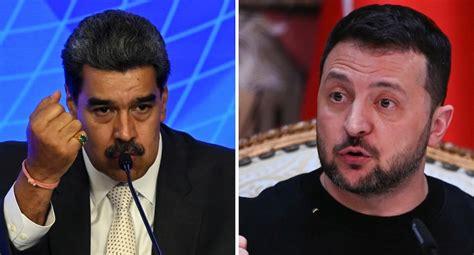
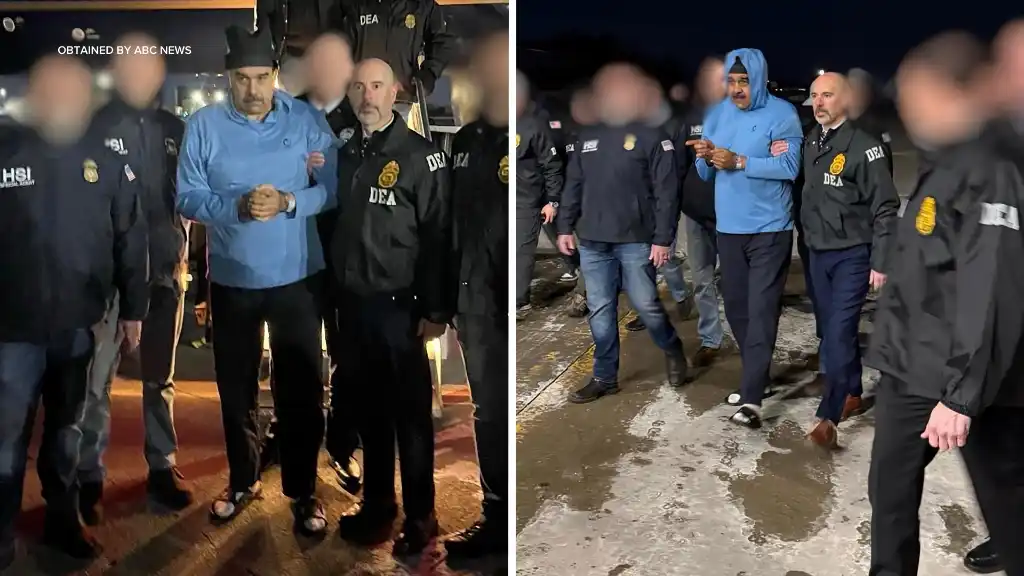
The sudden capture of Venezuelan President Nicolás Maduro by U.S. forces stunned the world not because of American military capability, but because of how effortless the operation appeared. In stark contrast, Russia’s attempt to decapitate Ukraine’s leadership by seizing Kyiv and capturing or killing Volodymyr Zelensky collapsed within days, plunging Moscow into a grinding war of attrition that has now lasted years.
These two events are often discussed as isolated cases. They should not be. When examined together, they reveal a deeper truth about modern warfare: leadership survival is not determined by firepower alone, but by legitimacy, institutional loyalty, and operational execution.
The capture of Maduro and the survival of Zelensky are not contradictions. They are consequences.
The Ancient Logic of Decapitation Warfare Still Holds
Military history is littered with examples where conflicts ended almost instantly once the ruler fell. In 1896, the Anglo-Zanzibar War ended in under an hour when British naval guns forced Sultan Khalid bin Barghash to flee. In antiquity, Alexander the Great’s pursuit of Persian King Darius III defined years of campaigning; victory became complete only when Darius was finally betrayed and killed by his own generals.
The principle is enduring because it works—but only when the state is hollowed out from within.
The assumption behind leadership decapitation is that institutions will not fight on without a figurehead. That assumption proved accurate in Caracas. It proved disastrously wrong in Kyiv.
Why Venezuela Collapsed Without a Fight
On paper, Venezuela was no easy target. Its geography is vast, its population comparable to Ukraine’s, and its armed forces are among the most heavily equipped in Latin America. Chinese long-range radars, Russian-made S-300VM and Buk-M2 air defense systems, Iranian fast-attack boats, anti-ship missiles, and advanced Su-30 fighter jets should have made any foreign airborne operation extraordinarily costly.
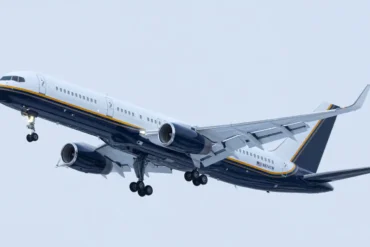
Yet when U.S. Chinook transports and AH-64 Apache helicopters flew low over Caracas, not a single Venezuelan MANPAD was fired.
That silence was not tactical hesitation. It was institutional betrayal.
No modern army, however dissatisfied, entirely stands down when a foreign power launches a decapitation strike—unless the chain of command has already been severed. The complete absence of resistance suggests that Maduro’s fate was sealed long before American boots touched Venezuelan soil. His generals did not hesitate. They did not defect mid-battle. They preemptively surrendered him.
In that moment, Maduro ceased to be a head of state and became a bargaining chip.
This was not military defeat. It was political liquidation.
The Crucial Variable: Army Loyalty
The most decisive difference between Venezuela and Ukraine lies in a single word: loyalty.
Maduro ruled through fear, patronage, and narcotics-linked power networks. His regime had survived not because of popular support, but because of repression and foreign backing. Once it became clear that Washington was willing to act directly, the Venezuelan military made a rational calculation: Maduro was no longer worth dying for.
Ukraine presented the exact opposite scenario.
When Russia launched its full-scale invasion in February 2022, Moscow knew the Ukrainian Army would fight. Kyiv had been preparing for this confrontation since 2014. Western training missions, battlefield experience in Donbas, and a growing sense of national identity had transformed Ukraine’s armed forces into a cohesive institution.
There would be no selling out Zelensky.
There would be no generals opening palace gates.
Putin’s Three-Day Plan Was Not Fantasy—It Was a Gamble
Western commentators often mock Vladimir Putin’s belief that Kyiv could fall in three days. That mockery ignores a crucial reality: Russia did have a plan capable of achieving that outcome. It failed not because it was irrational, but because it was executed poorly under hostile conditions.
The centerpiece of that plan was the seizure of Antonov Airport in Hostomel, just outside Kyiv. Control of Hostomel would allow Russia to airlift troops, armor, and supplies directly to the capital, overwhelming Ukrainian defenses before political mobilization and Western intervention could take shape.
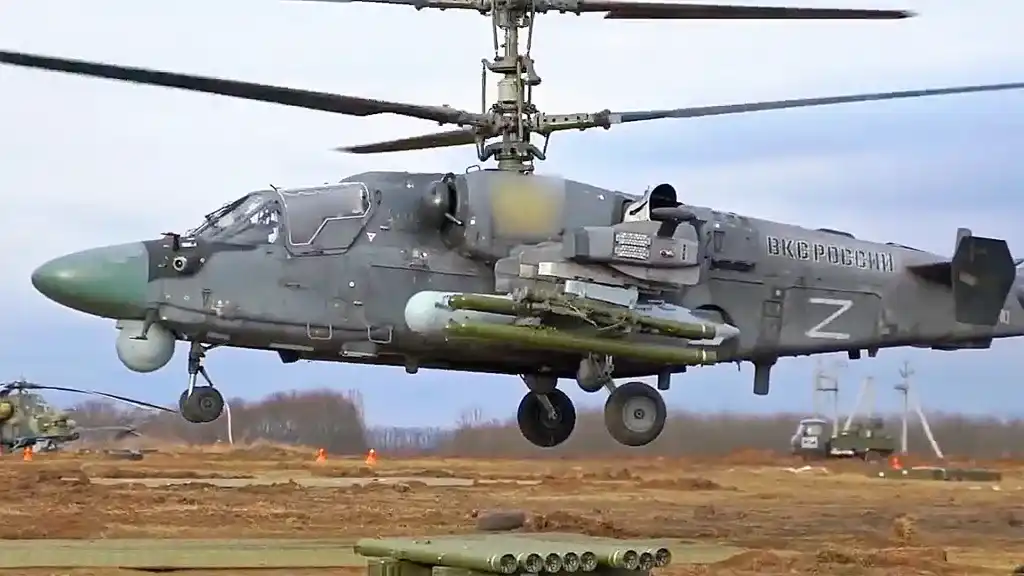
Russia committed its elite VDV airborne forces, supported by Ka-52 attack helicopters flying dangerously low to evade radar detection. This was a classic blitzkrieg maneuver—fast, violent, and designed to shock.
Hostomel: The Battle That Changed the War
Initially, the plan almost worked.
Russian airborne troops landed at Hostomel and briefly secured the airport. The gamble, however, depended on rapid reinforcement and complete area control. That never happened.
Ukrainian special forces, local police units, and territorial defense fighters converged on the airport with astonishing speed. Russian troops found themselves isolated, exposed, and outnumbered. Within days, the situation deteriorated further when Major General Andrei Sukhovetsky, one of Russia’s most senior airborne commanders, was killed by a sniper.
That single shot symbolized the collapse of Moscow’s opening gambit.
Without Hostomel, Russia lost its air bridge. Without the air bridge, the advance toward Kyiv stalled. Fuel shortages, ambushes, and logistical chaos followed, culminating in the infamous 40-mile convoy that became a symbol of Russian overreach.
The decapitation strike had failed.
Zelensky’s Survival Became Ukraine’s Greatest Weapon
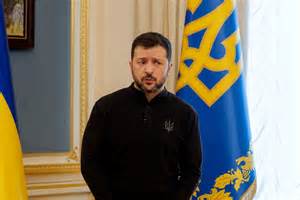
Volodymyr Zelensky’s decision to remain in Kyiv during those first days was not merely symbolic—it was strategically decisive.
By refusing evacuation and broadcasting messages from the capital, Zelensky transformed himself into a living rallying point. His presence eliminated any ambiguity within the Ukrainian chain of command. Orders flowed. Morale held. Resistance intensified.
Had Zelensky fled or been captured, Ukraine’s defense might have fractured. Instead, his survival unified military units, mobilized civilians, and accelerated Western political support.
This is where Putin’s assumptions unraveled. Zelensky was not a removable placeholder. He was a legitimizing force.
Why Airborne Decapitation Failed in Ukraine
Modern airborne operations are among the most complex and fragile maneuvers in warfare. They demand perfect timing, absolute surprise, and rapid consolidation. Hostomel demonstrated what happens when even one variable slips.
Ukraine’s layered defense, local intelligence, and decentralized resistance turned Russian paratroopers into stationary targets. Without full perimeter control, the airport became a liability instead of an asset.
By the time Russian commanders ordered a retreat from Kyiv Oblast in late March 2022, the war’s character had already changed. The chance for a swift victory was gone forever.
The Long-Term Cost of Initial Failure
Russia’s inability to seize Kyiv had consequences far beyond the battlefield. It gave NATO time to organize. It opened the floodgates for Western weapons. It allowed Ukraine to transition from survival to sustained defense.
By 2023, the war had devolved into trench warfare reminiscent of World War I. In 2024 and 2025, Russian forces gained territory—but only at enormous human and material cost.
Nearly a million casualties, massive equipment losses, and hundreds of billions of dollars later, the shadow of Hostomel still looms over Moscow’s strategy.
Why Washington Succeeded Where Moscow Failed
The U.S. operation in Venezuela did not succeed because America is stronger than Russia. It succeeded because Venezuela was already defeated from within.
Maduro lacked legitimacy.
His generals lacked loyalty.
His institutions lacked cohesion.
Zelensky, by contrast, embodied national resistance. The Ukrainian Army believed in the state it was defending. Russia faced not a hollow regime, but a mobilized society.
Decapitation warfare works only when the body is already dying.
The Final Lesson of Maduro vs Zelensky
The capture of Nicolás Maduro and the survival of Volodymyr Zelensky expose the ultimate truth of modern conflict: wars are not decided solely by weapons, but by belief.
Maduro fell because no one believed in him enough to fight.
Zelensky survived because millions did.
In that difference lies the answer to why one president was flown out in chains within hours, while another became the unbroken symbol of a nation under siege.