Modern warfare has shattered the old fantasy that a single fighter jet can dominate the battlefield through speed, maneuverability, or raw firepower alone. The decisive aircraft in today’s conflicts are not always the fastest, stealthiest, or most expensive machines in the sky. Victory increasingly belongs to the aircraft that can integrate intelligence, survive dense air defenses, sustain long-range operations, and enable entire combat ecosystems to function under relentless pressure.
Across Ukraine, Iran, the Middle East, Africa, and contested regions surrounding NATO and Russia, aircraft are no longer operating as isolated platforms. They are nodes in sprawling digital kill chains. Some gather intelligence. Some refuel strike packages thousands of miles from home. Others penetrate sophisticated radar networks. Others simply carry massive bomb loads once air superiority has already been achieved. The aircraft shaping wars today are decisive because they allow entire military systems to operate at scale.
The wars of the 2020s have exposed a brutal truth about modern air power: expensive aircraft without logistics, targeting, and survivability are vulnerable; meanwhile, integrated fleets supported by tankers, ISR platforms, electronic warfare, and precision-guided weapons can dismantle nations with astonishing speed.
The result is a new hierarchy of military aviation where support aircraft, stealth fighters, strategic bombers, and drones each occupy critical roles in determining the outcome of active conflicts.
The Aircraft Behind American Global Air Dominance
The United States remains unmatched in global air warfare not simply because of fighters like the F-35 or F-22, but because of the enormous support architecture surrounding them. No other military on Earth possesses the same combination of aerial tankers, ISR aircraft, airborne radar systems, logistics fleets, and global basing infrastructure.
The 2026 air campaign against Iran demonstrated this reality with startling clarity. American aircraft rapidly deployed across continents, sustained high sortie rates, and conducted continuous strike operations deep inside hostile territory. That level of endurance was only possible because tanker aircraft transformed distance into a manageable obstacle.
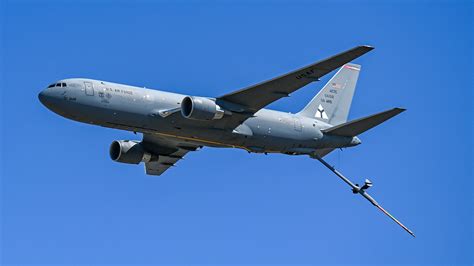
Aircraft such as the KC-135 Stratotanker and KC-46 Pegasus rarely dominate headlines, yet they are arguably among the most decisive military assets in existence. Without them, stealth fighters would struggle to maintain long-range combat patrols, bombers would require more forward bases, and expeditionary operations would slow dramatically.
Aerial refueling changes the geometry of warfare. Fighters carrying heavy bomb loads burn fuel rapidly, especially during low-altitude penetration or high-speed operations. Tankers allow those aircraft to remain airborne for hours longer, strike deeper targets, and return safely without sacrificing payload.
Equally important are ISR aircraft and airborne early warning systems like the E-3 Sentry. These aircraft provide commanders with an immense picture of the battlefield, tracking hostile aircraft, monitoring missile launches, and coordinating friendly assets across huge operational zones.
Without these enablers, even advanced fighters become partially blind.
Cargo aircraft complete the equation. C-17 Globemaster IIIs, C-130Js, and C-5M Super Galaxies transport precision munitions, spare engines, maintenance crews, and vital components needed to sustain combat operations. Modern wars are won through industrial endurance as much as tactical brilliance, and these aircraft make that endurance possible.
Russia’s difficulties in Ukraine highlighted the consequences of lacking this level of integrated support. Limited ISR capability, insufficient airborne coordination, and constrained logistics reduced the effectiveness of otherwise capable combat aircraft. In modern warfare, operational reach matters as much as airframe performance.
Why The F-35 Has Become The Most Influential Fighter Jet In Active Combat
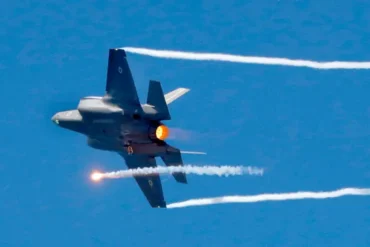
The F-35 Lightning II has evolved into the defining combat aircraft of the modern era not because it dominates dogfights, but because it reshapes the entire battlespace around it.
In conflicts involving advanced air defenses, the F-35 excels in suppression and destruction of enemy air defense systems. Its stealth characteristics, electronic warfare suite, and sensor fusion capabilities allow it to identify and neutralize radar systems that would threaten conventional aircraft.
During operations linked to escalating tensions with Iran between 2024 and 2026, the aircraft reportedly demonstrated extraordinary effectiveness against integrated air defense systems built around Russian-origin technology, including S-300 networks.
Unlike fourth-generation fighters, the F-35 does not merely hunt targets. It acts as a flying intelligence hub capable of detecting threats, sharing targeting data, and coordinating broader strike packages in real time.
Pilots often describe the aircraft’s sensor fusion as giving them a “god’s-eye view” of combat. Instead of managing disconnected radar feeds and warning systems, the aircraft combines battlefield information into a unified tactical picture. That advantage drastically reduces pilot workload while increasing situational awareness.
This capability becomes especially important in modern warfare where missile threats emerge from multiple directions simultaneously.
However, the F-35 is not invincible, nor is it optimized for every mission profile.
Its internal weapons capacity is relatively limited when maintaining stealth configuration. Compared to aircraft like the F-15E Strike Eagle, the F-35 cannot carry enormous quantities of bombs during high-intensity strike operations without sacrificing low observability.
That tradeoff reflects the aircraft’s intended role. The F-35 is designed to destroy high-value targets, open corridors through sophisticated air defenses, and survive in heavily contested airspace. It is not meant to endlessly dump unguided munitions across battlefields.
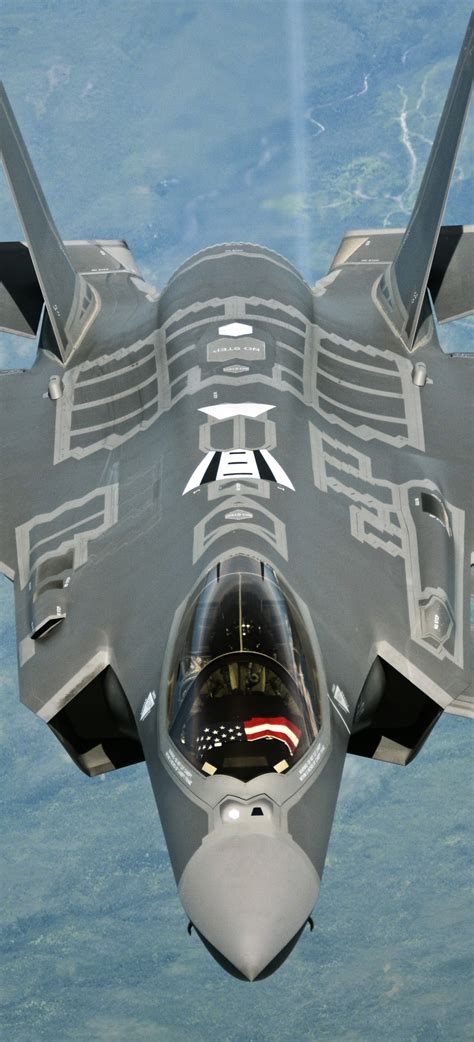
The aircraft’s vulnerabilities also remain real. Stealth reduces detection range; it does not make an aircraft invisible. If forced into low-altitude operations against line-of-sight missiles or MANPADS, the F-35 becomes more vulnerable. Reports surrounding an F-35 damaged during operations near Iran reinforced that even advanced stealth aircraft face danger when operating close to hostile defenses.
Still, few aircraft have influenced strategic planning worldwide as profoundly as the F-35. Nations across Europe, Asia, and the Middle East increasingly see it not simply as a fighter, but as the foundation of future network-centric warfare.
Strategic Bombers Returned To Relevance In 2026
For years, strategic bombers seemed like relics of Cold War doctrine. Then global conflicts intensified, and suddenly heavy bombers returned to center stage.
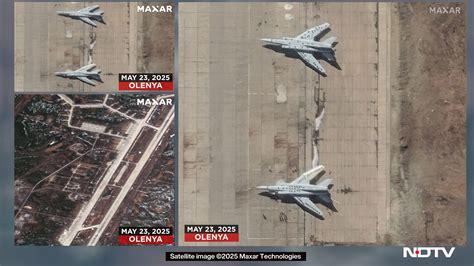
Russia relied heavily on Tu-95 Bear and Tu-22M bombers throughout the Ukraine conflict, launching stand-off cruise missile strikes from relative safety. Yet these operations exposed major limitations. Because Russia failed to establish full air superiority, its bombers could not safely penetrate Ukrainian airspace in large numbers.
Instead, they depended on expensive long-range missiles such as the Kh-101 and Kh-22. These weapons inflicted damage but imposed enormous logistical and financial costs while limiting sortie flexibility.
American bomber operations in 2026 painted a radically different picture.
After securing air superiority during strikes against Iran, the United States deployed B-52 Stratofortresses, B-1B Lancers, and B-2 Spirits with remarkable intensity. Once hostile air defenses weakened, non-stealth bombers carrying vast payloads entered the fight and unleashed enormous quantities of precision-guided munitions.
The difference was devastating.
American bombers could employ cheaper JDAMs, bunker-busting GBU-28s, BLU-109 penetrators, and even massive GBU-57 bunker destroyers rather than relying exclusively on expensive stand-off missiles.
That shift fundamentally changes operational tempo. Air campaigns become sustainable at higher intensity when forces can use abundant gravity bombs instead of limited cruise missile inventories.
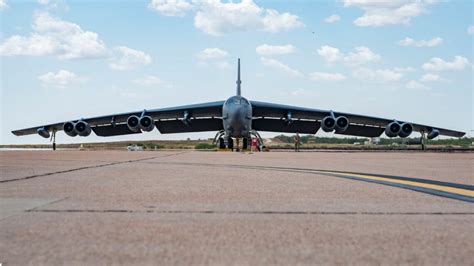
The B-2 Spirit proved particularly significant due to its ability to penetrate defended airspace and strike hardened facilities deep underground. Meanwhile, the B-1B Lancer demonstrated how sheer payload capacity still matters enormously in modern warfare.
Strategic bombers are decisive because they combine endurance, psychological pressure, and massed precision firepower. Once air superiority exists, few military assets can generate destruction on the same scale.
The wars of the 2020s revived an old lesson from World War II and the Gulf War alike: after enemy defenses collapse, bombers become instruments of overwhelming strategic coercion.
Why The F-16 And Su-35 Continue To Dominate The Ukraine Air War
Despite endless headlines surrounding fifth-generation fighters, the air war over Ukraine remains largely defined by upgraded fourth-generation aircraft.
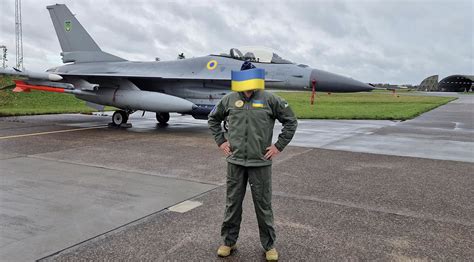
Ukraine’s F-16 Fighting Falcons and Russia’s Su-30/34/35 Flanker family have become the true workhorses of the conflict. Both sides entered the war with aging Soviet-era fleets, but years of attrition steadily reduced the effectiveness of older MiG-29s, Su-24s, and Su-25s.
The introduction of Western-supplied F-16s significantly altered the tactical environment.
Although available in relatively limited numbers, the aircraft improved Ukraine’s ability to conduct air defense missions, intercept cruise missiles, and challenge Russian aviation more aggressively. Even the psychological effect mattered. Russian pilots suddenly faced greater risk when approaching contested sectors.
Still, the F-16 has not achieved air superiority.
Russia’s Su-35S and Su-34 aircraft remain highly active across the front, conducting glide-bomb strikes and maintaining pressure on Ukrainian positions. The Flanker family continues to serve as Russia’s frontline aviation backbone because of its range, payload, and adaptability.
Interestingly, Russia’s Su-57 stealth fighter has failed to significantly influence the conflict despite years of promotion. The aircraft exists in limited numbers, and Moscow appears reluctant to risk major losses that could damage its export ambitions and prestige.
This hesitation reveals another reality of modern warfare: aircraft become strategically irrelevant if commanders are unwilling to use them aggressively.
Ukraine also demonstrated that modern air wars are increasingly shaped by air defense systems as much as aircraft themselves. Dense missile coverage forces both sides into cautious operating patterns, limiting opportunities for classic dogfighting and deep penetration missions.
As a result, neither Russia nor Ukraine achieved decisive control of the skies. Instead, the air war evolved into a grinding contest of attrition where survivability and standoff weapons matter more than dramatic aerial duels.
Combat Drones Changed Smaller Wars Forever
While stealth fighters dominate discussions among major powers, drones have become some of the most decisive air weapons in smaller regional conflicts.
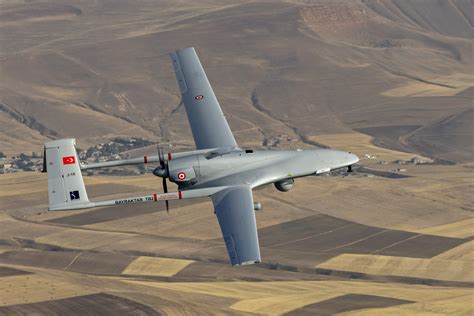
The transformation became impossible to ignore during the 2020 Nagorno-Karabakh war between Armenia and Azerbaijan. Turkish Bayraktar TB2 drones devastated Armenian armored formations and air defenses, fundamentally reshaping global perceptions of drone warfare.
Since then, combat drones proliferated across conflicts in Libya, Sudan, Ethiopia, Mali, and Myanmar.
Their appeal is obvious.
Compared to advanced fighter jets, drones are cheaper, easier to replace, and politically less risky. Losing a drone does not mean losing a pilot, which lowers the threshold for aggressive operations.
Countries with limited budgets increasingly view drones as practical substitutes for conventional air forces.
Chinese Wing Loong drones and Turkish TB2 systems became particularly influential because they offered relatively affordable strike capability combined with surveillance and targeting functions. In conflicts where opponents lacked sophisticated air defense systems, drones often operated with near impunity.
Yet drone warfare also revealed clear limitations.
In environments protected by functioning radar networks and layered missile defenses, medium-altitude drones become highly vulnerable. Ukraine demonstrated this repeatedly as both Russian and Ukrainian air defenses destroyed large numbers of drones once their operating patterns became predictable.
This dynamic explains why drones dominate low-intensity conflicts but struggle in peer-level wars.
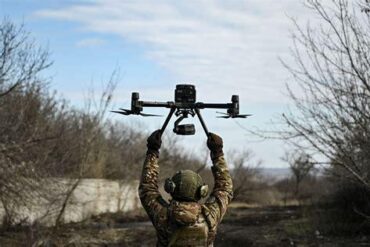
Nevertheless, the broader trend remains unmistakable. Militaries increasingly rely on unmanned systems for reconnaissance, strike coordination, kamikaze attacks, and electronic warfare. FPV drones and one-way attack drones now influence tactical engagements daily across modern battlefields.
Future wars will almost certainly feature swarms of collaborative unmanned aircraft operating alongside manned fighters and bombers.
Air Superiority Still Decides Everything
Modern conflicts repeatedly prove that air superiority remains the foundation of successful military operations.
When the United States secured control of the skies during operations against Iran, it unleashed the full weight of conventional bombing power. Non-stealth aircraft operated freely. Bombers attacked continuously. Logistics flowed uninterrupted.
Russia’s experience in Ukraine has been the opposite.
Because Ukrainian air defenses survived the initial invasion, Russian aviation never achieved unrestricted access to the battlespace. That failure forced Russian aircraft into stand-off tactics, reduced sortie effectiveness, and limited operational flexibility for years.
This distinction matters enormously.
Without air superiority, even advanced aircraft become constrained. Missions require greater caution, missile expenditures rise sharply, and operational tempo slows. Air superiority is not glamorous compared to stealth technology or hypersonic missiles, but it remains the single most important condition for effective air warfare.
That is precisely why future American doctrine centers around destroying enemy defenses quickly through stealth aircraft, ISR networks, electronic warfare, and long-range precision strikes.
The next generation of aircraft reflects this reality.
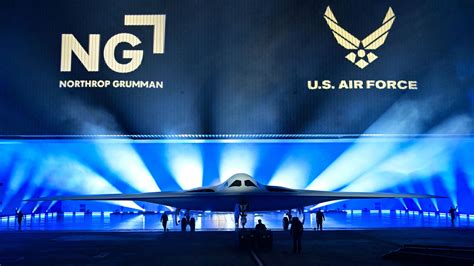
The B-21 Raider bomber is specifically designed for penetrating heavily defended airspace against peer adversaries. The upcoming F-47 and Collaborative Combat Aircraft programs aim to create interconnected systems where manned and unmanned aircraft fight together in coordinated formations.
The age of isolated fighter aces is fading. Modern air warfare increasingly revolves around information dominance, survivability, precision targeting, and integrated combat networks.
The aircraft proving decisive today are not necessarily those with the most dramatic specifications on paper. They are the aircraft capable of surviving complex air defense environments, coordinating enormous volumes of data, sustaining operations across continents, and enabling entire military ecosystems to function under pressure.
That reality explains why tankers, ISR aircraft, stealth fighters, bombers, drones, and networked combat systems together now define victory in modern war.