The modern luxury hotel landscape is shaped as much by loyalty economics as by architecture, service culture, or destination appeal. Points, elite tiers, and aspirational redemptions have become a parallel currency that quietly but decisively influences how certain hotels price themselves, how they operate, and how they treat guests. While many luxury hotels deliver exceptional value and experiences regardless of how a guest pays, a growing subset exists in a more ambiguous space—properties whose perceived luxury is propped up less by intrinsic excellence and more by the gravitational pull of points.
At first glance, these hotels appear indistinguishable from genuine icons. They sit under prestigious brand flags, command headline-grabbing nightly rates, and feature prominently in aspirational marketing. Yet beneath the surface, the experience often fails to justify the cash price being asked. The disconnect between rate and reality is not accidental; it is structural, intentional, and enabled by loyalty programs that guarantee demand even when the product underdelivers.
Understanding this category matters because it reshapes expectations. It explains why a hotel charging $2,000 per night can feel strangely ordinary, why service recovery feels perfunctory, and why design shortcuts go uncorrected year after year. These are not isolated disappointments but symptoms of a broader phenomenon—what can accurately be described as luxury hotel points farms.
By examining how loyalty programs function as economic crutches, how points-driven demand distorts pricing logic, and how truly great hotels differentiate themselves without relying on this mechanism, a clearer picture emerges. This is not an argument against redeeming points or enjoying aspirational stays. It is an argument for honesty—about what some luxury hotels really are, and why they exist in their current form.
Loyalty Programs as the Hidden Engine of Modern Luxury Hotels
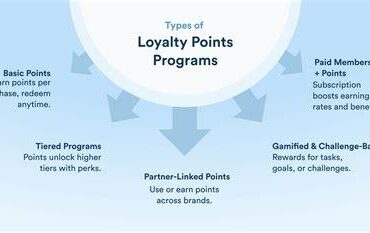
Loyalty programs are among the most powerful commercial innovations in the travel industry. Originally conceived as retention tools, they have evolved into vast ecosystems that generate billions in revenue, influence consumer behavior, and anchor entire corporate strategies. For major hotel groups, the loyalty program is no longer ancillary to the business; it is the business.
This shift has profound implications for how hotels compete. Independent luxury operators like Four Seasons or Auberge Resorts must earn each stay on merit alone. Without points or elite perks to fall back on, they are compelled to justify their pricing through consistently high service standards, thoughtful design, and genuine hospitality. A single poor experience risks losing a customer indefinitely, which is why service recovery at such brands is often swift, generous, and sincere.
By contrast, many chain-affiliated luxury hotels operate with a built-in safety net. They benefit from a captive audience of loyalty members who are emotionally and financially invested in a points ecosystem. These guests are not merely choosing a hotel; they are advancing toward elite requalification, maximizing redemption value, or chasing intangible perks that feel too costly to abandon. This dynamic fundamentally alters the balance of power between hotel and guest.
As a result, some properties grow comfortable charging premium rates without delivering commensurate value. Brand standards become flexible, service inconsistencies are tolerated, and guest dissatisfaction is absorbed rather than addressed. The loyalty program ensures repeat business, even when the experience itself would struggle to compete in a neutral market.
This environment is fertile ground for points farms to flourish.
Defining the Luxury Hotel Points Farm
A luxury hotel points farm is not defined by its brand affiliation, star rating, or even its aesthetics. It is defined by economics. These are hotels whose published cash rates bear little resemblance to what the majority of guests are effectively paying, and whose business models are calibrated around a high volume of points redemptions.
At such properties, points guests often represent a substantial portion of occupancy. This allows the hotel to inflate headline rates because it only needs to sell a fraction of rooms at those prices to maintain an elevated average daily rate. The rest of the inventory is quietly absorbed by loyalty redemptions, elite upgrades, and opaque corporate arrangements.
The result is a distorted pricing environment. Cash-paying guests are exposed to rates that would be untenable without the loyalty-driven demand underpinning them. Meanwhile, the service level is calibrated not to the advertised price, but to the blended reality of what the hotel actually earns per room.
This explains why service lapses at points farms often feel jarring. When something goes wrong, the response is frequently minimal—token gestures rather than meaningful recovery. The hotel does not need to overcorrect because it does not need to persuade the guest to return. The loyalty program has already done that work.
When Price Becomes Theoretical Rather Than Reflective
One of the most revealing characteristics of a points farm is how detached its pricing becomes from local market realities. In competitive destinations, independent luxury hotels must align rates with what discerning travelers are willing to pay. If the experience falters, the market corrects quickly.
Points farms operate differently. Their rates function less as prices and more as reference numbers used to calculate points value, reimbursement formulas, and perceived aspirational worth. The actual cash-paying guest becomes almost incidental.
This creates situations where a mass-market resort with generic design and uneven service charges multiples of what nearby independent hotels ask—despite offering no clear advantage in location, ambiance, or craftsmanship. Guests paying cash are effectively subsidizing the points ecosystem, while points guests are conditioned to view the redemption as extraordinary value.
The irony is that both groups are being misled. Cash guests are overpaying relative to the experience, while points guests are measuring value against an inflated benchmark rather than against genuine market alternatives.
A Case Study in Distorted Luxury Expectations
Few examples illustrate the points farm dynamic more clearly than certain ultra-premium resort destinations in peak season. At these properties, nightly rates can exceed $2,000, creating the expectation of flawless execution. Yet the reality often falls short—rooms feel interchangeable, service feels transactional, and recovery efforts feel disproportionately small relative to the price.
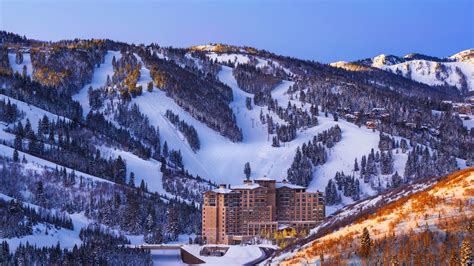
When a luxury hotel charging four-figure rates responds to serious room issues with a modest bottle of wine or a perfunctory apology, it reveals a deeper truth. The hotel is not calibrated to impress a $2,000-per-night guest because that guest is not the core customer. The core customer is the points redeemer, whose expectations are anchored to the narrative of value extraction rather than to absolute excellence.
Compare this with independent luxury properties in the same destination that charge significantly less while delivering superior design, warmer service, and stronger identity. These hotels cannot afford complacency. They compete in a real market, not a loyalty-protected one.
Why Points Farms Can Feel Soulless
Beyond service inconsistencies, points farms often share a subtler trait: a lack of soul. Design choices skew safe and brand-compliant rather than distinctive. Public spaces feel oversized but impersonal. Amenities are adequate rather than inspired.
This is not accidental. When demand is guaranteed by loyalty mechanics, investment priorities shift. Capital expenditures are optimized for scale and compliance, not for emotional resonance. The hotel does not need to become a destination in itself; it merely needs to remain bookable within the program.
Over time, this erodes character. What remains is a polished but hollow version of luxury—expensive, but not memorable.
The Elite Status Illusion and Irrational Cash Spending
A particularly powerful force sustaining points farms is elite status psychology. Many guests willingly pay inflated rates to maintain tier benefits that provide relatively modest tangible value. A complimentary breakfast, late checkout, or room upgrade becomes the justification for spending hundreds or thousands more per night than comparable alternatives.
This cycle reinforces itself. Guests convince themselves that the cost is offset by perks, while hotels learn that rates can continue rising without corresponding improvements. The loyalty program transforms rational travelers into captive consumers, locked into a hamster wheel of qualification and redemption.
Even seasoned travelers are not immune. The emotional satisfaction of maintaining status often outweighs objective assessments of value, allowing points farms to thrive even as service standards stagnate.
Not All Points Hotels Fall Into This Trap
It is crucial to distinguish points farms from genuinely excellent points-enabled luxury hotels. Some properties are popular because they are exceptional, not because they are bookable with points. At these hotels, cash-paying guests are plentiful, rates are high but defensible, and service standards reflect the price being asked.

Hotels like Park Hyatt Sydney or Park Hyatt Tokyo command loyalty not through points alone but through location, legacy, and execution. Guests pay willingly because the experience stands on its own merits. Points redemptions at such properties feel like opportunities, not distortions.
Similarly, certain historic or destination-defining hotels within large chains maintain integrity despite loyalty affiliation. Their identity predates the points ecosystem, and their management treats brand affiliation as a distribution channel rather than as a substitute for excellence.
The Gray Area: High Redemption Demand Without Complacency
Some hotels occupy a nuanced middle ground. They benefit enormously from points demand, yet still strive to deliver quality experiences. Their rates may be inflated due to redemption dynamics, but their service culture remains earnest.

Properties like Alila Ventana Big Sur exemplify this category. While pricing logic can appear disconnected from nearby competitors, the hotel’s effort, environment, and hospitality mitigate the distortion. Guests sense intention rather than indifference.
These hotels demonstrate that points-driven demand does not inevitably lead to complacency. It simply creates temptation. Whether a hotel resists that temptation depends on leadership, culture, and long-term vision.
How Reimbursement Mechanics Incentivize Rate Inflation
Behind the scenes, loyalty reimbursement formulas further encourage points farm behavior. When a hotel reaches high occupancy, award night reimbursements are often tied to the average daily rate of cash bookings. This creates a powerful incentive to push cash rates upward, even if only a minority of rooms are sold at those prices.
The higher the published rate, the higher the reimbursement for points stays. This mathematical feedback loop rewards theoretical pricing rather than real market alignment. Over time, it entrenches inflated rates that few would willingly pay without loyalty incentives.
Why Honesty Matters for Travelers
Recognizing points farms for what they are allows travelers to recalibrate expectations. A $2,000 sticker price at a points farm should not be interpreted as a promise of transcendent luxury. It is a reference number within a loyalty ecosystem, not a reflection of the hotel’s intrinsic worth.
For points redeemers, this understanding can prevent disappointment. For cash-paying guests, it can prevent costly misjudgments. Luxury is not defined by rate alone; it is defined by coherence between price, service, and experience.
The Real Divide in Luxury Hospitality
The most meaningful distinction in luxury hotels today is not between brands or continents, but between properties that would thrive without a loyalty program and those that would struggle to fill rooms at their published rates. The former invest in hospitality as a craft. The latter optimize hospitality as a function of points economics.
Neither category is inherently wrong. Points farms can offer excellent redemption value and memorable stays when expectations are aligned. Problems arise only when theoretical pricing is mistaken for genuine prestige.
Understanding this divide empowers travelers to choose wisely, appreciate great hotels for the right reasons, and engage with loyalty programs as tools rather than as illusions. In an era where luxury is increasingly abstracted into points and perks, honesty remains the most valuable currency of all.