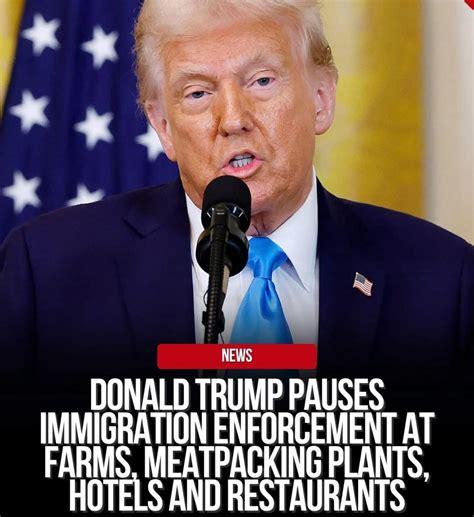
In a striking recalibration of its immigration enforcement strategy, the Trump administration has ordered a suspension of ICE arrest operations at farms, hotels, and restaurants. This decision arrives amid mounting pressure from influential sectors like agriculture and hospitality, which have raised the alarm over the disruption caused by aggressive immigration raids targeting undocumented workers. The move reveals a fundamental tension between the administration’s hardline immigration ideology and the economic dependency on immigrant labor that underpins several critical U.S. industries.
The pause in arrests represents not only a significant political compromise but also an acknowledgment of the practical limits of mass deportation strategies. President Trump, initially adamant about expanding ICE’s daily arrest targets from 650 to 3,000, is now facing the economic fallout of such an aggressive stance. As enforcement intensified, businesses reported losing key staff, sparking widespread concerns about labor shortages, operational continuity, and national food security.

Economic Pressures Force a Policy U-Turn
For weeks, the administration had authorized U.S. Immigration and Customs Enforcement to ramp up its workplace enforcement actions. Farms across California and the Midwest, food packaging plants in the Plains states, and hospitality hubs from New York to Nevada all reported intensified raids. Yet as arrests increased, so did the disruption to essential services.
In Nebraska, for instance, a food processing facility lost over 70 workers in a single ICE operation, forcing the plant to operate at just 30% of its capacity. Hotel operators, particularly in states like Florida and Arizona, reported losing long-term housekeeping staff and kitchen workers, severely hampering their ability to meet guest expectations during peak travel periods.
The tipping point came when industry associations, local leaders, and business owners launched coordinated efforts to reach Washington, urging the administration to reconsider its strategy. The consensus among these stakeholders was clear: the deportation of seasoned workers, many of whom had built lives and careers in the U.S., was not just unjust but economically devastating.
Farmers and Hotel Owners Bear the Brunt
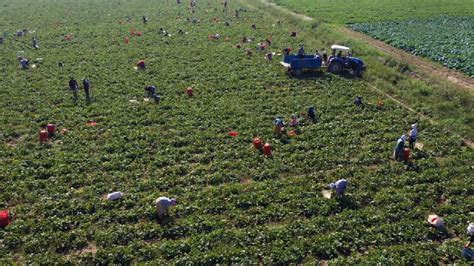
The agricultural industry has long been vulnerable to shifts in immigration policy. With U.S. citizens largely unwilling to take up strenuous, seasonal farm jobs, growers have for decades relied heavily on undocumented labor. ICE’s stepped-up enforcement targeted this exact workforce, often detaining workers during critical harvest periods and leaving produce to rot in fields.
Farm bureaus in California and Arizona reported that fear of detention was spreading across entire communities, with many workers choosing to stay home rather than risk arrest. In turn, farmers were forced to plow under unharvested crops or pay a premium for temporary labor, adding unsustainable pressure to already narrow profit margins.
The hospitality industry mirrored this narrative. Hotels, especially in resort towns and urban centers, depend on a largely immigrant workforce. From janitorial teams to food prep staff, many of these roles are filled by individuals who lack legal documentation but have performed their duties reliably for years. The sudden disappearance of these employees created chaos behind the scenes, with some hotels even being forced to reduce available rooms due to insufficient staff.
Ideology Meets Economic Reality
The Trump administration’s immigration policy has always leaned toward strict enforcement, aiming to curb undocumented migration and assert federal authority in the immigration space. However, the economic consequences of those policies have begun to take precedence, particularly in an election climate where job growth and economic resilience remain key talking points.
Administration insiders report that President Trump, after initially pushing for increased ICE operations, began to express concern over the political optics and practical fallout of the disruptions. Economic advisors and Department of Labor officials reportedly emphasized the risk of inflation in food prices and the decline in hospitality revenues linked directly to the enforcement surge.
This internal reassessment led to a directive halting ICE raids in certain “sensitive” employment sectors, such as agriculture, food processing, and hospitality. While not a full policy reversal, the pause reflects an implicit acknowledgment that economic priorities and ideological objectives are on a collision course.
Immigration Enforcement and Sanctuary Jurisdictions
Another layer complicating the enforcement landscape is the ongoing clash between federal immigration agencies and sanctuary cities. These jurisdictions have adopted policies that limit cooperation with ICE, refusing to detain individuals solely based on immigration status without a judicial warrant.
In response, the administration had shifted tactics, targeting workplaces and public spaces in sanctuary regions. The result was a dramatic escalation in fear and uncertainty within immigrant communities. But critics argue that the strategy did more to fracture trust between local and federal governments than it did to meaningfully advance enforcement goals.

Legal experts and civil rights organizations have warned that workplace raids violate labor protections and disrupt local economies. Instead of enhancing safety, they contend, these operations sow chaos and often ensnare individuals with deep community ties and no criminal records.
A Calculated Pause or Strategic Retreat?
The administration’s suspension of ICE enforcement at hotels and farms may be temporary, but it signals a more strategic recalibration. While the core objectives of restricting illegal immigration remain unchanged, the method and scope of enforcement appear to be evolving.
Some analysts argue this move is a tactical retreat designed to reduce backlash ahead of political milestones. Others believe it marks the beginning of a more pragmatic approach—one that takes into account the economic interconnectedness of undocumented labor and national industries.
Advocates for immigrants view the pause as an overdue recognition of the value undocumented workers bring to the economy, particularly in sectors where legal labor is in short supply. However, they remain wary, noting that pauses can easily become reversals under political pressure or in the absence of comprehensive reform.
Broader Implications for U.S. Immigration Policy
This episode underscores the need for a balanced, data-driven approach to immigration enforcement. The binary framing of “illegal” versus “legal” immigrants often ignores the economic infrastructure built on immigrant labor, both documented and otherwise.
The current pause highlights that enforcement-only strategies fail when they ignore industry realities. Instead of blanket crackdowns, experts recommend targeted reforms, such as expanded work visa programs, pathways to legal status for long-term undocumented workers, and partnerships with industry leaders to ensure compliance without compromising productivity.
While President Trump’s base continues to support tough immigration measures, this development illustrates that governance requires more than slogans—it demands solutions. The next phase of U.S. immigration policy will likely be shaped by how well lawmakers and federal agencies can reconcile enforcement with the economic imperatives of a labor-dependent market.
Conclusion: Immigration Policy Meets Economic Limits
The Trump administration’s decision to pause ICE raids at hotels, farms, and restaurants marks a pivotal moment in the nation’s ongoing immigration saga. It reveals the complexities of enforcing immigration laws in a country where critical industries depend on undocumented labor to function.
This move serves as a rare instance where economic pragmatism overrules ideological rigidity, at least temporarily. Whether it is a calculated political maneuver or the beginning of a more adaptive enforcement framework remains to be seen. What is clear, however, is that America’s labor ecosystem is deeply entwined with its immigration reality—and navigating this interdependence will require far more than arrests and raids.
As policymakers, business leaders, and immigrant advocates look to the future, the question is not whether immigration enforcement is necessary—but how it can be implemented in a way that protects national interests without crippling the industries that feed, house, and serve the nation.