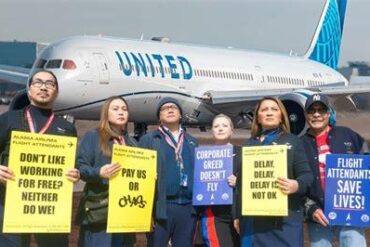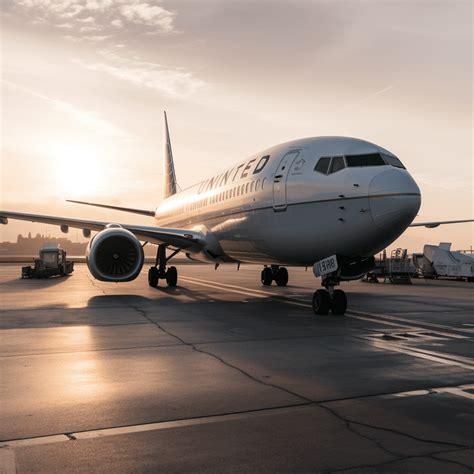
As contract negotiations between United Airlines and its unionized maintenance workforce continue to stagnate, a growing divide has emerged not only between the company and the International Brotherhood of Teamsters, but also within United’s own leadership structure. Despite public assertions of “bargaining in good faith,” United faces intense scrutiny from employees, aviation observers, and union leaders who question the sincerity and direction of its proposals.
The most recent negotiation round, scheduled in Houston, saw United’s representatives present and prepared, while Teamsters negotiators were notably absent, reportedly refusing to attend after declining to issue a counteroffer to United’s initial economic proposal made in early February. This development highlights deeper frustrations over what many technicians perceive as a strategy of delay and deflection.
United’s Initial Offer: Industry-Leading or Insufficient?
United’s public statement characterizes its proposal as an industry leader — boosting pay tables across the board without altering existing restrictions on heavy maintenance. The offer was framed as a generous opening bid, meant to signal commitment to crafting a competitive and equitable deal. However, inside the maintenance hangars and break rooms, technicians view the proposal differently. Many described the offer as a “slap in the face,” given its omission of key quality-of-life protections such as pensions, paid time off, and accelerated wage top-out schedules.
Employees voiced concern that real economic security, not just surface-level wage hikes, is being left off the table. Pension protections, once a cornerstone of long-term planning for aviation mechanics, remain ambiguous in the current deal. A recurring sentiment among the workforce is that a faster top-out — ideally within five to six years — would be a welcome concession, even in exchange for slightly lower base pay, provided other core benefits remain untouched.
Union Strategy: Delay or Tactical Refusal?
From the Teamsters’ perspective, refusing to submit a counteroffer and instead suggesting that the membership vote directly on United’s initial proposal could be viewed as a bold strategic move. By choosing not to engage in tit-for-tat haggling, union leaders may be trying to gauge the strength of support among workers for the current offer, using a vote as a kind of informal temperature check.
This approach is highly unusual in standard contract bargaining procedures, and it has predictably slowed down the negotiation timeline. Yet, this slowdown may not be a mistake. Union leaders could be applying pressure on United through stall tactics under the framework of the Railway Labor Act (RLA) — a law that governs airline labor relations but makes it difficult for workers to strike. By dragging out talks and rejecting insufficient offers, workers could gain leverage over time as annual industry-wide wage resets put upward pressure on pay.

Leadership Turmoil: The Maria Deacon Factor
Adding to the complexity is the recent and significant departure of Maria Deacon, United’s former VP of Technical Operations. Sources close to the matter confirm that she was dismissed shortly after the failure of a tentative agreement, with multiple insiders attributing her exit to the company’s hardline negotiating stance under her watch. Deacon had earned a reputation as strongly anti-labor, and her fingerprints were said to be all over contentious items in the original offer — including a proposed reduction in A&P-certified technicians and limiting field service personnel.
With her departure, there is speculation that United may soften its negotiating posture, particularly if her approach was internally blamed for derailing talks. Her removal suggests dissent within United’s executive ranks and possibly a pivot in tone, but that remains to be seen as negotiations resume.
The Stakes: Offshoring, Field Work, and Long-Term Pressure
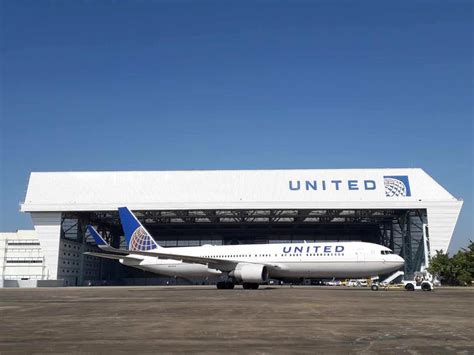
Beyond wages and pensions, mechanics are growing increasingly concerned about offshoring of heavy maintenance checks and the long-term erosion of U.S.-based technical labor. Reports that United is outsourcing critical aircraft servicing to foreign MROs (Maintenance, Repair, and Overhaul providers), particularly in Asia, are viewed as betrayal by workers who see themselves as the backbone of flight safety.
Union members have pointed out that offshoring may pose not just economic risks but safety and quality assurance challenges. Many are playing the long game, expecting that poor-quality offshore work will eventually circle back during C checks, where unionized American workers can demonstrate superior craftsmanship and safety adherence. This belief is powering a growing sentiment: “Hold the line, vote no, and wait them out.”
Mediation Looms: A Double-Edged Sword
As March negotiations shift to Denver, many believe that unless significant progress is made, the talks could soon move into formal mediation under the RLA. Mediation is a lengthy process with uncertain outcomes, and while it could eventually impose a deal or force arbitration, it also delays final resolution. Union members are divided on whether this route is advantageous. On one hand, it buys time and keeps pressure on United. On the other, it could result in a compromise that leaves both sides dissatisfied.
Still, there is strategic logic in the delay. By rejecting multiple offers and dragging out the timeline, union negotiators aim to extract yearly wage resets that align them with contracts signed by rivals like American Airlines and Delta. There’s strong suspicion among United mechanics that these competitors coordinated with United’s leadership, especially CEO Scott Kirby, to set their own contracts to begin after United’s pay scale reset window.
Workers’ Resolve: The Grassroots Rebellion
Perhaps the most important development in this entire saga is the resilience and unity of United’s TechOps workforce. Despite the frustration, they are communicating through forums, private channels, and peer networks to stay informed, mobilized, and ready. Many have publicly stated that no deal — even one close to industry standards — should be accepted if it involves concessions on pensions, benefits, or safety standards.
This is no longer a standard labor negotiation — it’s a movement. Workers understand the long-term implications of these negotiations not only for themselves but for the future of aviation maintenance as a skilled, respected, and domestic profession. They believe their message is clear: no concessions, no shortcuts, and no tolerance for optics-driven PR campaigns.
Conclusion: A Contract That Defines the Future
The current standoff between United Airlines and its maintenance union isn’t just about economics. It reflects broader tensions over corporate strategy, worker dignity, and the soul of American aviation labor. With leadership in flux, union solidarity solidifying, and public pressure mounting, the next few rounds of negotiation — especially those scheduled in Denver — will be critical.
If United is serious about reaching an agreement its employees can support, it will need to offer more than increased pay. It must address core concerns around pensions, workload fairness, and job security, while demonstrating a willingness to re-center its technical workforce as a strategic asset, not a cost burden.
Anything less risks triggering a new era of labor unrest at one of America’s largest carriers — and with it, an erosion of trust that no amount of industry-leading pay tables can restore.