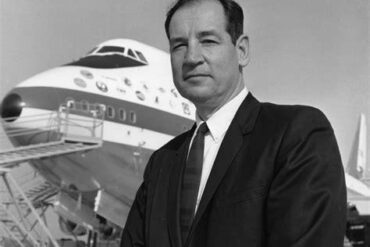
In a strategic move set to shape the future of labor relations in the U.S. aviation industry, Alaska Airlines has appointed Joe Wonderly as Vice President of Labor Relations, positioning him at the core of the airline’s integration with Hawaiian Airlines. This leadership change, announced on July 1, 2025, comes at a pivotal time when two major U.S. carriers are navigating the complex terrain of workforce unification, union negotiations, and cultural alignment.
Wonderly’s new role places him in charge of labor relations across both airlines, overseeing negotiations and agreements with five powerful unions that represent 85% of Alaska Airlines’ workforce. These unions span pilots, flight attendants, mechanics, and customer service staff—critical personnel whose contracts and workplace environments will define how smoothly the integration unfolds.
Strategic Labor Alignment in a Merger Environment
The decision to elevate Wonderly to this executive position reflects Alaska Airlines’ deep commitment to labor transparency and employee-first values. His primary responsibility involves guiding the collective bargaining process, working directly with union representatives from both legacy carriers to establish equitable and unified contracts. As Alaska inches closer to becoming a global carrier, its labor strategy must not only unify operational functions but also honor the legacies and legal agreements of both airlines.
Wonderly’s leadership is not merely operational—it’s philosophical. According to Chief Operating Officer Constance von Muehlen, “Joe’s thoughtful approach to labor relations aligns with Alaska’s longstanding philosophy: that strong, respectful relationships with labor partners are essential to delivering a safe, caring, and reliable experience for both our people and our guests.” This sentiment reveals that labor peace and collaboration are not just HR goals—they’re tied to the airline’s brand promise and customer experience.
Joe Wonderly’s Legal Expertise and Industry Experience
Wonderly brings over a decade of experience in labor and employment law, making him uniquely qualified to steward Alaska Airlines through the intricate legal and logistical aspects of union integration. His tenure at Alaska Airlines began in 2019, where he served as Senior Corporate Counsel, advising both Alaska and its regional subsidiary, Horizon Air, on employment law, negotiations, and contract interpretation.
Before that, Wonderly was a partner at Seyfarth Shaw LLP in Seattle, a major law firm where he advised corporate clients on collective bargaining, arbitration, and union campaign strategy. His academic credentials include a Juris Doctor from Boston University School of Law and a Bachelor’s in History from Seattle University, adding both legal rigor and a contextual understanding of labor history to his qualifications.
Union Dynamics: A Multi-Union Challenge with High Stakes
The Alaska-Hawaiian merger represents a labor relations challenge of national scale. Integrating workforces means aligning pay scales, work rules, scheduling protocols, and safety policies—all while maintaining operations and minimizing disruption to travelers. Wonderly’s task is to lead negotiations with:
- The Air Line Pilots Association (ALPA)
- The Association of Flight Attendants (AFA-CWA)
- The International Association of Machinists and Aerospace Workers (IAM)
- The Transport Workers Union (TWU)
- The International Brotherhood of Teamsters (IBT)
Each union brings its own bargaining history and contractual nuances. The complexity intensifies because Hawaiian Airlines employees are covered under separate agreements, with different arbitration precedents and company cultures. Ensuring that employees feel heard, protected, and valued in this transition will be critical to the long-term success of the merger.
Integrating Talent: Allen Thieman to Lead Inflight Operations
Coinciding with Wonderly’s appointment, Allen Thieman has been named Vice President of Inflight, tasked with overseeing nearly 10,000 flight attendants from both Alaska and Hawaiian. Upon the achievement of a Single Operating Certificate (SOC), which will officially unite the airlines under one operating structure, Thieman will be responsible for ensuring service quality, safety, and workforce coordination among cabin crews.
Thieman’s resume includes over 20 years in inflight operations, from frontline roles to executive oversight. He previously led inflight crew scheduling for Alaska Airlines in California and served in a key leadership position for Hawaiian Airlines’ Crew Scheduling Team in Honolulu. His academic background includes a B.S. in Aviation Business Administration from Embry-Riddle and a M.S. in Management from the University of Central Florida.

According to von Muehlen, “Allen is a career long inflight professional and has been instrumental in our ongoing integration with Hawaiian Airlines. He consistently embodies the mindset of ‘See it. Own it. Change it.’ and is a trusted leader among his peers.”
From Merger to Transformation: A Workforce-Centric Vision
The Alaska-Hawaiian merger is not just about expanding route networks or consolidating assets. It’s about transforming into a globally competitive airline—one where the human capital is as optimized as the aircraft fleet. Wonderly and Thieman’s appointments signal that Alaska Airlines is placing workforce alignment at the heart of its transformation strategy.
Rather than imposing top-down mandates, the leadership team appears focused on collaborative decision-making, mutual respect, and preserving the identities of both brands while forming a new unified culture. That requires constant communication, data-driven contract forecasting, dispute resolution mechanisms, and employee morale programs.
Cultural Sensitivity and Pacific Islander Representation
One underreported but critically important factor in this integration is the cultural dimension. Hawaiian Airlines has a workforce deeply embedded in Pacific Islander heritage and values, and Alaska Airlines has stated publicly that it will honor those traditions and include them in its broader corporate ethos. Wonderly’s background in crafting culturally sensitive labor policies may be tested as he navigates this cross-regional complexity.
Maintaining cultural integrity while streamlining operations will require careful stewardship—not only in written contracts but in day-to-day working relationships, training programs, and internal communication. Thieman’s previous experience working in Honolulu is expected to help bridge that cultural divide within inflight services.
Looking Ahead: Single Operating Certificate and Future Milestones
The next major milestone in this integration will be the formal attainment of a Single Operating Certificate from the FAA, projected for late 2025 or early 2026. Achieving SOC means the two airlines will be regulated as a single entity, enabling route coordination, crew scheduling, and aircraft interchangeability under one operational umbrella.
Until then, both Wonderly and Thieman will play indispensable roles in shaping not only logistics but also the emotional and psychological experience of employees navigating change. Their success will be judged not just by cost savings or efficiency metrics, but by how well employees from both companies feel represented, respected, and excited to work in the new organization.
Conclusion: A Model for Modern Airline Integration
In an industry where mergers can easily turn turbulent, Alaska Airlines is making a clear investment in thoughtful leadership and workforce harmony. With Joe Wonderly leading labor relations and Allen Thieman managing inflight services, the airline has positioned itself to not only execute a successful merger with Hawaiian Airlines, but to set a new benchmark for how people-focused integrations should be conducted in aviation.
The coming months will test this approach through negotiations, certification processes, and daily operational alignment. Yet, with seasoned leaders at the helm, Alaska Airlines is signaling to unions, employees, regulators, and passengers alike that it’s not just building a bigger airline—it’s building a better one.