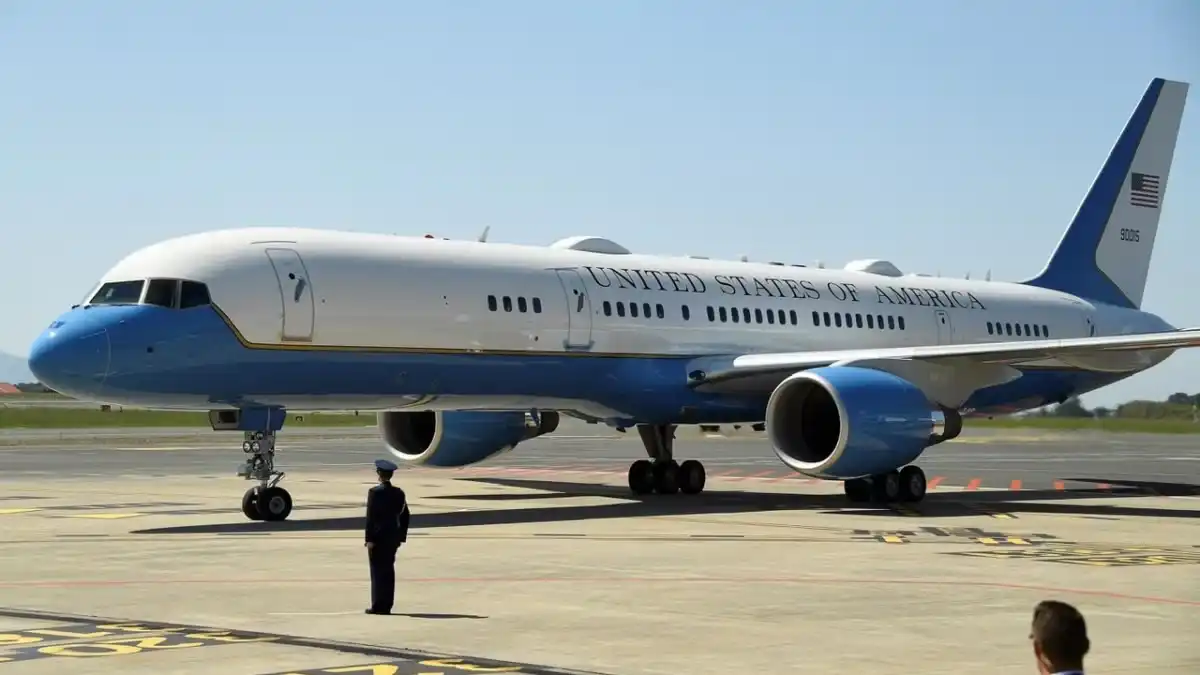
The aircraft that carries the Vice President of the United States, known as Air Force Two, is often viewed through the lens of symbolism, prestige, and continuity of command. Yet beneath that polished exterior lies a structural aviation dilemma that has quietly grown more serious with each passing year. The backbone of this mission is the Boeing 757-based C-32A, a platform originally designed for commercial efficiency but repurposed into one of the most specialized executive transports in the world. While it continues to perform reliably in service, the deeper truth is that its unique capabilities are becoming increasingly irreplaceable in ways that no modern aircraft design has successfully matched.
The Boeing 757 was never just another narrowbody jet. It was engineered with a rare combination of high-thrust engines, long, efficient wings, and a lightweight but robust airframe, allowing it to outperform aircraft of similar size classes in both range and field performance. This balance gave it a reputation for being “overpowered,” capable of operating in environments that challenge newer, more efficient designs. Even today, its ability to combine transcontinental range with strong short-field performance places it in a category of its own, particularly when modified for military VIP transport missions that demand flexibility under unpredictable conditions.
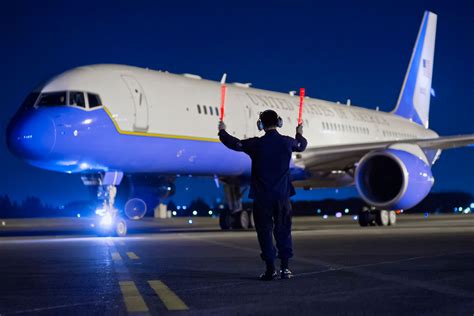
When the United States Air Force adapted the platform into the C-32A configuration, it transformed a commercial airliner into a hardened, strategic mobility asset. This aircraft became responsible for transporting the Vice President, senior officials, and sensitive government delegations across the globe. Its role extends far beyond comfort or logistics; it functions as a flying command and communications hub, equipped with secure systems, defensive modifications, and classified communications infrastructure. The selection of the 757 platform was not accidental—it was the result of an engineering sweet spot that balanced payload, range, and operational versatility in a way few aircraft have ever achieved.
At the core of the growing concern is what can best be described as a critical capability gap. This gap does not refer to a single missing feature but rather the absence of any modern aircraft that can replicate the full operational envelope of the 757 in its militarized form. The aircraft can operate from relatively short or constrained runways, carry heavy mission equipment, and still achieve intercontinental range without refueling. Modern replacements tend to excel in only one or two of these categories, but none achieve the complete trifecta that the 757 inadvertently mastered decades ago.
This imbalance becomes especially visible when examining global airport infrastructure. The Vice President’s travel itinerary often includes secondary airports, forward operating bases, and diplomatically strategic but spatially limited airfields. These locations may lack the runway length or support infrastructure required by modern widebody aircraft. While newer jets prioritize fuel efficiency and passenger capacity, they often sacrifice the raw thrust-to-weight flexibility that allows the 757 to perform reliably in restricted environments. That operational flexibility is not just convenient—it is mission-critical for unpredictable diplomatic and security scenarios.
Another dimension of the capability gap lies in range combined with payload endurance. The C-32A can travel approximately 5,500 nautical miles while carrying substantial communications suites, defensive systems, and personnel configurations tailored for executive missions. Modern narrowbodies such as upgraded 737 variants struggle to replicate this performance when fully loaded with mission-critical equipment. Meanwhile, larger widebody aircraft can match or exceed the range requirement but are structurally incompatible with the smaller, more austere airfields frequently required for rapid political mobility and contingency operations.
Compounding this issue is the age of the fleet itself. The Boeing 757 production line was permanently shut down in 2004, leaving no direct successor in Boeing’s portfolio. As a result, the Air Force has been forced to maintain and upgrade airframes that are now decades old. These aircraft undergo intensive maintenance cycles, including deep structural inspections, corrosion control, and avionics upgrades to sustain operational readiness. Despite this, the increasing frequency of wear-related issues highlights the long-term unsustainability of relying on aging airframes for such a critical national security function.
The broader aerospace industry has also drifted away from the design philosophy that made the 757 unique. In its place, manufacturers have prioritized either highly efficient narrowbodies or long-range widebody jets, leaving a “middle-of-the-market” void that has proven difficult to fill. Boeing’s attempt to revisit this segment through the conceptual New Midsize Airplane (NMA) program highlighted the demand for a 757-like successor, but the project was ultimately delayed and deprioritized as the company faced multiple concurrent engineering and certification challenges across its major programs.
Meanwhile, Airbus has effectively capitalized on this gap with aircraft such as the A321XLR, which delivers impressive range and fuel efficiency within a narrowbody frame. However, despite its commercial success, it cannot fulfill the specific requirements of U.S. executive transport. Not only does it lack the same thrust-to-weight characteristics needed for extreme short-field operations under heavy load, but geopolitical and defense-industrial restrictions make it unsuitable for integration into the U.S. military’s most sensitive aviation platforms. The executive fleet is as much about sovereignty and industrial independence as it is about performance.
The Boeing 737 MAX family, often considered a potential alternative, also falls short in this specialized role. Although modern variants offer improved efficiency and extended range compared to older 737 generations, the airframe’s inherent design limitations constrain its adaptability. The low ground clearance restricts engine size, which in turn limits the aircraft’s ability to achieve the same combination of high payload and short runway performance that defines the 757’s operational advantage. When fully outfitted with mission systems, these limitations become even more pronounced.
Attempts to resolve this long-term gap through future programs such as a revived NMA or 797-class aircraft remain uncertain. While conceptual designs suggest a hybrid approach—combining narrowbody economics with widebody comfort and efficiency—the timeline for such an aircraft remains distant. Even optimistic projections place meaningful entry into service well into the 2030s, leaving a significant interim period where the Air Force must continue relying on legacy 757 platforms or fragmented replacement strategies involving multiple aircraft types.
This fragmentation introduces strategic complexity. Instead of a single aircraft capable of handling the full spectrum of missions, the future may involve a dual-asset system, where medium-range missions are handled by modified narrowbodies while long-range or high-risk operations depend on larger, less flexible widebody aircraft. Such an approach reduces operational simplicity and increases logistical dependency, particularly in time-sensitive diplomatic or crisis-response scenarios where rapid deployment flexibility is essential.
Ultimately, the Boeing 757’s enduring role in the Vice President’s fleet highlights a deeper truth about aviation procurement: technological progress does not always replace older designs when those designs occupy a uniquely optimized niche. The capability gap in Air Force Two’s aircraft is not simply a matter of aging equipment—it is a structural absence in modern aerospace design philosophy. Until a true successor emerges, the United States will continue relying on an aircraft whose origins lie in a different era of engineering, yet whose performance remains unmatched in precisely the ways that matter most for executive global mobility.