The Pentagon is showing clear signs of reversing its controversial decision to cancel the Boeing E-7 Wedgetail programme after the recent Iran conflict demonstrated how indispensable airborne early warning and battle management aircraft remain in modern warfare. What had previously been framed as a transition toward space-based intelligence and surveillance systems is now colliding with operational reality, as the US Air Force faces shrinking airborne radar capacity at precisely the moment regional conflicts are becoming more drone-saturated, missile-heavy and operationally complex.
For much of 2025, the Air Force argued that the E-7 was an expensive interim platform destined to become obsolete once next-generation satellite constellations matured. Officials promoted a future dominated by distributed space-based ISR architecture capable of tracking airborne threats globally without risking vulnerable crews near hostile airspace. The logic appeared compelling on paper. In practice, the Iran conflict exposed how far that vision remains from operational readiness.
According to multiple defence reports and congressional testimony, the Department of Defense is now seeking to restore E-7 funding in the Fiscal Year 2027 budget after previously attempting to terminate the programme. The shift marks one of the most dramatic procurement reversals in recent Air Force planning and reflects mounting concern that the United States is approaching a dangerous airborne surveillance shortfall.
The catalyst appears to have been the recent air campaign surrounding Iran, where airborne warning aircraft played a central role coordinating coalition air operations across crowded Gulf airspace. The conflict highlighted the importance of persistent radar coverage capable of tracking low-flying drones, cruise missiles and fast-moving aircraft simultaneously while also managing real-time command and control responsibilities.
After years of discussion about replacing flying radar aircraft with satellites, the Pentagon has now been reminded of an uncomfortable reality: satellites still cannot replicate everything an AWACS platform does.
Iran Conflict Reinforced the Value of Airborne Battle Management
The Iran conflict became a live demonstration of why airborne early warning aircraft remain deeply embedded within modern air warfare doctrine. The operational environment over the Gulf involved dense civilian air traffic, coalition aircraft movements, drone incursions and heightened missile threats unfolding simultaneously across multiple theatres.
In those conditions, the E-3 Sentry fleet remained heavily tasked despite its age and declining availability. Reports indicate the Air Force deployed six E-3 aircraft to the region ahead of the air campaign, underlining how dependent the service still is on airborne radar despite official ambitions to transition away from such platforms.
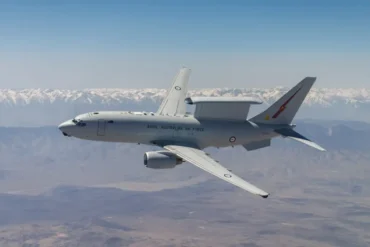
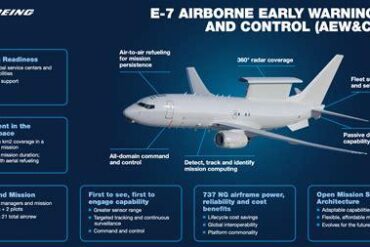
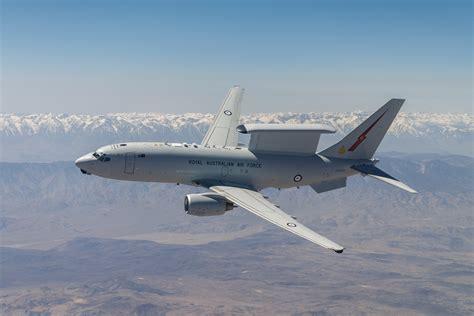
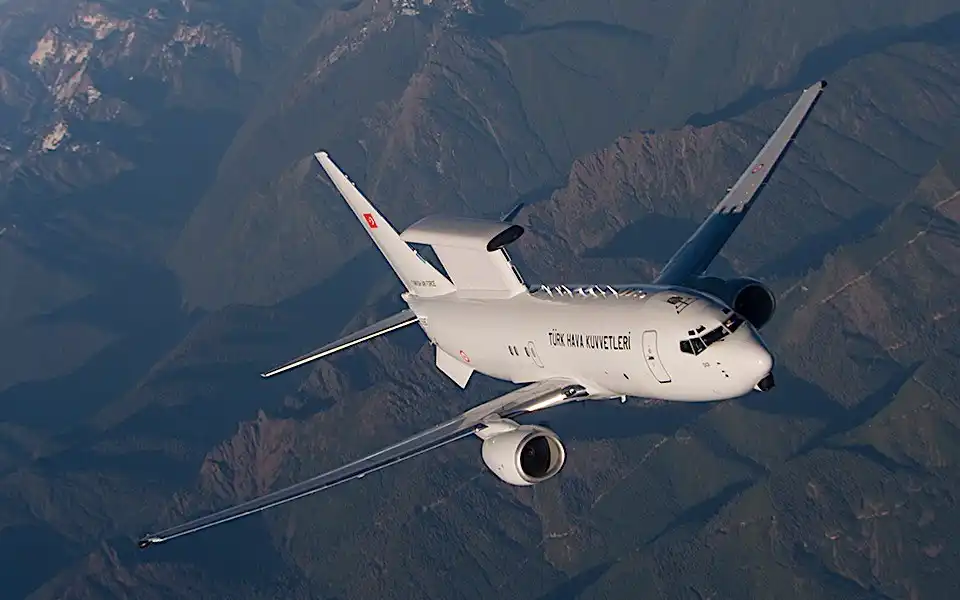
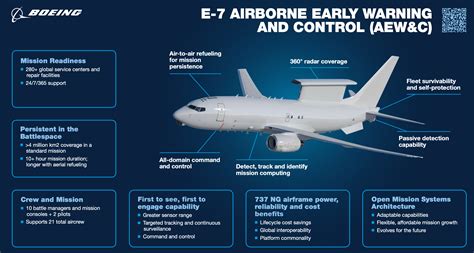
The Boeing E-7 Wedgetail, developed originally for the Royal Australian Air Force, has increasingly emerged as the most credible successor to the ageing E-3 fleet. Based on the Boeing 737 airframe, the aircraft combines proven commercial reliability with advanced radar and battle management capabilities specifically designed for contemporary high-threat environments.
Its Multi-role Electronically Scanned Array radar provides extensive tracking capability against aircraft, drones and cruise missiles, including low-flying threats that have become especially dangerous in recent conflicts. The rise of cheap attack drones and long-range cruise missiles has fundamentally altered modern air defence calculations, making persistent airborne surveillance more valuable than at any point since the Cold War.
Unlike satellites, which follow predictable orbital paths, airborne platforms can reposition dynamically in response to changing battlefield conditions. They also provide immediate command-and-control functions inside active combat zones, directing fighters, coordinating tankers and managing surveillance assets in real time.
That flexibility proved especially important during operations linked to Iran, where airspace congestion and rapidly evolving threat conditions demanded continuous airborne coordination.
USAF E-3 Fleet Is Rapidly Deteriorating
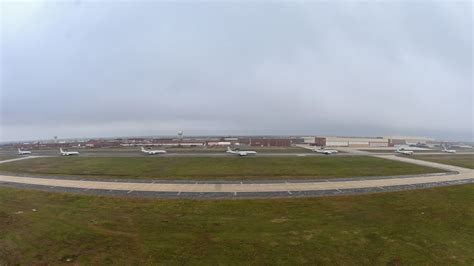
The renewed interest in the E-7 is also being driven by the worsening condition of the Air Force’s E-3 Sentry fleet. Many aircraft have already been retired, while others remain in storage or suffer from chronic maintenance issues. Operational readiness rates have steadily declined for years.
By early 2026, open-source intelligence analysts estimated that only around 15 USAF E-3 aircraft remained operational after one was reportedly destroyed during Iran-linked strikes on Prince Sultan Air Base in Saudi Arabia.
The loss underscored both the importance and vulnerability of airborne warning aircraft. While critics of AWACS platforms frequently point to survivability concerns in contested airspace, military planners increasingly acknowledge that vulnerability does not eliminate operational necessity.
That debate has become especially relevant after Russia lost several Beriev A-50 airborne early warning aircraft during the war in Ukraine. Those incidents demonstrated that large radar aircraft can become prime targets in high-end conflicts involving long-range missiles and advanced air defences.
Yet the same conflicts have simultaneously proven how valuable such aircraft remain for managing complex air operations. Militaries continue accepting the risk because no fully capable substitute currently exists.
Congress Quietly Kept the Wedgetail Alive
Despite the Air Force’s earlier attempt to terminate the programme, Congress moved aggressively to preserve the E-7 initiative. Lawmakers restored funding in the FY2026 defence budget and maintained support for prototype development tied to a USAF-specific Wedgetail configuration.
The Air Force has already awarded Boeing contracts covering five E-7 aircraft out of a planned fleet of seven. That procurement pipeline effectively prevented the programme from collapsing entirely, allowing Pentagon officials room to reconsider after operational lessons from the Iran conflict became impossible to ignore.
During a House Appropriations Committee hearing, Representative Tom Cole directly questioned Defense Secretary Pete Hegseth about whether the Pentagon intended to restore E-7 funding in the FY2027 request.
Hegseth acknowledged growing concerns surrounding the risk of creating a near-term capability gap before future space-based systems become operationally mature. While the Air Force still supports transitioning ISR functions toward orbital platforms eventually, Pentagon leadership now appears far less willing to eliminate airborne radar capability prematurely.
That represents a significant strategic recalibration rather than a simple budget adjustment.
Space-Based ISR Still Cannot Replace AWACS Aircraft
The broader debate surrounding the E-7 ultimately reflects a larger struggle inside the Pentagon over the future of airborne surveillance itself. Space-based ISR remains one of the military’s most ambitious modernization goals, with advocates envisioning resilient constellations capable of persistent global tracking without risking aircrews near hostile airspace.
DARPA, the Space Force and multiple defence contractors continue developing advanced orbital tracking systems designed to monitor missiles, aircraft and drones from space. In theory, distributed satellite networks would prove more survivable than a small fleet of large airborne radar aircraft.
The problem is timing.
Most analysts agree that those systems remain years away from replacing the complete functionality of platforms such as the E-3 or E-7. Satellites can contribute surveillance and targeting data, but they currently lack the flexible theatre-level battle management capability airborne command aircraft provide.
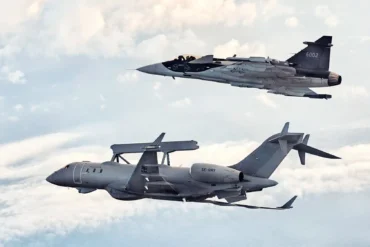
An AWACS aircraft does not simply detect threats. It acts as a flying command centre capable of interpreting the tactical environment, coordinating multiple assets simultaneously and adapting instantly to changing combat conditions.
That distinction matters enormously during fast-moving operations where seconds can determine whether incoming drones or missiles are intercepted successfully.
Pentagon Appears Increasingly Unwilling to Risk a Capability Gap
The Pentagon’s apparent reversal on the E-7 Wedgetail signals growing recognition that future technologies cannot yet shoulder the full burden of airborne battle management. The Iran conflict accelerated that realization by exposing how dependent modern military operations remain on persistent airborne coordination and radar coverage.
For the Air Force, the dilemma has become unavoidable. The E-3 fleet is ageing rapidly, operational demand remains intense and space-based alternatives are not ready. Attempting to bridge that gap without a dedicated replacement increasingly looks strategically reckless.
The E-7 Wedgetail may once have been viewed as a temporary bridge toward a space-dominated future. After the Iran conflict, it is starting to look more like an operational necessity the Pentagon can no longer afford to abandon.