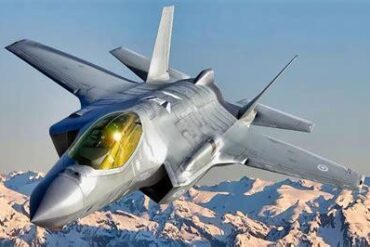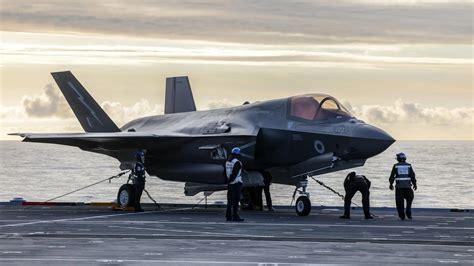
The F-35 Joint Strike Fighter program has once again found itself at the center of controversy following the eighth consecutive failure of the Pentagon’s financial audit. With a string of cost overruns, delivery delays, and missing inventory, the F-35’s spiraling trajectory is forcing global defense stakeholders to reassess their commitments to the once-vaunted stealth jet.
Pentagon’s Audit Bombshell: A Blow to Confidence
On December 19, 2025, the U.S. Department of Defense (DoD) released its latest financial audit report, revealing 26 material weaknesses and two significant deficiencies. One particularly striking flaw involved the F-35 program. Auditors reported that the Pentagon could not verify the existence, value, or completeness of the aircraft’s global spares pool. This shortfall in documentation led to a “material misstatement” in the agency-wide financial statements.
The failure marks the eighth year in a row the Pentagon has failed its audit—a requirement since 2018. But unlike past instances, this year’s audit lands amid mounting geopolitical tensions, declining international confidence, and a growing chorus of skepticism over Lockheed Martin’s troubled jet.
Technology Refresh 3 and the 238-Day Delay Disaster
Compounding the audit failure is the F-35’s persistent delivery delays. According to a September 2025 GAO report, every F-35 jet delivered in 2024 was late—by an average of 238 days. This staggering delay was primarily attributed to the long-troubled Technology Refresh 3 (TR-3) upgrade. Originally planned as part of a $2 billion modernization initiative known as Block 4, the TR-3 suite is essential for integrating advanced sensors, cockpit displays, and computing capabilities into the fleet.
However, the TR-3’s rollout has been mired in software instability and component shortages. The cost of the Block 4 upgrade has ballooned by an additional $6 billion and now sits at more than $15 billion, with full implementation likely delayed until 2030.
Costs Spiral Beyond Control: A $2 Trillion Juggernaut
The F-35 has long carried the dubious distinction of being the most expensive weapon system in U.S. history, and its financial footprint continues to grow. As of December 2023, total acquisition costs had surged to $485 billion, up from $442 billion in 2022. This figure represents more than double the original cost estimate from 2001.
When factoring in long-term sustainment, operations, and lifecycle expenses, the program’s full cost is now estimated at over $2 trillion. These rising costs are not merely theoretical— they’re tangibly affecting procurement timelines, defense budgets, and allied confidence around the globe.
On-Time Incentives With Built-In Delays
Despite the consistent delays, the Department of Defense has been paying incentive fees to contractors like Lockheed Martin and Pratt & Whitney for “on-time delivery.” The GAO report revealed that these incentives allowed contractors to deliver jets up to 60 days late and still receive bonuses—a structure that critics argue rewards mediocrity rather than accountability.
This ineffective oversight is emblematic of deeper issues within the JSF program, where financial engineering often takes precedence over operational discipline.
Global Spares Pool Black Hole
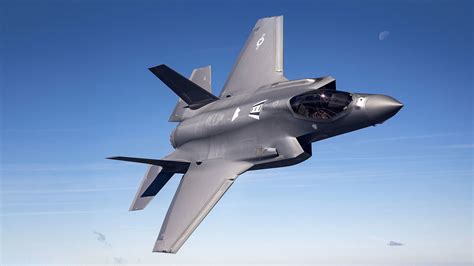
Perhaps the most damning revelation from the audit was the Pentagon’s inability to account for the F-35’s Global Spares Pool—a network of parts shared among partner nations and operators worldwide. According to the report, the DoD could not confirm whether spare parts existed, how many were missing, or what their actual value was. This failure strikes at the core of logistical integrity, undermining not only financial credibility but also combat readiness.
This pool supports hundreds of aircraft operated by the United States, United Kingdom, Canada, Italy, Netherlands, Australia, Denmark, and Norway, among others. Each of these nations depends on the pool to keep their F-35s mission-ready. If parts are missing or misreported, the consequences could be operationally catastrophic.
Complexity at the Core: The Triple-Variant Challenge
A foundational challenge in the F-35’s development is its goal of producing three different aircraft variants from a single airframe:
- F-35A: Conventional takeoff for the U.S. Air Force.
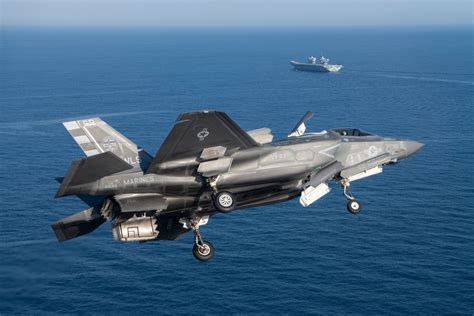
- F-35B: Short takeoff and vertical landing (STOVL) for the Marine Corps.
- F-35C: Carrier-based operations for the Navy.
Designing for these divergent mission profiles required complex compromises and introduced unique technical problems in each version. Engineers have struggled to reconcile stealth, speed, and vertical lift in a single platform, resulting in a plane that is hyper-engineered and fragile, with supply chains that are brittle and prone to disruption.
Software Troubles Still Haunt the Skies
At the heart of the F-35’s modernization woes is its TR-3 software, which is essential for enabling “Block 4” capabilities such as advanced electronic warfare and network-centric warfare operations. But repeated delays in software testing, integration failures, and instability have made it impossible for the DoD to deploy the aircraft at full capability.
Each delay extends training schedules, disrupts deployment planning, and stalls foreign military sales. With many aircraft delivered but stored awaiting software updates, the inventory of “zombie jets”—airframes ready to fly but unable to fight—continues to grow.
Production Paralysis: Supply Chain Gridlock and Delays
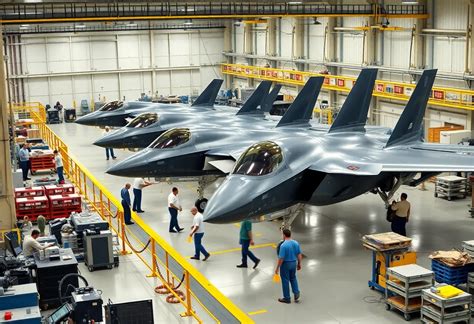
Manufacturing issues have further crippled production lines. Lockheed Martin and Pratt & Whitney have consistently failed to meet production timelines due to engine shortages, labor gaps, and unavailable components. These issues have led to dozens of aircraft being parked in hangars or storage facilities, awaiting critical parts.
The Pentagon has, at times, intentionally slowed production to manage costs, which ironically causes additional delays and stretches timelines further, compounding the very risks it aims to mitigate.
International Partners Eye the Exit
The F-35’s failures have opened the door for rival aircraft platforms to make serious gains in the international defense market. The Saab Gripen has found new buyers in Colombia and Thailand, while Switzerland and Canada are re-evaluating their Lockheed Martin commitments. Canadian Prime Minister Mark Carney is considering diversifying its fleet after signing a new defense framework with the European Union.
In France, the Dassault Rafale continues its rise, securing deals such as the 26 Rafale-Marine jets for the Indian Navy. Even Portugal and Spain, once potential F-35 customers, are leaning toward European alternatives like the Eurofighter Typhoon or upcoming FCAS.
The United Kingdom, one of America’s closest defense partners, is debating whether to scale up domestic Eurofighter production rather than increase reliance on the troubled F-35 line.
Trump-Era Tariffs Complicate Defense Ties
Adding to the turbulence are Trump-era tariffs, which have created political tension and disrupted trade relations. Nations already frustrated with delivery delays and cost overruns are now burdened with increased import costs, pushing them further toward European-built platforms.
A Tectonic Shift in Defense Procurement
Across Europe and Asia, a quiet but steady reorientation is unfolding. Nations are increasingly favoring collaborative regional programs such as:
- Future Combat Air System (FCAS) – Germany, France, Spain
- Global Combat Air Program (GCAP) – UK, Japan, Italy
These initiatives aim to achieve technological self-reliance, enhance interoperability among allies, and foster domestic defense industries. In this evolving landscape, the F-35—once viewed as a symbol of next-gen warfare—is now seen as a liability.
Conclusion: From Icon to Warning
The F-35 program, once heralded as the cornerstone of 21st-century air power, has become a case study in bureaucratic bloat, technological overreach, and fiscal mismanagement. The latest Pentagon audit failure is not merely a financial embarrassment—it is a strategic alarm.
With rising costs, mismanaged logistics, and waning international faith, the F-35 stands at a crossroads. Whether the program can recover its trajectory or be eclipsed by leaner, smarter alternatives will define not just the future of American airpower, but the broader contours of global defense strategy.