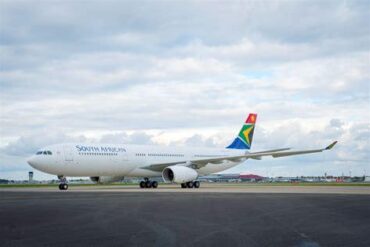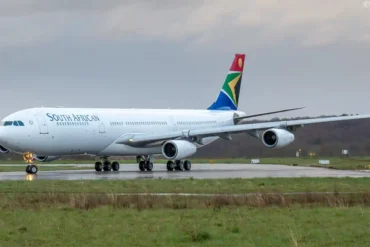
South African Airways is once again navigating turbulence, but this time the challenge is not operational survival. Instead, the carrier is fighting to restore credibility after a damaging audit crisis exposed weaknesses in its financial reporting systems just as the airline was rebuilding momentum following years of restructuring and business rescue.
The airline’s leadership insists the problems are manageable, temporary, and disconnected from the broader recovery story that has seen the carrier gradually reclaim lost market share across Africa and beyond. Yet the stakes are significant. For an airline that only recently emerged from one of the most dramatic collapses in African aviation history, confidence from regulators, investors, government stakeholders, and passengers remains critical.
At the center of the effort is South African Airways Acting CEO Matshela Seshibe, who inherited the leadership role after the abrupt departure of former CEO John Lamola amid escalating scrutiny surrounding the airline’s finances.
Seshibe, only 32 years old, has become the public face of SAA’s recovery campaign during one of the airline’s most sensitive moments since exiting business rescue in 2021. His message has been consistent: operational growth outpaced internal administrative systems, but corrective measures are now firmly underway.
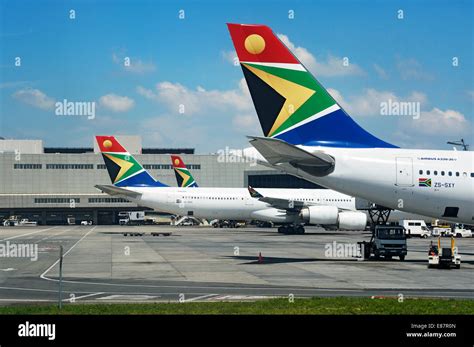
SAA’s Audit Crisis Raises Fresh Questions About Governance
The controversy intensified after South Africa’s Auditor-General issued a disclaimer audit opinion on SAA’s financial statements for the year ending March 2025. The findings also highlighted approximately R505 million in irregular expenditure, triggering immediate concern across government and aviation circles.
A disclaimer audit opinion represents one of the most severe findings auditors can issue. It effectively signals that auditors could not obtain enough reliable evidence to confirm the accuracy of the company’s financial reporting. For an airline attempting to rebuild public trust after years of financial instability, the implications were deeply damaging.
The timing proved especially problematic because SAA had previously celebrated what it described as a second consecutive profitable year following its restructuring. The audit findings cast doubt over that narrative and reopened questions about oversight, accountability, and financial discipline within the state-owned airline.
Rather than denying the seriousness of the issue, Seshibe acknowledged the shortcomings directly during an aviation webinar hosted on behalf of the African Airlines Association.
According to Seshibe, the airline’s operational rebound occurred at a pace that internal reporting systems simply failed to match. SAA expanded routes, increased passenger volumes, and accelerated commercial activities faster than its administrative controls matured.
He argued that the airline has now implemented new oversight structures, including steering committees, loss control mechanisms, and consequence-management procedures intended to tighten accountability and improve record-keeping standards.
The language coming from SAA leadership has been notably cautious, reflecting an understanding that credibility will not be restored through optimism alone. The airline now faces the difficult task of proving consistency over time rather than relying on recovery rhetoric.

South Africa’s Aviation Market Continues Expanding Despite Uncertainty
Even amid the audit controversy, SAA executives believe broader market dynamics still strongly favor the airline’s long-term recovery ambitions.
South Africa remains one of the continent’s most strategically important aviation hubs. The country currently hosts services from nearly 80 international airlines, while both OR Tambo International Airport and Cape Town International Airport continue attracting rising passenger volumes.
Cape Town’s rapid growth has become particularly significant. The airport has emerged as Africa’s third-busiest aviation gateway behind Johannesburg and Cairo, highlighting South Africa’s increasing importance in long-haul tourism and intercontinental connectivity.
SAA leadership believes these trends create an opening for the airline to reclaim portions of the international market it lost during the business rescue process. When the carrier drastically reduced operations several years ago, foreign airlines quickly moved into the vacuum, expanding capacity on routes previously dominated by SAA.
Now the airline is attempting to selectively rebuild its international footprint while avoiding the overexpansion mistakes that historically damaged many African carriers.
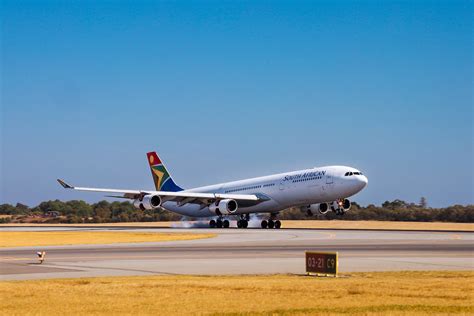
Recent route additions reflect that strategy. SAA has introduced services connecting Johannesburg and Cape Town with São Paulo while also launching flights between Johannesburg and Perth. These routes are designed to capitalize on strong diaspora, tourism, and business travel demand.
The airline reports passenger traffic growth exceeding 32% over the past year, a figure executives view as evidence that the SAA brand still retains considerable recognition despite years of instability.
Africa’s Aviation Potential Remains Vast but Financially Challenging
Seshibe repeatedly emphasized a statistic increasingly cited throughout the aviation industry: Africa accounts for roughly 18% of the world’s population but contributes only around 2% of global air traffic.
That imbalance fuels the belief that African aviation still represents one of the industry’s largest untapped growth opportunities. Rapid urbanization, population growth, and the expansion of the middle class continue driving demand for air travel across the continent.
However, turning that potential into sustainable airline profitability remains extraordinarily difficult.
African carriers face structural disadvantages rarely experienced elsewhere in the world. Fuel costs across the continent are substantially higher than global averages, while airport taxes, navigation fees, and regulatory expenses continue weighing heavily on profitability.
Seshibe noted that African airlines often pay nearly 70% more for aviation fuel than competitors in other regions. Those elevated costs severely reduce margins in an industry already known for thin profitability.
The economics become even more concerning when examining profit per passenger. Globally, airlines average roughly seven dollars in profit per traveler. In Africa, that figure can fall close to one dollar.
SAA executives argue that the continent’s fragmented aviation policies contribute significantly to the problem. In many cases, short regional flights within Africa can carry higher taxes and charges than significantly longer intercontinental services.
The airline also continues facing difficulties associated with blocked funds in certain African markets, where currency restrictions prevent carriers from repatriating revenue generated through local ticket sales. Airlines effectively sell seats and incur operational costs while struggling to access the cash they have earned.
Those issues have become a recurring concern raised by the International Air Transport Association, which has repeatedly warned that blocked airline revenues threaten African aviation growth.
Competition Intensifies as SAA Rebuilds Its Network
While SAA remains one of Africa’s most recognizable airline brands, the competitive environment has changed dramatically since the carrier entered business rescue.
Low-cost operators now dominate major segments of South Africa’s domestic market, particularly FlySafair, which controls more than 60% of domestic seat capacity.
That dominance has forced SAA to rethink how a traditional full-service airline can compete effectively without sacrificing premium service standards.
Seshibe acknowledged that the distinctions between legacy carriers and low-cost airlines are increasingly blurred. Airlines across the world are borrowing successful practices from one another, combining operational efficiency with selective premium offerings.
SAA’s strategy appears focused on adopting revenue-maximization techniques commonly associated with budget airlines while preserving the broader customer experience expected from a network carrier.
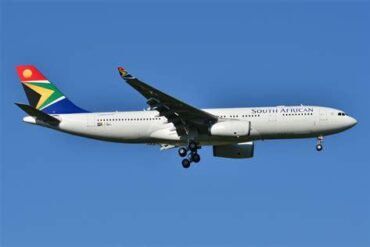
The airline is also relying heavily on partnerships rather than aggressive fleet expansion. Through its membership in the Star Alliance and codeshare agreements with Kenya Airways and Emirates, SAA can extend its reach to more than 150 destinations without deploying its own aircraft on every route.
That approach reduces financial exposure while allowing the airline to rebuild international relevance incrementally.
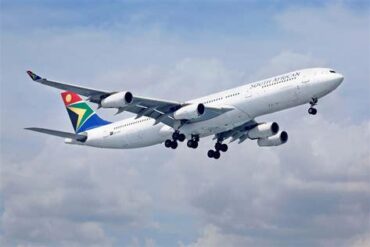
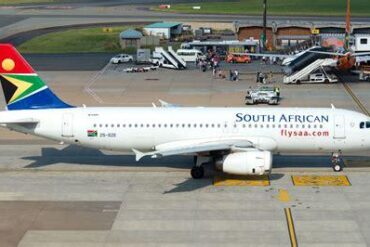
Still, questions remain about scale. SAA currently operates a fleet of only 19 aircraft across 17 routes. Whether that network can expand rapidly enough to support South Africa’s broader ambition of reaching 42 million airline passengers annually by 2030 remains uncertain.
Geopolitical Pressure Adds Another Layer of Risk
Beyond internal restructuring and continental competition, SAA also faces the same geopolitical pressures currently affecting airlines worldwide.
Conflict in the Middle East has contributed to substantial volatility in jet fuel prices, placing additional strain on airline operating costs. Although SAA says route disruptions and schedule adjustments have so far remained limited, executives acknowledge that prolonged instability could eventually impact global travel demand.
For now, Seshibe maintains that booking trends remain stable and passenger demand continues holding up despite the wider uncertainty.
That cautious optimism reflects the delicate balance now defining South African Airways. The airline has undeniably restored portions of its operational network and regained visibility within African aviation. Yet the audit controversy demonstrates that rebuilding an airline requires far more than aircraft, routes, and passengers.
For SAA, the next phase of recovery may depend less on expansion headlines and more on proving that governance, accountability, and financial discipline are finally matching the ambitions of its commercial comeback.