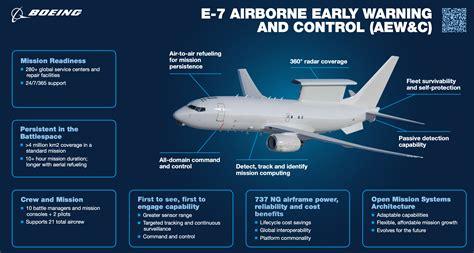
The U.S. Congress has delivered a decisive rebuke to the Pentagon’s strategic pivot away from legacy airborne early warning systems, rescuing Boeing’s E-7 Wedgetail program through the newly enacted $900 billion National Defense Authorization Act (NDAA). This bold legislative move not only restores confidence in the aging aerial command infrastructure but also reaffirms the role of manned radar platforms in securing American air dominance amid rising global threats.
The NDAA: A $900B Shift in Military Priorities
Signed into law by President Donald Trump in December 2025, the sweeping $900 billion NDAA is a cornerstone of bipartisan cooperation in a fractured Washington. Beyond standard military appropriations and pay raises, the bill enshrines Trump’s “Peace Through Strength” doctrine and eliminates controversial diversity, equity, and inclusion (DEI) programs. Yet one of the most consequential reversals in the bill lies buried in a single line-item: the restoration and protection of the E-7 Wedgetail program, which the Pentagon had sought to terminate.
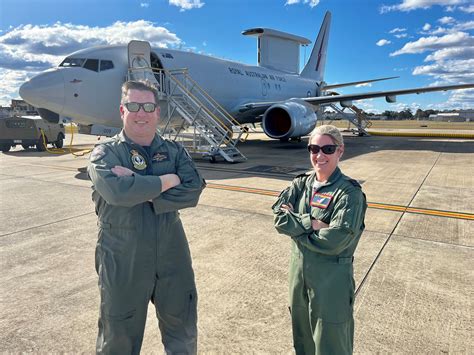
Congressional Override: Defying Pentagon’s Strategic Logic
In its fiscal 2026 budget request, the Pentagon proposed halting E-7 procurement, citing projected delays, cost overruns, and concerns about the aircraft’s survivability in near-peer conflict scenarios, particularly involving China and Russia. The Department of Defense favored shifting investments to space-based sensors and expanding the Navy’s E-2D Hawkeye fleet as more agile, resilient solutions.
Congress, however, forcefully disagreed. The NDAA injects $647 million in additional funding to guarantee continued E-7 development, while legally prohibiting the Air Force from terminating its existing contract with Boeing or shuttering its production lines. In parallel, lawmakers restricted the retirement of E-3 Sentry AWACS units until sufficient E-7s are operational or a validated alternative is approved.
Generals Rally for Air Dominance
This defense of the Wedgetail program is backed by top military voices. Sixteen retired four-star generals, including six former U.S. Air Force Chiefs of Staff, submitted a letter to Congress warning of a dangerous erosion in America’s air combat readiness. They stressed that maintaining U.S. air dominance is still within reach—but only through sustained investment in platforms like the E-7.
In subsequent media engagements, eight of the signatories detailed how reliance solely on space-based ISR (Intelligence, Surveillance, Reconnaissance) would create capability gaps, emphasizing that airborne command-and-control platforms remain vital for multi-domain operations in contested environments.
European NATO Abandons Joint E-7 Program
While Congress breathes new life into the Wedgetail, Europe turns away. In a blow to transatlantic collaboration, a coalition of NATO member states, led by the Netherlands and including Belgium, Germany, Norway, and others, has withdrawn from plans to jointly purchase six E-7s to replace NATO’s 14 E-3A aircraft by 2035. This retreat follows the U.S. exit from the initiative in July, removing what European officials called the program’s “strategic and financial foundations.”
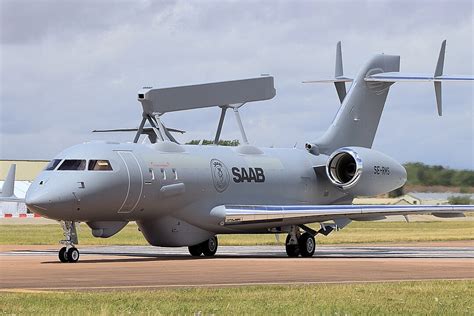
Instead, Europe appears poised to back alternatives with stronger domestic industrial ties. Sweden’s Saab GlobalEye, already selected by France, emerges as a prime contender in this unfolding continental pivot away from Boeing’s solution.
The E-7 Wedgetail: A Technical Backbone of Modern Warfare
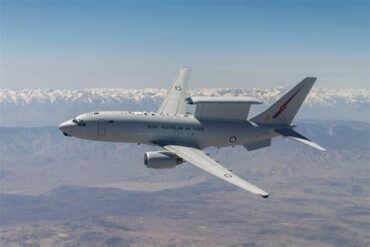
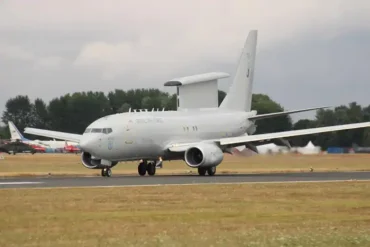
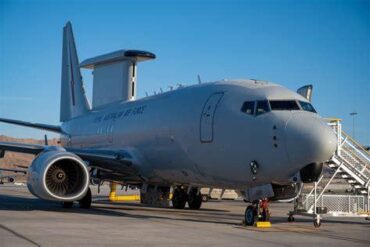
At the heart of this political and military storm stands the Boeing E-7 Wedgetail—an aircraft designed not only to see the unseen, but to orchestrate battle across vast theaters of operation. Developed initially for Australia, the E-7 is built on the reliable Boeing 737 Next Gen airframe, but with its iconic dorsal radar fin replacing the traditional rotating dome of the E-3.
Powered by twin CFM56-7B27A turbofan engines, each producing 27,300 lbf of thrust, the E-7 cruises at 530 mph with a range of 4,000 miles and an operational ceiling of 41,000 feet. Its cabin houses two pilots and up to ten mission operators, with a typical configuration featuring 8–10 radar consoles.
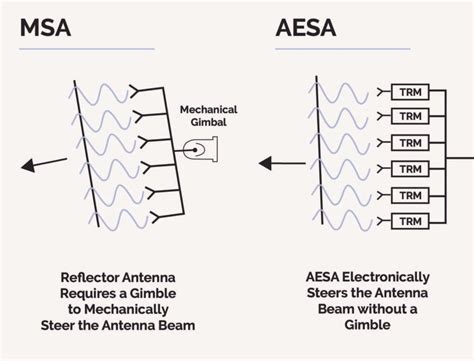
The centerpiece of its capability is the Northrop Grumman MESA radar, a fixed active electronically scanned array (AESA) offering continuous 360-degree coverage. With detection ranges of 600+ km for aerial targets and over 850 km for electronic intelligence (ELINT), the MESA system enables simultaneous control of air operations, maritime surveillance, and threat coordination.
Survivability & Strategic Necessity
Critics argue that in the face of peer-level adversaries with hypersonic weapons and anti-access/area-denial (A2/AD) capabilities, the E-7’s large radar signature makes it vulnerable. However, proponents counter that its suite of countermeasures, including nose, tail, and wingtip systems, alongside electronic warfare support, provide robust protection. Furthermore, satellite-based solutions are still seen as unreliable in real-time tactical coordination—especially under jamming or kinetic attack.
The E-7’s crew-centric command infrastructure offers an indispensable human-in-the-loop capability. Unlike fully autonomous platforms, it excels in dynamic threat environments requiring fluid decision-making, particularly in support of 5th-generation fighters like the F-35.
The Bigger Picture: America’s Defense Doctrine at a Crossroads
The resurrection of the Wedgetail program marks more than a procurement decision—it signals a broader realignment of defense priorities. The bipartisan move to override Pentagon preferences underscores growing Congressional skepticism toward an overreliance on experimental or immature technologies. It also reflects strategic anxieties about adversaries’ growing military capabilities, and America’s readiness to confront them with proven platforms.
The NDAA’s provisions ensure Boeing’s production line remains active, supporting not just U.S. Air Force readiness, but also allied exports to countries like the UK, Australia, and South Korea. In doing so, Congress affirms a continued commitment to industrial base vitality, especially as aerospace faces mounting pressure from emerging European competitors.
Conclusion: An Old Warhorse with New Relevance
As the global security environment intensifies, the decision to fund and protect the E-7 Wedgetail signals a pragmatic shift in U.S. defense thinking. Lawmakers have opted for operational certainty over theoretical innovation, placing their trust in a platform that bridges legacy infrastructure with future warfare.
Congress’s move challenges the Pentagon’s vision—but perhaps rightfully so. In this moment of geopolitical tension, the E-7 Wedgetail rises not just as an aircraft, but as a symbol of strategic continuity, technological reliability, and airborne vigilance in an uncertain world.