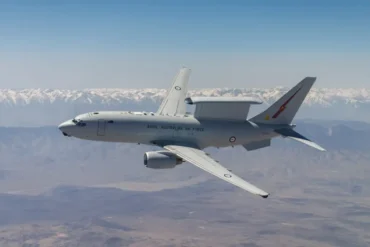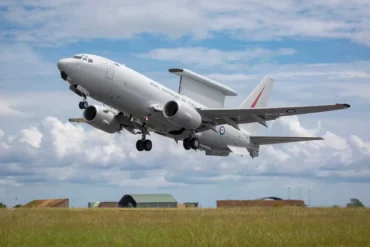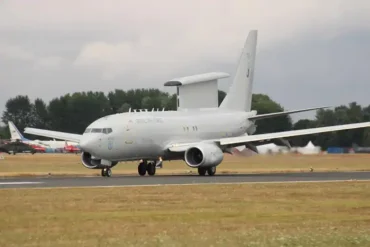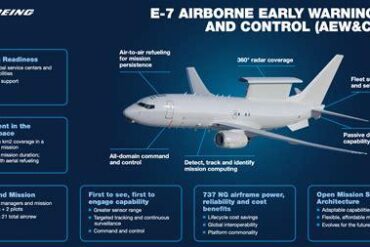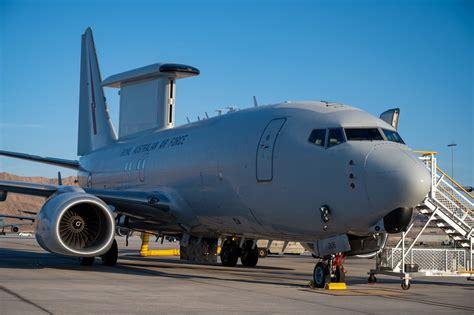
The Boeing E-7 Wedgetail represents a leap forward in modern airborne early warning and control (AEW&C) systems. Designed on the trusted Boeing 737 Next Generation airframe, it replaces traditional rotating radar domes with a fixed, cutting-edge Northrop Grumman Multi-role Electronically Scanned Array (MESA) radar. This innovative sensor suite, mounted atop the fuselage in a distinctive “top hat” structure, offers superior 360-degree surveillance, command and control capabilities, and electronic intelligence gathering.
Originally developed for the Royal Australian Air Force (RAAF) under Project Wedgetail, the aircraft has since gained traction globally, with variants in service or on order by Turkey, South Korea, the United Kingdom, and potentially the United States and NATO allies.
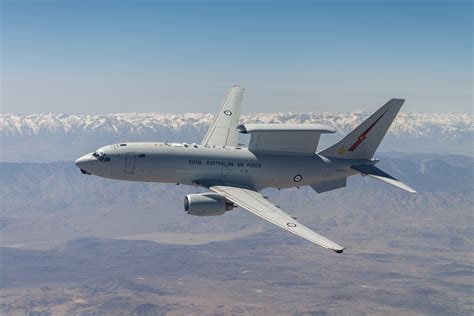
The Genesis of a Modern AEW&C Platform
The development of the E-7 Wedgetail traces back to 1986, when Australia initiated evaluations for a next-generation AEW&C solution. This pursuit matured into Project AIR 5077, culminating in a 1996 Request for Proposal. Boeing’s bid won in 1999, proposing a robust AEW&C platform derived from the 737-700ER, augmented with advanced radar and mission systems.
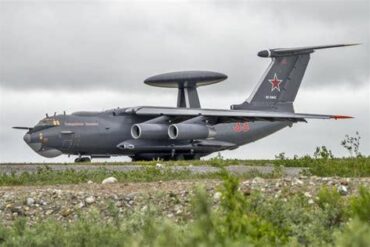
Unlike the rotating radome used on platforms like the E-3 Sentry, the Wedgetail’s MESA radar is fixed. Two broadside arrays and end-fire arrays provide uninterrupted 360-degree coverage, capable of tracking aerial and maritime targets at ranges exceeding 600 km (look-up mode) and offering ELINT reach beyond 850 km at cruising altitudes.
Its electronic warfare support includes systems from BAE Systems Australia, while ventral fins, countermeasures, and in-flight refueling capabilities enhance its operational endurance. The aircraft typically houses eight to ten mission consoles, expandable to twelve, enabling it to manage complex battlespace environments.
Australia: The Launch Operator and Combat-Proven User
Australia initially ordered four Wedgetail aircraft, later expanding the fleet to six. Assembly and testing began in Seattle, followed by local modifications in Australia. Although the project faced delays due to radar integration issues—incurring a $770 million cost overrun—deliveries resumed, and the RAAF received its final aircraft in June 2012.
Following its Initial Operational Capability (IOC) in November 2012 and Final Operational Capability (FOC) in May 2015, the E-7A Wedgetail quickly proved its value. In April 2014, it participated in the search for MH370, and later supported coalition operations over Iraq and Syria, achieving a 17-hour combat mission—a record for RAAF C2 operations.
In 2016, one Wedgetail flew 36 missions over 12 hours each without a single failure, marking a 100% mission success rate in combat against ISIS. These operations ended in early 2019, but the platform continued to demonstrate strategic utility, including deployments to Europe in 2023 and 2025 in support of supply chain protection for Ukraine.
Turkey: Peace Eagle Program and Modernization
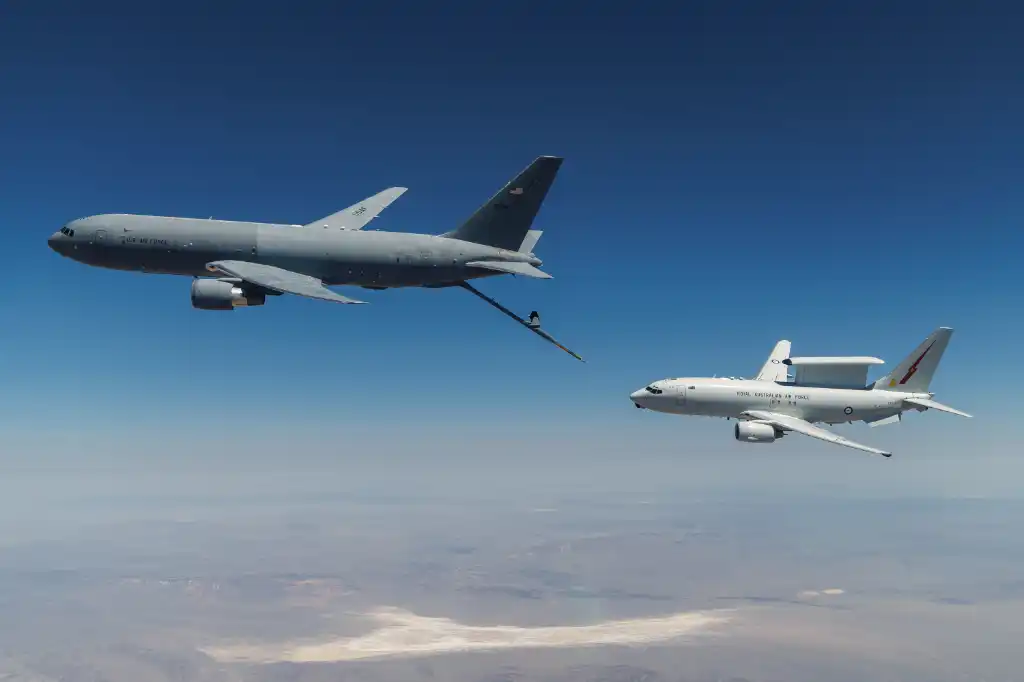
Turkey ordered four E-7T Peace Eagle aircraft, with Turkish Aerospace Industries (TAI) leading the local assembly and HAVELSAN managing software and ground systems—uniquely licensed to handle US-sourced code. The first aircraft, Kuzey (North), was delivered in February 2014, followed by Güney (South), Doğu (East), and Batı (West).
Despite delivery delays, all aircraft were operational by December 2015. In IDEF 2023, a major modernization effort was launched to enhance operational capability. This included IFF Mode 5 Responder, Karetta CRPA antennas, and Aselsan-developed mission computer hardware, ensuring compatibility with future battlefield requirements.
South Korea: Peace Eye for Northeast Asia
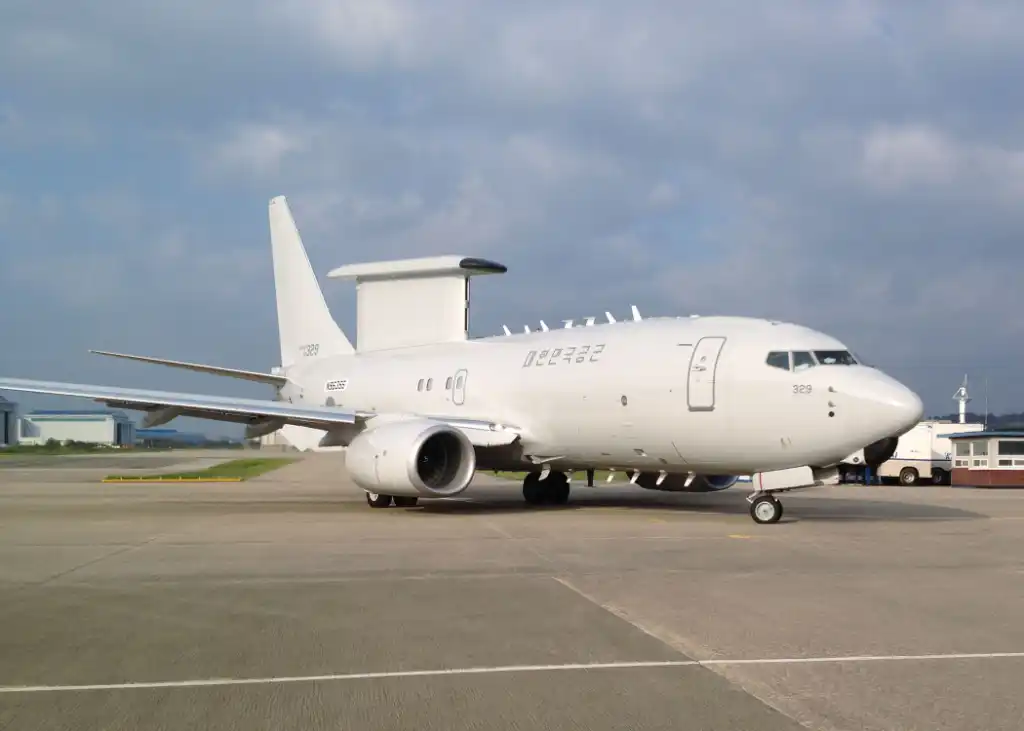
Under a $1.6 billion contract signed in 2006, South Korea acquired four Peace Eye E-7s, beating out Israel’s Gulfstream G550-based contender. The first aircraft arrived in August 2011, with subsequent deliveries every six months through October 2012. Korea Aerospace Industries (KAI) modified three of the airframes domestically.
In 2023, Seoul initiated a competitive procurement for four additional AEW&C aircraft, evaluating the E-7, Saab GlobalEye, and an L3Harris Gulfstream variant. Final bids were submitted in April 2024, underscoring the Republic of Korea Air Force’s trust in airborne radar systems for regional security.
United Kingdom: Wedgetail AEW1 Program
The Royal Air Force selected the E-7 Wedgetail in 2019, signing a $1.98 billion deal for five aircraft, later reduced to three in the 2021 defense review. The aircraft, dubbed Wedgetail AEW1, includes both converted commercial 737s and newly built units. Modifications are being handled by STS Aviation UK, with each conversion taking around 24 months.
Delivery timelines have slipped from 2023 to 2026, though defense officials maintain an eventual return to a five-aircraft fleet is possible. Notably, the program was chosen without open competition, drawing criticism from Saab, which advocated for an Erieye-based solution on Airbus A330 MRTT.
United States: A Controversial Journey to Replacement
With the aging E-3 Sentry fleet facing obsolescence, US military leaders such as General Kenneth Wilsbach and General Jeffrey Harrigian lobbied for rapid E-7 acquisition. By April 2022, the U.S. Air Force formally selected the E-7 as the only platform capable of meeting near-term tactical battle management (TBM) and moving target indication (MTI) requirements.
A $1.2 billion contract was awarded in 2023 for two US-specific variants, with a plan for a total of 26 aircraft. However, in June 2025, amid escalating cost concerns and survivability debates, the program was canceled in favor of space-based AMTI solutions under the “Golden Dome” vision. Yet by September 2025, a pivot emerged: two E-7s would be converted in the UK for U.S. service, reflecting the platform’s lingering relevance.
NATO and the Multinational Future of AEW&C
As NATO moves toward retiring its 14 E-3A aircraft, a Request for Information (RFI) was issued in 2022, with Boeing, Saab, and Northrop Grumman submitting competing solutions. By November 2023, NATO confirmed its intent to acquire six E-7s, operational from 2031, based at Geilenkirchen, with forward deployment options across Europe.
The E-7 offers a seamless path to interoperability within allied forces, a feature central to NATO’s strategic shift toward distributed surveillance and control.
Potential and Lost Opportunities
Saudi Arabia, currently mid-way through a two-phase E-3 Sentry upgrade, has expressed interest in the E-7 as a long-term replacement. Meanwhile, Canada, in April 2024, earmarked CA$5 billion for AEW&C capabilities, with Boeing’s E-7 in contention against Saab’s GlobalEye.
However, the E-7 has not been universally adopted. Italy, after initial interest in 2004, opted for ATR 72MP and later procured Gulfstream G550 CAEW units via a strategic counter-deal with Israel. The United Arab Emirates, which considered the E-7 alongside the E-2D, selected the GlobalEye in 2015. Qatar, too, shelved a planned purchase of three E-7s by 2018.
Technical Specifications of the E-7 Wedgetail
The E-7 is built on a modified Boeing 737-700 airframe, retaining commercial efficiency while offering military-grade endurance and sensor performance. Its specifications reflect a balance between operational capability and deployment flexibility.
- Crew: 2 flight, 6–10 mission operators
- Max Takeoff Weight: 171,000 lb
- Length: 110 ft 4 in
- Wingspan: 117 ft 2 in
- Engines: 2× CFM56-7B27A turbofans, 27,300 lbf each
- Cruise Speed: 460 knots (530 mph)
- Range: 3,500 nautical miles (6,500 km)
- Service Ceiling: 41,000 ft
- Radar: Northrop Grumman MESA AESA
These features make the Wedgetail not only an effective airborne sensor platform but also a reliable command and control node, essential for modern joint force operations.
Conclusion: Wedgetail’s Enduring Strategic Relevance
The Boeing E-7 Wedgetail stands as a critical pillar of 21st-century air defense and situational awareness. Its fixed radar architecture, long mission endurance, and electronic warfare capabilities allow it to outperform legacy systems, particularly in contested or degraded environments.
Despite procurement and political hurdles, the E-7’s international adoption and continued investment by key powers reflect its strategic value. As peer adversaries deploy stealth platforms and complex integrated air defense systems, the Wedgetail remains one of the few platforms capable of sustaining coalition-wide air dominance and real-time threat tracking.
In an era increasingly shaped by space and unmanned surveillance, the E-7 Wedgetail is proof that airborne platforms still have a decisive role in the orchestration of modern warfare.