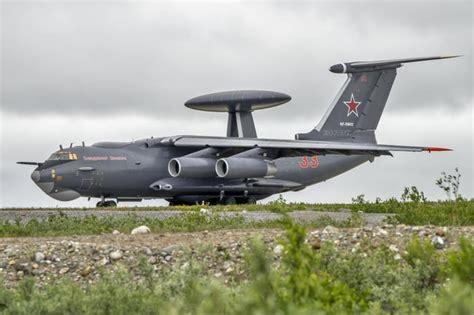
The Beriev A-50, NATO reporting name Mainstay, stands as one of the Soviet Union’s most ambitious airborne early warning and control (AEW&C) projects. Evolving from the proven Ilyushin Il-76 transport platform, the A-50 was specifically engineered to replace the aging Tupolev Tu-126 “Moss.” First taking to the skies on 19 December 1978, the aircraft entered operational service in 1985, with a total production run of approximately 42 airframes completed by 1992.
Developed amid intense Cold War pressures, the A-50 was designed to fulfill multiple strategic roles: long-range surveillance, airborne command and control, and fighter direction. Its sophisticated airborne radar systems and mission suite enabled Soviet commanders to maintain real-time situational awareness across vast airspaces, directing interceptors, managing air defense coordination, and even supporting ground-attack tasking. Over four decades, the A-50 and its modernized variant, the A-50U, have remained critical assets in both peacetime monitoring and high-stakes conflict environments.
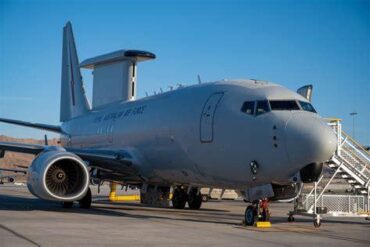
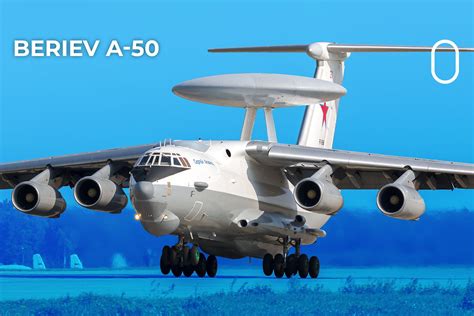
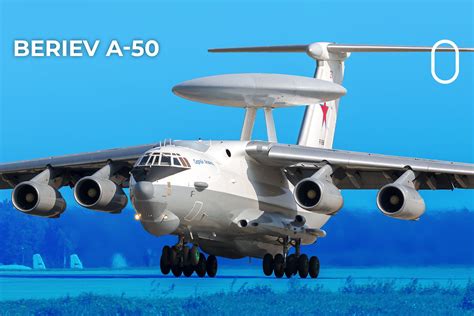
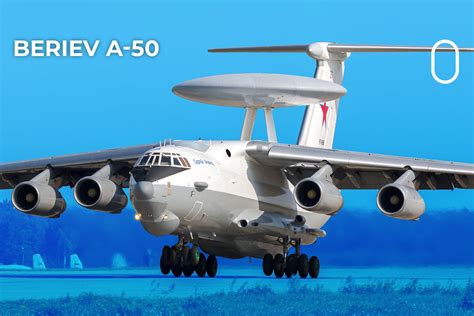
Drawing on the proven Il-76 airframe, the A-50 features a 15‑member crew operating the powerful Liana surveillance radar housed in a distinctive 9 m over‑fuselage rotodome. This configuration allows the platform to detect up to 150 individual targets simultaneously: air contacts out to 650 km and surface or maritime contacts to 300–400 km. With a four‑hour on‑station endurance and aerial refueling capability via Il-78 tankers, the Mainstay can maintain persistent coverage over contested zones.
Origins and Development
The roots of the A-50 trace back to the late 1970s, when Soviet planners recognized the need to modernize their airborne early warning capabilities. The Ilyushin Il-76, already in service as a heavy transport, offered a robust and reliable foundation. Beriev design bureaus collaborated with NPO Vega to integrate the Vega-M radar, a powerful pulse-Doppler system capable of tracking multiple targets. Trials began with the prototype’s maiden flight in December 1978, followed by rigorous state acceptance trials. Official induction occurred in 1985 with the 67th Independent Aviation Squadron at Šiauliai, Lithuanian SSR, marking a leap forward in Soviet AEW&C operations.
By 1992, geopolitical shifts brought production to an end, freezing the fleet at around 42 aircraft. Despite waning budgets, the A-50’s flexibility—controlling up to ten fighter assets for either intercept or strike missions—ensured its continued service. Its over-the-horizon detection range allowed Soviet command to anticipate NATO maneuvers well beyond the Iron Curtain. Throughout the late 1980s, smaller detachments in Chita and Vitebsk supplemented long-range patrols, and during the Gulf War (1990–1991) two A-50s monitored U.S. Air Force sorties over the Black Sea, underscoring the platform’s strategic value.
Cutting-Edge Radar Systems and Avionics
Central to the A-50’s mission effectiveness is the Liana radar system, with its iconic rotodome spinning above the fuselage. Measuring nine meters in diameter, the dome houses a mechanically scanned array that sweeps a 360° sector every ten seconds. The radar’s raw detection envelope extends to 650 km for high-altitude fighters and 300 km for ground and maritime targets, while the Vega-M’s target processing unit can maintain track files on up to 150 distinct contacts simultaneously. Enhanced signal processing and moving-target indication features allow for robust clutter rejection and the detection of low-observable threats.
Aerial refueling capability via Il-78 tankers extends on-station endurance beyond the baseline four hours, enabling the A-50 to orbit at significant distances from its home base. The integration of digital datalinks and secure voice communications permits real-time data sharing with both ground command posts and friendly fighters. In 2003, modernization efforts gave rise to the A-50U, featuring a full digital avionics suite by NPO Vega, upgraded operator consoles, improved signal trackers, and integrated navigation aids. These enhancements reduce crew workload, increase reliability, and extend mission effectiveness in electronic warfare environments.
Operational Deployment and Combat History
Peacetime Surveillance
Upon entering service in 1985, the A-50 joined the 67th Squadron, later redesignated the 144th Independent Regiment. Operating from Šiauliai until relocating to Pechora Kamenka in 1998, these aircraft conducted routine patrols over the Baltic and Northern Fleet areas. Smaller detachments maintained AEW coverage over the Russian Far East from Chita and Vitebsk during the late 1980s and early 1990s. The Mainstay’s ability to monitor high-altitude bomber routes and naval activity underscored its role in strategic deterrence and maritime domain awareness.
Syrian Civil War Support
In December 2015, the Russian Air Force deployed A-50s to support operations over Syria. From their forward operating bases, these aircraft provided battle-space management, vectoring strike aircraft such as Su-34s and Su-24Ms to targets across the theater. Their situational awareness capabilities proved invaluable in coordinating complex joint operations and tracking coalition air activity in the Eastern Mediterranean.
Russo‑Ukrainian Conflict
The A-50’s involvement in the Russo‑Ukrainian War has been marked by both strategic deployment and attrition. Deployed to Crimea in December 2018, the fleet conducted maritime surveillance and air defense coordination. In early 2023, partisan forces claimed drone strikes against an A-50 at Machulishchy, though satellite imagery showed minimal damage. In January and February 2024, Ukrainian forces successfully engaged and downed A-50Us “37 Red” and “42 Red” over the Sea of Azov, reducing the operational fleet from six to four. Open-source analysts and U.S. Army missile defense reports confirmed these losses. A later drone strike in June 2025 damaged two additional A-50s at the Ivanovo base, raising questions about the platform’s vulnerability when stationed on the ground.
Variants and Modernization Paths
- A-50: Original production variant with Vega-M radar and analogue avionics.
- A-50M: Interim upgrade featuring mid-air refueling capability and Shemel-2 radar enhancements for better low-altitude detection.
- A-50U (Mainstay-B): Fully digital upgrade with Shemel-M radar, new operator consoles, improved data processing, and enhanced crew amenities such as rest areas and galley facilities. Eight units delivered as of September 2023.
- A-50EI: Export model for the Indian Air Force, equipped with PS-90A-76 engines and Israeli EL/W-2090 AESA radar arrays, tailored for South Asian operational requirements.
The A-50U modernization program also lays the groundwork for the forthcoming Beriev A-100, which will feature the advanced Vega Premier active electronically scanned array (AESA) radar. Although Rostec announced plans to resume A-50U production in 2024, industry analysts anticipate delays due to budgetary constraints and supply chain challenges.
Global Operators and Fleet Status
- Russian Aerospace Forces: 2457th Aviation Base at Ivanovo Severny operates 16 aircraft, including both A-50 and A-50U variants.
- Indian Air Force: No. 50 Squadron at Agra Air Force Station fields three A-50EIs, with two additional units on order. The platform enhances India’s airspace monitoring over the northern and western borders.
- Korean People’s Army Air Force: Operates one A-50, acquired in the 1990s, maintained in limited operational status for strategic reconnaissance.
Technical Specifications (A-50E)
- Crew: 5 flight crew + 10 mission operators
- Dimensions: Length 46.6 m; Wingspan 50.6 m; Height 14.8 m; Wing area 300 m²
- Weights: Empty 61 000 kg; Max takeoff 170 000–190 000 kg depending on Il-76 variant
- Powerplant: 4× Soloviev D-30KP turbofan engines (117.7 kN thrust each)
- Performance: Max speed 850 km/h; Cruise 750–800 km/h; Range 7 500 km; Endurance 4 h (extendable via aerial refueling); Service ceiling 15 500 m
- Sensors & Armament: Vega-M 360° surveillance radar; 2× 23 mm GSh-23 autocannons for self-defense
Future Prospects and Strategic Value
The Beriev A-50 remains a cornerstone of Russian and allied air defense architectures. With modernization efforts extending service life and preparing the transition to the A-100 AESA-equipped platform, the Mainstay concept endures. As geopolitical tensions persist in Eastern Europe, the Middle East, and the Indo-Pacific, the ability to maintain airborne radar coverage will continue to shape conflict outcomes and deterrence postures. Despite operational losses, the A-50’s blend of range, endurance, and multi‑target tracking capability ensures its relevance for decades to come.