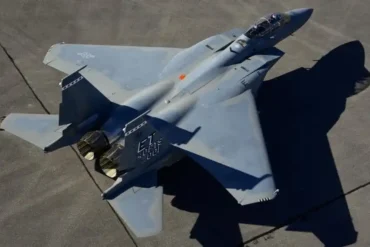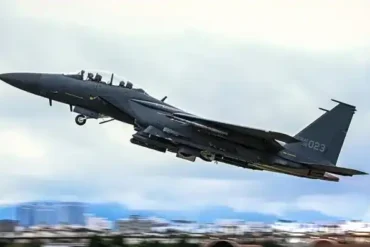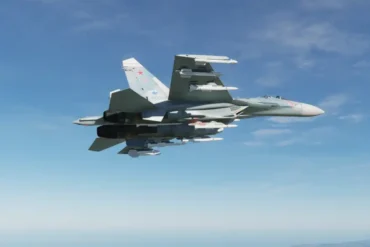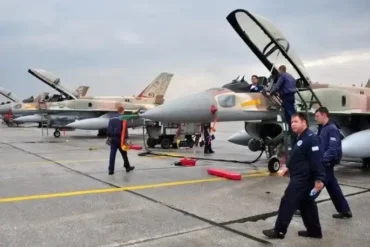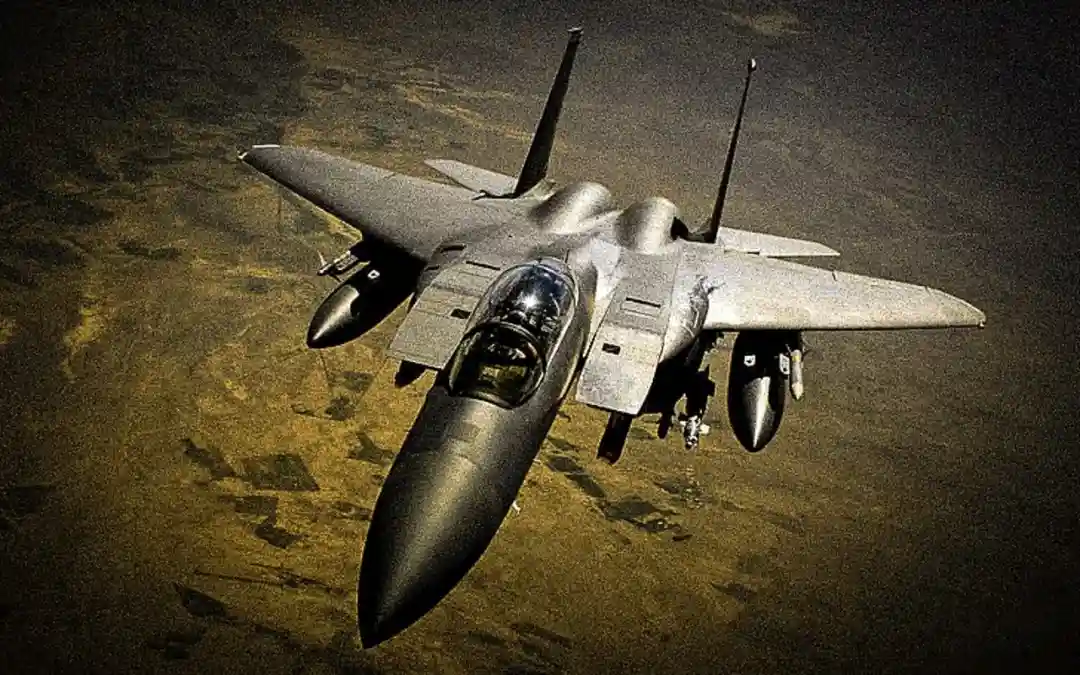
Since its introduction in 1976, the F-15 Eagle has established itself as one of the most successful and versatile multirole fighter jets in the world. Renowned for its superior maneuverability, speed, and exceptional weapon load, the F-15 has been the backbone of many air forces, earning its place in combat history. With a remarkable combat record of 104:0, primarily achieved by the Israeli Air Force (IAF), the F-15 has proven time and again that it is an aircraft capable of unparalleled air superiority. This article explores the F-15’s combat record, its role in key conflicts, and its continuous evolution to meet the demands of modern warfare.
Early Combat Successes: Dominance in the Middle East
Israel’s Historic F-15 Combat Record: 104:0
The most impressive aspect of the F-15’s combat record is its undefeated status, with a staggering 104:0 kill-to-loss ratio. The Israeli Air Force has been the primary contributor to this remarkable achievement, and it is in the Middle East that the F-15 first earned its legendary status.

In the 1982 Bekaa Valley conflict, Israeli F-15s and F-16s conducted a joint operation against Syrian forces, resulting in the destruction of 82 Syrian aircraft. This victory, achieved without a single loss of an Israeli aircraft, proved the F-15’s air superiority capabilities. Israeli pilots successfully used the AIM-7 Sparrow and AIM-120 AMRAAM missiles to neutralize a wide range of targets, including MiG-21s and MiG-23s, confirming the F-15’s role as the dominant fighter in the skies.
F-15’s Continued Role in Israeli Air Superiority
Following the Bekaa Valley battle, the IAF continued to showcase the F-15’s unmatched capabilities in various regional conflicts. Its ability to conduct long-range interceptions, air-to-air combat, and air-to-ground strikes made it a cornerstone of Israeli defense strategy. The 104:0 record became an enduring testament to the reliability and combat effectiveness of the F-15, with the aircraft serving as a cornerstone of Israel’s air superiority for decades.
Additional Key Israeli Engagements
In 2001, two Israeli F-15Cs made headlines when they successfully shot down two Syrian MiG-29s in a remarkable engagement. This further bolstered the F-15’s reputation, proving that even after decades of service, the F-15 remained a highly capable platform for intercepting and defeating advanced enemy aircraft.
The Gulf War (1991): A Crucial Moment in the F-15’s Legacy
The 1991 Gulf War was another major milestone in the F-15’s combat history, where it demonstrated its dominance in both air-to-air combat and precision strikes.
Air-to-Air Combat Superiority
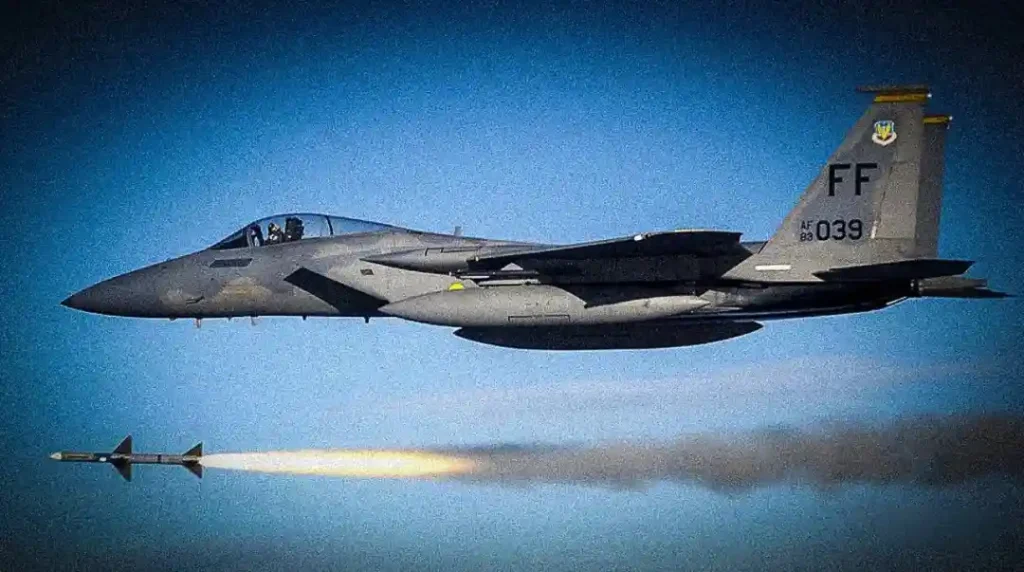
During the Gulf War, the U.S. Air Force deployed the F-15C in large numbers, where it played a pivotal role in establishing air superiority. With its advanced radar and missile systems, the F-15C shot down 33 Iraqi aircraft, including the advanced MiG-29 and Mirage F1. This achievement further solidified the F-15’s status as the dominant air-to-air fighter, capable of engaging targets at long range with AIM-7 Sparrow and AIM-120 AMRAAM missiles.
The F-15C’s unmatched combat record in the Gulf War, where it did not lose a single aircraft, reinforced its reputation as a stalwart in high-performance air-to-air engagements.
Precision Ground Strikes with the F-15E
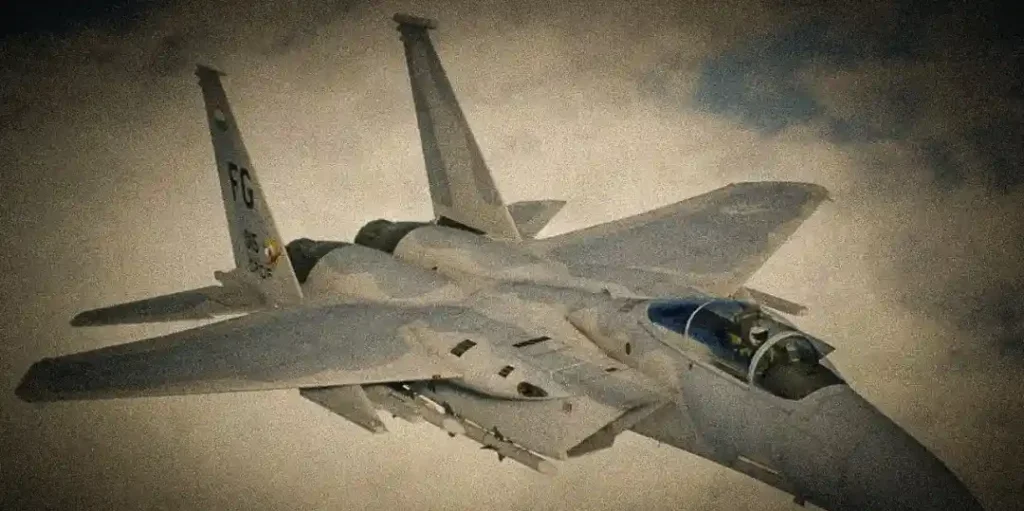
Alongside the F-15C, the F-15E Strike Eagle made its combat debut during the Gulf War. The F-15E’s multirole capabilities allowed it to conduct precision ground strikes, targeting Iraqi military installations, scud missile launchers, and command bunkers. Armed with laser-guided bombs (LGBs) and precision-guided munitions (PGMs), the F-15E played a critical role in ensuring the success of the air campaign.

Kosovo War and Post-Gulf Operations: F-15’s Continued Dominance
The F-15’s capabilities continued to evolve as it participated in subsequent conflicts, including the Kosovo War in 1999 and the Iraq War in 2003.
Kosovo War (1999): Precision Strikes with JDAMs
In the Kosovo War, the F-15E was called upon to perform air-to-ground strike missions, particularly in the form of precision strikes against Yugoslav military targets. Utilizing Joint Direct Attack Munitions (JDAMs), the F-15E destroyed military infrastructure, command centers, and radar sites, further solidifying its reputation as a capable and reliable multirole fighter.
Iraq and Afghanistan: Sustaining Air Superiority
In the Iraq War (2003) and the Afghanistan War, the F-15E continued to provide critical support to U.S. ground forces. The aircraft performed close air support (CAS) missions, striking high-value targets and enemy positions with precision-guided munitions. The F-15E proved invaluable in these conflict zones, proving its ability to adapt to a variety of combat scenarios while maintaining operational effectiveness over extended periods.
The F-15 in the Saudi Air Force: A Regional Power Player
Saudi Arabia, another major operator of the F-15, has relied heavily on the aircraft in regional conflicts, particularly the Yemeni Civil War.
The F-15SA: An Advanced Variant for Modern Warfare
The F-15SA, an upgraded variant of the F-15, has proven itself as a highly capable multirole fighter in Saudi hands. Equipped with modern avionics, advanced radar, and electronic warfare systems, the F-15SA is tailored to meet the challenges of contemporary air combat. The Saudi F-15SA fleet has been extensively employed in the ongoing Yemeni Civil War since 2015, conducting both air-to-air and air-to-ground missions against Houthi rebel forces.
High Survivability and Combat Effectiveness
Despite claims from the Houthis of shooting down Saudi F-15s using anti-aircraft missiles, no official reports have confirmed such incidents, underscoring the aircraft’s high survivability in hostile environments. The F-15SA’s ability to conduct precision airstrikes and maintain air superiority remains a critical asset in Saudi Arabia’s defense strategy.
The Future of the F-15: From Legacy to Innovation
Though the F-15 has been in service for nearly 50 years, its combat record and continued relevance in modern warfare are undeniable. The aircraft has undergone a series of upgrades, ensuring it remains a formidable force in the skies.
The F-15EX: A New Chapter in F-15 Combat History
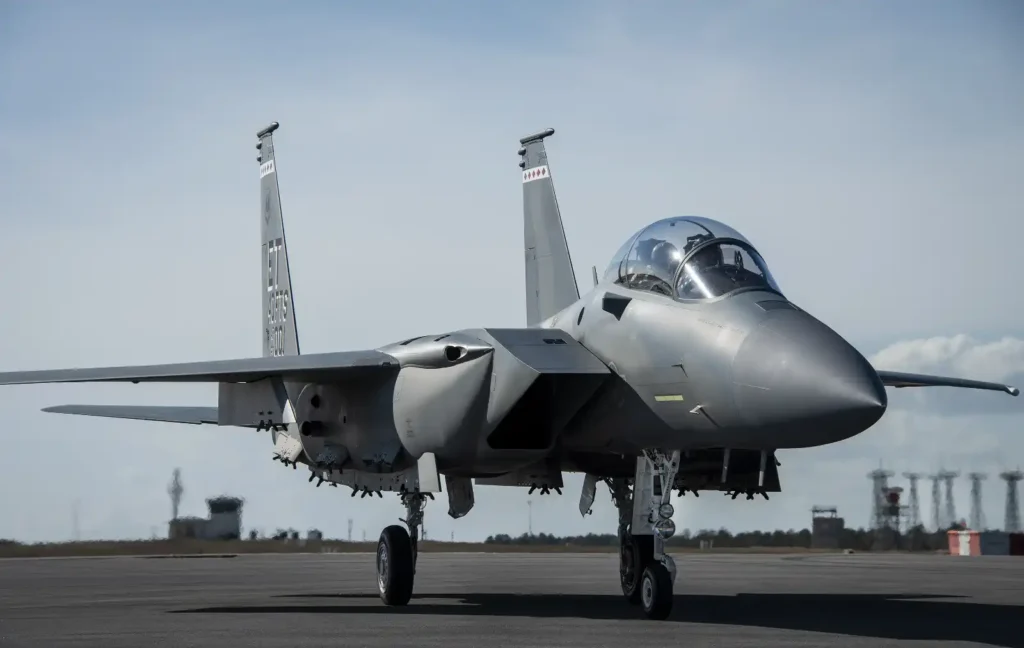
The introduction of the F-15EX marks the next chapter in the F-15’s legacy. This upgraded version features cutting-edge electronic warfare systems, including the EPAWSS (Electronic Warfare System), developed by BAE Systems, to enhance its survivability in contested electromagnetic environments. The F-15EX’s capabilities also include carrying a massive weapons load, with the ability to carry up to 22 air-to-air and air-to-ground missiles, including 12 AMRAAMs.
Advanced Weapon Systems and Multirole Capabilities
The F-15EX’s payload capacity of 13.5 tons and its ability to deliver a wide array of precision-guided munitions make it a highly versatile aircraft. As part of the U.S. Air Force’s high-low mix strategy, the F-15EX will work alongside the F-35 to deliver both air superiority and strike capabilities. This upgrade ensures the F-15 remains a potent tool in modern combat, continuing its legacy of dominance.
Conclusion: A Timeless Combat Legend
The F-15 remains one of the most successful and versatile combat aircraft in the world, with a combat record of 104:0 largely attributed to the Israeli Air Force. From its early engagements in the Middle East to its critical role in the Gulf War and subsequent conflicts, the F-15 has proven its value time and again. Its continuous upgrades, including the F-15EX, ensure that it remains at the forefront of modern air combat.
The F-15’s undefeated combat record and its global impact have solidified its place as a timeless legend in the world of military aviation, and its future remains bright as it continues to evolve with the demands of modern warfare.