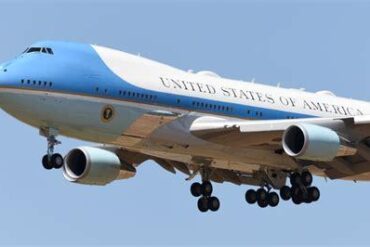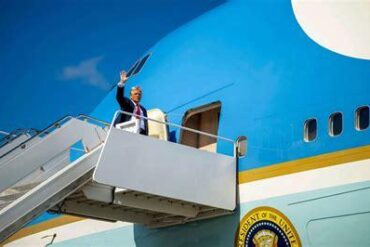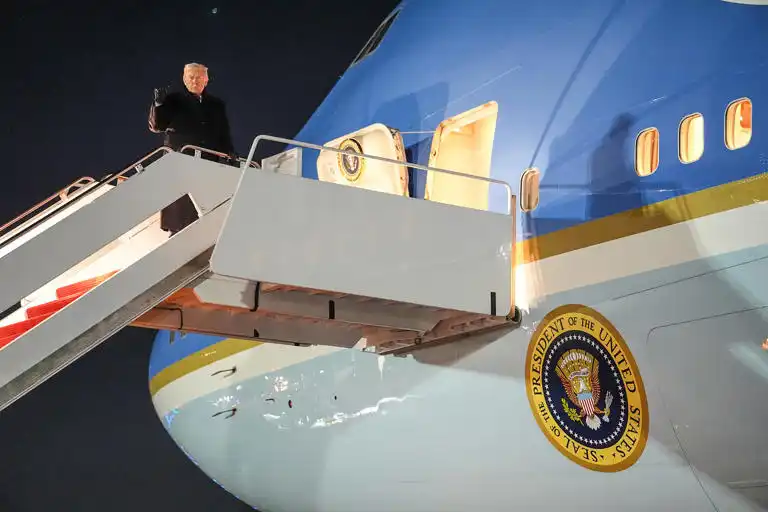
The transatlantic journey that was supposed to carry President Donald Trump smoothly from the United States to Switzerland instead became a vivid reminder that even the most advanced presidential aircraft are not immune to mechanical reality. Late Tuesday night, the iconic Boeing 747 known worldwide as Air Force One was forced to turn back shortly after departure, aborting its crossing of the North Atlantic and triggering an unusually public scramble to keep the presidential schedule intact.
Air Force One, formally designated the Boeing VC-25A, departed Joint Base Andrews in Maryland bound for Zürich, where Trump was due to attend the World Economic Forum in Davos. Not long after takeoff, an electrical issue emerged onboard, prompting the flight crew to make the conservative but unavoidable decision to return to base. The aircraft landed back at Joint Base Andrews at 11:07 p.m. local time, ending the first attempt at the overnight journey before it truly began.
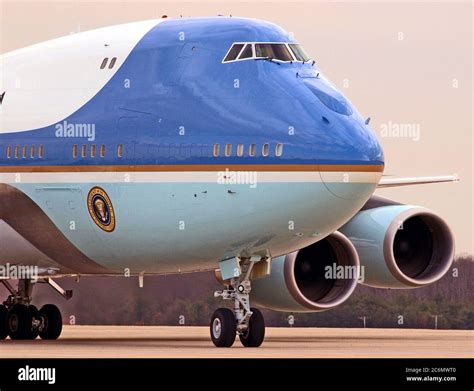
The incident immediately drew attention not only because of the passenger involved, but because the VC-25A fleet has long been a symbol of American technological prestige. These heavily modified Boeing 747-200 aircraft entered service in the early 1990s, and while they are meticulously maintained, their age has increasingly placed them under scrutiny. The aborted flight added fresh fuel to a debate already simmering inside Washington and the aviation community.
According to White House Press Secretary Karoline Leavitt, the electrical issue was described as minor, yet significant enough to justify caution. The emphasis on safety underscored a key principle of presidential air travel: no risk is acceptable when redundancy and alternatives exist. That philosophy quickly moved from theory to practice as contingency plans were activated almost immediately.
Within less than an hour of the VC-25A’s return, a replacement aircraft was prepared. The solution came not from another jumbo jet, but from a smaller, narrower platform that quietly plays a crucial role in presidential logistics. A Boeing C-32A, a military variant of the 757-200, was readied to carry Trump and his team across the Atlantic instead.
The speed of the turnaround was striking. The C-32A departed at 12:05 a.m. local time, just 58 minutes after the faulty 747 touched down. Considering the layers of security, communications checks, and coordination required for presidential travel, the rapid switch highlighted the depth of planning that surrounds every movement of the commander-in-chief. It was a logistical ballet performed in the dark, under intense pressure, and with little margin for error.
While less visually imposing than the 747, the C-32A is no stranger to high-profile missions. Operated by the United States Air Force, the aircraft is most commonly associated with the Vice President and often flies under the callsign Air Force Two. However, when the President is onboard, the callsign “Air Force One” transfers to whichever aircraft is carrying him, regardless of size or type. In this case, the slender twinjet briefly inherited one of the most famous identifiers in aviation.
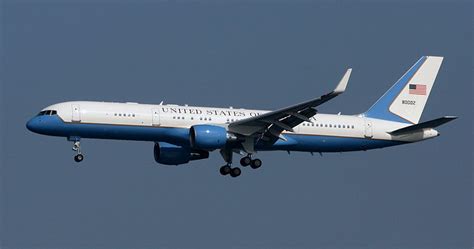
The aircraft used for the journey, registration 09-0015, is itself no spring chicken. At 34 years old, it reflects a broader reality about the US executive airlift fleet: many of its most critical assets date back decades. Despite that age, the C-32A has proven capable of long-range missions. Flight tracking data shows it has previously ventured far beyond US borders, including trips to the Middle East and an extensive multi-stop journey across Europe and Asia late last year.
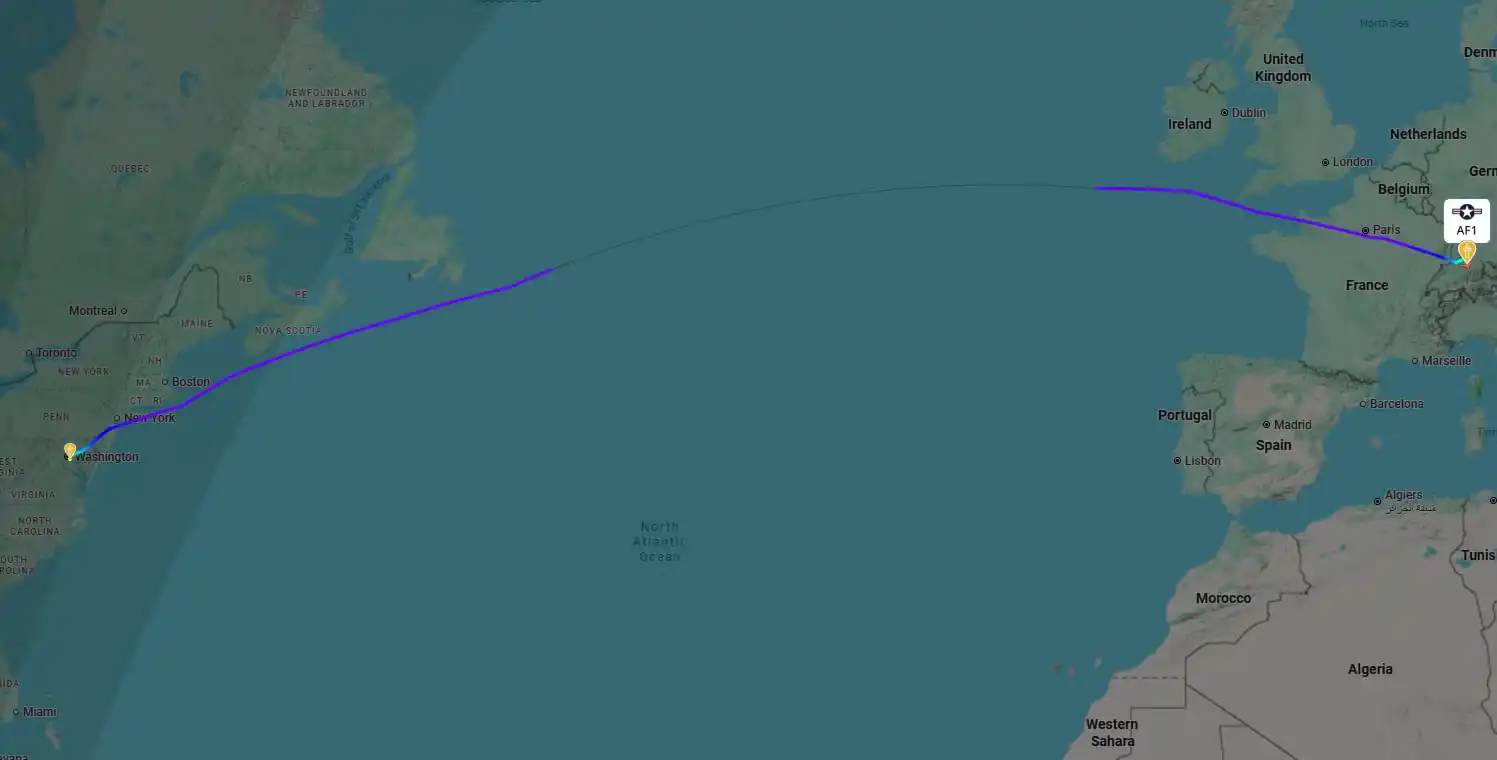
By early afternoon in Switzerland, the mission was back on track. The C-32A touched down at Zürich Airport at 12:35 p.m. local time, delivering Trump with only a modest delay. The arrival drew extraordinary online attention, with Flightradar24 reporting that more than 112,000 users were tracking the aircraft as it descended toward the runway. The combination of presidential travel, a mid-flight abort, and a substitute aircraft had turned a routine diplomatic journey into a global spectator event.
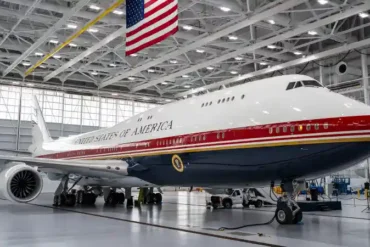
Beyond the immediate drama, the aborted flight highlighted deeper structural issues surrounding Air Force One. The VC-25A fleet has become a focal point during Trump’s presidency, particularly as plans for its replacement continue to slip. The long-anticipated next-generation Air Force One, based on the Boeing 747-8, has faced repeated delays, with delivery now projected no earlier than mid-2028. Cost overruns, technical challenges, and supply chain complications have all contributed to the extended timeline.
In response, the US government has taken interim measures, including the acquisition of a former Qatari VIP-configured 747-8 that is now being modified for executive airlift duties. This stopgap solution reflects an uncomfortable truth: the aircraft meant to symbolize continuity and power is itself caught in a transitional limbo, bridging an aging past and an uncertain future.
The episode also served as a quiet reminder of how resilient the presidential travel system truly is. When one aircraft falters, another stands ready, crewed, fueled, and equipped to assume the mission with minimal disruption. The public rarely sees this redundancy in action, but on this night, it unfolded in real time, tracked by aviation enthusiasts and casual observers alike.
In the end, the aborted Atlantic crossing was less a crisis than a stress test, one that the system passed. Trump arrived in Switzerland, the schedule largely held, and Air Force One once again became a topic of conversation far beyond aviation circles. The incident reinforced an enduring reality: even at 35,000 feet, technology, caution, and contingency planning remain inseparable companions to power.