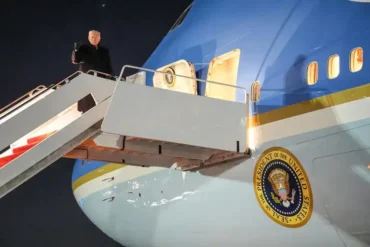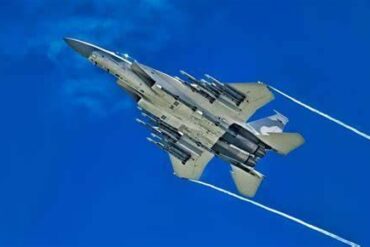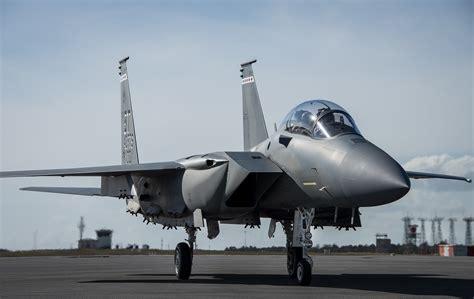
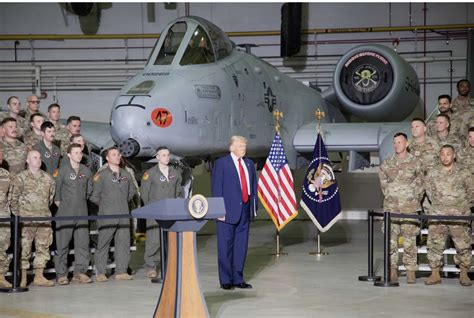
On April 29, 2025, U.S. President Donald J. Trump delivered a landmark announcement at Selfridge Air National Guard Base, confirming that the 127th Wing of the Michigan Air National Guard will replace its venerable fleet of A-10C Thunderbolt II aircraft with 21 state-of-the-art F-15EX Eagle II multirole fighters. This bold strategic move signals a profound shift in the Air National Guard’s combat capabilities and underscores the U.S. Department of Defense’s ongoing commitment to modernize its tactical airpower in response to evolving global threats.
The 127th Wing, a storied unit with roots dating back to World War I, operates out of Selfridge, a base that has long stood as a symbol of American airpower. With its composite structure of the 107th Fighter Squadron and the 171st Air Refueling Squadron, the Wing has demonstrated decades of versatility, performing missions ranging from close air support and air-to-air combat to aerial refueling operations. Historically flying a diverse array of aircraft—from the F-84 Thunderjet to the A-10 Thunderbolt II—the 127th Wing has epitomized adaptability and operational excellence in both domestic defense and overseas engagements.
The A-10 Thunderbolt II: A Legendary CAS Platform Nearing Sunset
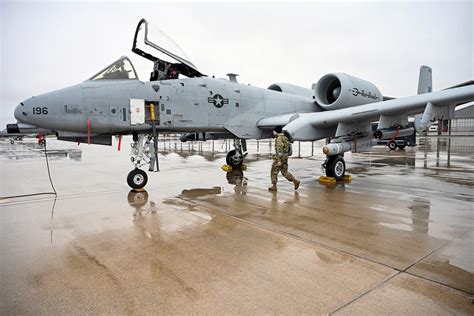
The A-10 Thunderbolt II, affectionately known as the “Warthog,” has earned legendary status for its unmatched performance in close air support (CAS) missions. Built around the formidable GAU-8/A Avenger 30mm rotary cannon, the A-10 can decimate armored targets with unrivaled precision. Designed for survivability, its titanium-armored cockpit, redundant flight systems, and damage-tolerant airframe have made it indispensable in asymmetric warfare environments.
Yet, the A-10’s strengths—its slow speed, low-altitude loiter capability, and tank-killing firepower—have become liabilities in the modern battlefield. Facing sophisticated adversaries equipped with advanced surface-to-air missiles (SAMs) and fifth-generation fighters, the A-10’s lack of stealth, limited sensor suite, and vulnerability to high-end threats have exposed the platform’s diminishing relevance in peer-conflict scenarios.
The F-15EX Eagle II: A Quantum Leap in Capability
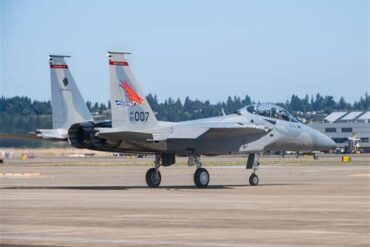
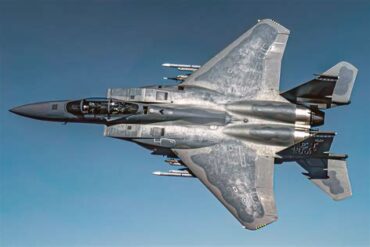
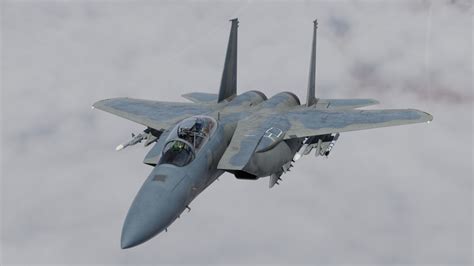
In stark contrast, the F-15EX Eagle II represents the cutting edge of fourth-generation fighter technology, enhanced by critical fifth-generation systems. Developed by Boeing, the Eagle II retains the battle-hardened airframe of its predecessors but incorporates groundbreaking advancements in avionics, digital architecture, and mission systems. Powered by twin Pratt & Whitney F100-PW-229 engines, the F-15EX achieves speeds exceeding Mach 2.5 and operates at altitudes over 65,000 feet, boasting an exceptional combination of speed, power, and altitude flexibility.
With an ordnance capacity of more than 29,000 pounds, the Eagle II can carry an impressive array of weaponry, from AIM-120 AMRAAMs and AIM-9X Sidewinders to advanced AGM-158 JASSM air-to-ground standoff missiles. This heavy payload capability, combined with superior sortie rates, makes the F-15EX a formidable force multiplier in both air superiority and strike missions.
At the heart of the Eagle II is its AN/APG-82(V)1 AESA radar, offering unparalleled detection, tracking, and targeting precision. Paired with the Eagle Passive/Active Warning Survivability System (EPAWSS), the aircraft features advanced electronic warfare capabilities that enable it to detect, jam, and evade enemy radar and missile systems. Its open-architecture design ensures rapid integration of emerging technologies, future-proofing the platform for decades to come.
A Strategic Pivot for the 127th Wing
President Trump’s decision to equip the 127th Wing with the F-15EX is a testament to the unit’s operational readiness and tactical proficiency. The transition is slated to begin in fiscal year 2028, with 21 Eagle IIs being delivered alongside sweeping infrastructure upgrades at Selfridge. Pilots and ground crews will undergo rigorous retraining to master the complexities of the new platform, ensuring a seamless integration into active operations.
This transformation is more than a simple aircraft replacement; it represents a doctrinal shift for the 127th Wing. Moving beyond its historic focus on close air support, the unit will expand its operational scope to include air superiority, offensive counter-air, and deep interdiction missions. The transition ensures that the 127th Wing remains not just relevant, but indispensable in high-threat environments against near-peer adversaries such as China and Russia.
Economic and Strategic Impact for Michigan
Selfridge Air National Guard Base, a critical economic engine contributing nearly $850 million annually to Michigan’s economy, is poised to benefit significantly from the Eagle II program. The influx of advanced aircraft will necessitate upgrades in logistics, maintenance, and training facilities, bringing new investments and job opportunities to the region. Additionally, plans to station KC-46A Pegasus aerial refueling tankers at Selfridge will further cement the base’s status as a pivotal hub for air mobility and combat support operations.
Toward a Future-Ready Air National Guard
The replacement of the A-10 with the F-15EX at Selfridge is emblematic of the U.S. Air Force’s broader strategic pivot. As warfare evolves toward contested, multi-domain operations, legacy systems designed for irregular conflicts must give way to platforms capable of excelling in peer-level engagements. The F-15EX, with its blend of speed, firepower, and adaptability, embodies the technological leap required to maintain U.S. air dominance.
This transformation ensures that the 127th Wing, long a stalwart of American airpower, will remain at the vanguard of 21st-century air combat. The Eagle II’s arrival marks not just a new chapter for Selfridge but a reaffirmation of the Air National Guard’s indispensable role in national defense strategy well into the 2040s and beyond.