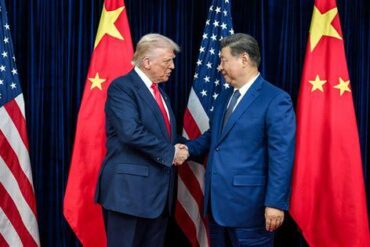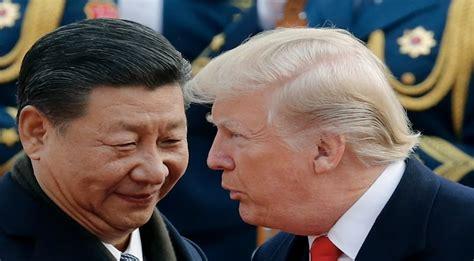
China may finally be reopening one of the most strategically important aviation markets in the world to Boeing. During a high-profile visit to Beijing, President Donald Trump declared that China had agreed to purchase 200 Boeing aircraft, a figure that exceeds the 150 jets Boeing had reportedly been seeking during negotiations.
The announcement immediately sent shockwaves through the aerospace industry, where Boeing’s near-decade struggle to regain footing in China has become one of the defining commercial aviation stories of the post-737 MAX era. While key details remain undisclosed — including aircraft types, customer airlines, delivery schedules, and financial terms — the political and industrial significance of the announcement is already substantial.
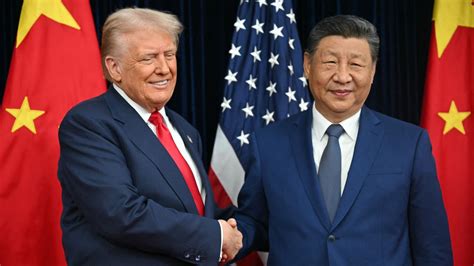
According to Trump’s remarks during an interview with FOX News host Sean Hannity, the agreement emerged from ongoing discussions with Chinese President Xi Jinping as both governments sought broader trade concessions involving energy, agriculture, and manufacturing exports.
“One thing he agreed to today, he’s going to order 200 jets … Boeing wanted 150, they got 200,” Trump said during the televised interview.
The statement may prove to be far more consequential than a simple aircraft order. It potentially signals the beginning of a thaw in one of Boeing’s most damaged international relationships.
Boeing’s China Freeze May Finally Be Ending
For Boeing, the Chinese market has represented both enormous opportunity and extraordinary frustration over the last seven years. Before the 737 MAX crisis erupted in 2019, China was routinely one of Boeing’s largest and fastest-growing customers. Massive state-linked aircraft purchases occurred every few years, helping sustain Boeing production lines and strengthening American manufacturing exports.
That momentum collapsed after the fatal Lion Air and Ethiopian Airlines crashes involving the 737 MAX. China became the first country in the world to ground the aircraft in March 2019, moving ahead of the Federal Aviation Administration and virtually every other major regulator.
What followed was an unusually prolonged freeze.
While many aviation authorities gradually reapproved the MAX, China kept the aircraft sidelined for years longer. Boeing deliveries into China slowed dramatically, and political tensions between Washington and Beijing further complicated negotiations. The result was a historic sales drought that allowed Airbus to aggressively expand its influence across the Chinese market.
Industry estimates suggest Boeing delivered only slightly more than 100 aircraft into China during the years following the MAX crisis — a stunning decline considering Chinese airlines alone accepted roughly that number of MAX jets during 2018.
Against that backdrop, a 200-aircraft agreement represents more than a sales win. It represents a strategic reopening.
Why The 200-Aircraft Figure Matters
The reported size of the agreement is especially notable because Boeing had reportedly been pursuing a much larger package in discussions with Chinese officials and airlines.
Earlier industry reports suggested negotiations could involve as many as 500 Boeing aircraft, including large numbers of 737 MAX narrowbody jets alongside potential widebody orders for the 787 Dreamliner and possibly the delayed 777X program.
That context explains why financial markets reacted cautiously despite the headline-grabbing announcement. Boeing shares reportedly fell more than 4% during trading following Trump’s remarks, as investors weighed whether the deal represented only a partial breakthrough rather than the mega-order some analysts had anticipated.
Still, a confirmed 200-jet purchase would rank among the largest Boeing-China agreements of the decade.
Previous state-linked Chinese Boeing deals included:
- 300 aircraft in 2017
- 300 Boeing 737s in 2015
- 200 aircraft in 2013
- 200 aircraft in 2011
The pattern illustrates how important periodic Chinese bulk purchases have historically been to Boeing’s commercial strategy. The nearly decade-long interruption since 2017 created an enormous vacuum that Airbus moved quickly to exploit.
The 737 MAX Is Likely The Core Of The Deal
Although Trump referred broadly to “large aircraft,” aviation analysts expect the package to be heavily dominated by the Boeing 737 MAX family.
China’s domestic air travel demand continues to expand rapidly, and narrowbody aircraft remain the backbone of airline growth strategies across the country. Aircraft such as the 737 MAX and Airbus A320neo are essential for high-frequency domestic routes connecting China’s megacities and secondary urban markets.
Widebody aircraft like the Boeing 787 Dreamliner and 777X may still form part of the agreement, particularly as Chinese airlines rebuild international long-haul networks following years of pandemic disruption. However, narrowbody aircraft almost certainly represent the bulk of the reported order.
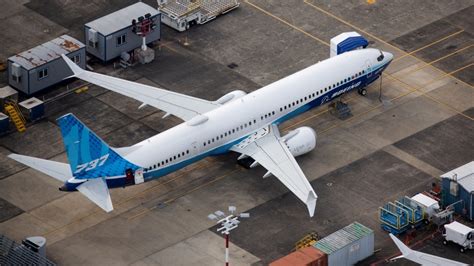
That focus would align with broader global airline trends. Airlines increasingly favor fuel-efficient narrowbodies capable of operating medium-haul international routes while maintaining lower operating costs.
For Boeing, securing large-scale MAX orders in China is especially important because the aircraft remains central to the company’s financial recovery strategy.
Airbus Built A Massive Advantage While Boeing Struggled
While Boeing remained effectively frozen out of China, Airbus expanded aggressively.
The European manufacturer secured a series of enormous agreements with Chinese airlines and state aviation authorities, gradually establishing dominance in one of the world’s most critical aircraft markets.
Major Airbus agreements since 2019 include:
- 300 aircraft ordered during Xi Jinping’s visit to France in 2019
- 292 A320-family aircraft ordered by major Chinese carriers in 2022
- 160 additional aircraft allocated through CAAC-linked agreements in 2023
- Multiple A320neo-family orders across 2025 and 2026 totaling more than 350 aircraft
Airbus strengthened its position even further through industrial partnerships inside China itself.
Its Tianjin final assembly line became a major strategic advantage, allowing Airbus to present itself not merely as a foreign supplier but as a manufacturing partner embedded within China’s aviation economy. The company later expanded the facility with a second assembly line, deepening those ties and increasing production capacity for Chinese customers.
Boeing, by contrast, struggled to match that level of industrial integration.
The imbalance became increasingly visible as Airbus steadily accumulated orders while Boeing remained locked in regulatory uncertainty and geopolitical tension.
Trump’s Beijing Visit Adds Political Weight To The Deal
The timing of the announcement also matters.
Trump’s Beijing visit has focused heavily on trade flows and export expansion, with aircraft purchases serving as a politically symbolic example of American manufacturing strength. Boeing has long occupied a special role in U.S.-China economic relations because aircraft orders generate enormous headlines while supporting thousands of highly skilled American jobs.
Treasury Secretary Scott Bessent had already hinted before the trip that a major Boeing order could emerge from the negotiations.
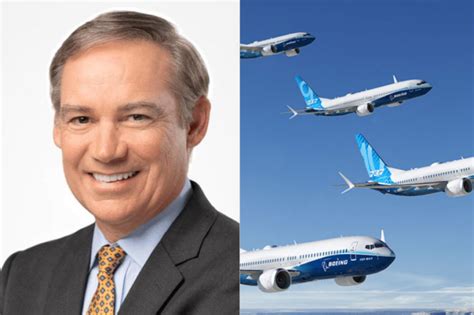
Boeing CEO Kelly Ortberg also joined the delegation of American executives traveling with Trump, underscoring the strategic importance attached to aviation diplomacy.
Whether the agreement ultimately becomes a firm contract, framework arrangement, or political memorandum remains unclear. Aircraft negotiations involving Chinese state entities often evolve gradually over months before becoming fully finalized.
Still, public acknowledgment from both political leadership and American officials substantially increases pressure to convert discussions into actionable orders.
China Remains The Aviation Prize Every Manufacturer Wants
The long-term stakes behind the agreement extend far beyond 200 airplanes.
China is expected to become the world’s largest commercial aviation market during the coming decades. Industry forecasts project the country’s airline fleet could nearly double by the early 2040s, approaching 10,000 commercial aircraft as rising incomes and expanding regional connectivity drive explosive travel demand.
That future growth makes China impossible for Boeing to ignore.
Allowing Airbus to dominate the market indefinitely would create serious long-term consequences for Boeing’s global competitiveness, production planning, and aftermarket support business. Every large Chinese fleet order also influences pilot training pipelines, maintenance ecosystems, spare parts supply chains, and future replacement cycles.
Aircraft competition is rarely limited to a single transaction. Once airlines commit heavily to one manufacturer’s ecosystem, future fleet decisions often follow the same direction for decades.
That reality explains why Boeing’s reentry into China matters so much strategically.
Boeing Still Faces Major Challenges Ahead
Even if the reported agreement is fully confirmed, Boeing’s problems will not disappear overnight.
The company continues facing production constraints, regulatory oversight, certification delays, and supply-chain bottlenecks affecting multiple programs. Delivering hundreds of aircraft into China would require sustained manufacturing stability at a time when Boeing remains under intense scrutiny from regulators and airline customers alike.
Questions also remain about how quickly Chinese regulators will normalize approvals for future Boeing deliveries.
Yet despite those challenges, the symbolism of the announcement is difficult to overstate.
For years, Boeing’s absence from China became a visible measure of both the MAX crisis fallout and deteriorating U.S.-China relations. A renewed aircraft agreement suggests that commercial pragmatism may once again be outweighing political friction in one of the world’s most important aerospace relationships.
A confirmed 200-aircraft deal would not instantly erase Boeing’s lost ground. But it would mark the company’s most important commercial breakthrough in China since before the 737 MAX crisis — and potentially the beginning of a much larger comeback.