The idea that loyalty points programs are “ruining” luxury hotels has a certain dramatic flair, but beneath the surface, it reveals something far more uncomfortable for the hospitality industry: a tension between exclusivity and accessibility that hotels themselves created—and now struggle to control. The narrative that guests redeeming points are somehow degrading the luxury experience may sound compelling in elite circles, but it collapses quickly under scrutiny. What’s really happening is not a decline in standards caused by guests, but a structural contradiction in how modern luxury hospitality operates.
The Rise of Points Culture in Luxury Hospitality
Luxury hotel groups didn’t stumble into loyalty programs by accident. These systems were meticulously engineered to drive repeat business, build brand ecosystems, and create emotional attachment to corporate portfolios rather than individual properties. Giants like Marriott International and Hilton didn’t just introduce rewards—they built entire economic engines around them.
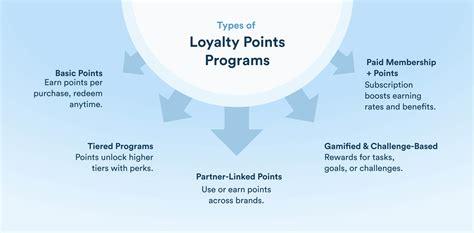
Points programs transformed hotels into something more than destinations; they became part of a broader consumption loop. Guests earn points through stays, co-branded credit cards, and partnerships, then redeem them for future travel. This system incentivizes loyalty in a way traditional hospitality never could.
But here’s the twist: the very success of these programs has blurred the line between exclusivity and mass participation. When hundreds of millions of members can access the same ecosystem, the idea of “elite travel” begins to shift.
The “Freeloader” Myth: A Misguided Narrative
The claim that guests redeeming points are freeloaders is not just flawed—it’s fundamentally disconnected from how these programs function. Points are not free perks handed out arbitrarily; they are earned through spending, often at significant opportunity cost.
When a traveler chooses to accumulate hotel points instead of cashback or other rewards, they are making a calculated financial decision. That “free” night is, in reality, prepaid through loyalty.
Labeling these guests as freeloaders is akin to criticizing someone for redeeming miles on a flight or using a coffee shop reward. It ignores the transactional nature of loyalty ecosystems and reframes a designed benefit as an abuse of the system.
More importantly, it reveals a subtle but telling bias: a belief that certain guests “belong” in luxury spaces while others do not. That’s not a hospitality issue—it’s a perception problem.
When Anecdotes Replace Reality
Stories of guests making sandwiches from breakfast buffets or emptying minibars to store personal food are often presented as evidence of a broader problem—yet they are, at best, isolated incidents. Every hotel, regardless of price point, encounters difficult guests. To attribute such behavior specifically to points users is not just misleading—it’s intellectually lazy.
Luxury hotels have always hosted a wide spectrum of personalities. Wealth does not guarantee etiquette, and frugality does not equate to poor behavior. The idea that paying cash inherently produces a more refined guest is more fantasy than fact.

The Real Issue: Hotels Want It Both Ways
The real tension lies not with guests, but with hotel owners and operators who are attempting to reconcile two conflicting goals: maximizing revenue through large-scale loyalty programs while preserving an aura of exclusivity.
Affiliation with major brands brings undeniable advantages—global distribution, marketing power, and a steady stream of bookings. Loyalty programs are central to this equation. Without them, many properties would struggle to maintain occupancy, especially in competitive markets or during low seasons.
Yet, during peak periods, some operators begin to resent the very system that fills their rooms. Points redemptions, elite benefits, and upgrade expectations can feel like constraints rather than advantages. This leads to a quiet but persistent friction: hotels want the demand, but not the obligations that come with it.
That’s not a failure of the program—it’s a failure of alignment.
The Economics Behind the Curtain
To understand why loyalty programs are unlikely to disappear, one must look at where the real money is made. For companies like Marriott Bonvoy and Hilton Honors, loyalty ecosystems are not just marketing tools—they are profit centers.
These programs generate billions through partnerships with banks, particularly via co-branded credit cards. Financial institutions purchase points in bulk, which are then distributed to cardholders. This creates a lucrative cycle that extends far beyond hotel stays.
In many cases, the loyalty program itself is more profitable than the hotel operations. Suggesting that these companies should abandon points programs is not just unrealistic—it ignores the core of their business model.
Why True Luxury Brands Opt Out
It’s often noted that ultra-luxury brands like Aman Resorts, Four Seasons Hotels and Resorts, and Mandarin Oriental do not operate traditional points programs. This is frequently cited as evidence that loyalty schemes dilute the luxury experience.
But the reality is more nuanced.
These brands rely on a different strategy: uncompromising service, strong brand identity, and a clientele willing to pay for consistency and exclusivity. They don’t need loyalty programs because their value proposition is inherently compelling.
In contrast, large hotel groups manage vast portfolios across multiple tiers. Loyalty programs help unify these properties under a single umbrella and provide a reason for guests to stay within the ecosystem.
The absence of points in ultra-luxury is not a moral stance—it’s a strategic choice.

The Illusion of Declining Standards
There is a legitimate concern buried within the criticism: some hotels do cut corners. However, attributing this decline to points programs is misplaced.
In reality, the issue often stems from cost management decisions. When hotels know they have a built-in customer base through loyalty programs, there can be less pressure to compete on service quality. Սա creates a complacency that has nothing to do with who the guests are and everything to do with operational strategy.
Blaming points users for this dynamic is like blaming passengers for airline delays caused by scheduling inefficiencies. It targets the symptom, not the cause.
Exclusivity vs. Accessibility: A Defining Tension
Luxury has always been defined by scarcity. Loyalty programs, by design, democratize access. This creates an inherent contradiction that no amount of branding can fully resolve.
When a guest redeems points for a five-star stay, they are participating in a system that was intentionally built to offer that opportunity. The discomfort some industry insiders feel is not about behavior—it’s about perception. The presence of points users challenges traditional notions of who luxury is “for.”
But markets evolve. What was once exclusive becomes aspirational, then accessible. This is not degradation—it’s transformation.
A More Honest Perspective on Loyalty Programs
The argument that points programs are ruining luxury hotels ultimately collapses under its own contradictions. These programs are not external forces imposed on unwilling participants; they are integral to how modern hotel groups operate.
If a property believes that affiliation with a loyalty program undermines its brand, it has a clear option: leave the system. Independent hotels and non-program luxury brands demonstrate that this path is viable.
What doesn’t hold up is the attempt to benefit from the scale and profitability of loyalty ecosystems while simultaneously criticizing the guests they attract.

Conclusion: The Real Problem Isn’t the Guest
The debate over points programs and luxury hotels says far more about industry psychology than guest behavior. It exposes a reluctance to fully accept the consequences of strategic decisions.
Guests are simply playing the game as it was designed. They earn points, redeem them, and engage with brands exactly as intended. There is nothing inherently disruptive about that.
The real question is whether the industry is willing to confront its own contradictions. Luxury cannot be both exclusive and mass-market without friction. Loyalty programs did not create this tension—but they have made it impossible to ignore.
And perhaps that’s the most valuable thing they’ve done.