Delta Air Lines is preparing to strengthen its position in the Pacific Northwest with the return of nonstop flights between Seattle-Tacoma International Airport (SEA) and Tokyo Narita International Airport (NRT), reopening a major competitive front against Alaska Airlines. The reinstated route marks Delta’s return to the Seattle-Narita market after a seven-year absence and highlights the carrier’s continued ambition to transform Seattle into a leading global gateway.
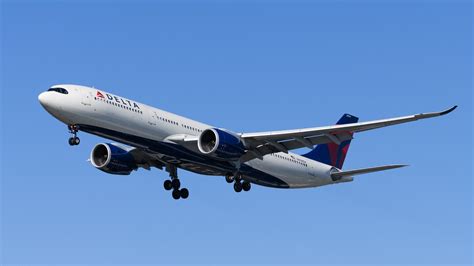
The new service is scheduled to begin on March 27, 2027, giving travelers another option between the United States and Japan. Delta will operate the route with the Airbus A330-900neo, adding additional capacity to its already extensive Tokyo network from Seattle. The move comes as both Delta and Alaska continue expanding their international operations from Seattle, a city that has become one of the most strategically important aviation markets in North America.
Delta Returns to Seattle-Tokyo Narita After Seven-Year Break
Delta’s renewed Seattle-Narita service represents a significant shift in the airline’s Pacific strategy. The carrier previously operated flights between Seattle and Narita through its historical connection with Northwest Airlines, which had a long-standing presence in Japan. However, Delta suspended the route in 2020 as the COVID-19 pandemic severely disrupted international aviation demand.
The upcoming relaunch will restore a second Tokyo option for Delta passengers departing from Seattle. The airline already operates daily flights between Seattle and Tokyo Haneda Airport, the preferred airport for many business travelers due to its proximity to central Tokyo. By adding Narita back into its network, Delta will provide customers with greater flexibility while increasing its competitive pressure on Alaska Airlines.
Delta’s planned schedule includes flight DL167, departing Seattle at approximately noon and arriving in Narita at around 2:20 PM the following day. The return flight, DL166, will leave Narita at approximately 4:05 PM and arrive in Seattle around 9:25 AM. The flights will have scheduled durations of about 10 hours and 20 minutes westbound and 9 hours and 20 minutes eastbound.
The airline believes the combination of Haneda and Narita services will create what it describes as its most comprehensive Seattle-Tokyo offering ever. By serving both Tokyo airports, Delta can appeal to different passenger groups, including corporate travelers, leisure passengers, and connecting customers across its extensive U.S. network.
Seattle Becomes a Major Battleground Between Delta and Alaska Airlines
The return of Delta’s Narita route is not simply an expansion of international capacity; it is also a direct challenge to Alaska Airlines’ growing global ambitions. Seattle has historically been Alaska’s strongest market, with the carrier maintaining a dominant position at Seattle-Tacoma International Airport.
However, Delta has spent years building Seattle into a major international hub. The airline currently operates more than 160 peak-day departures from Seattle to over 62 destinations, positioning itself as one of the largest international carriers at the airport. Its growing network includes routes to Europe, Asia, and other global destinations.
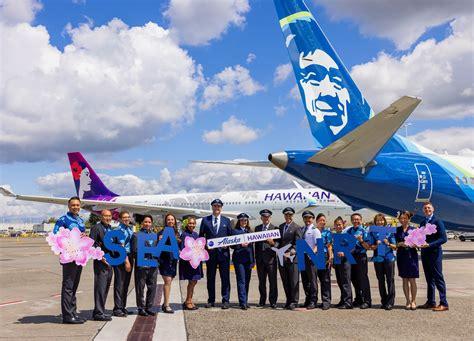
Alaska Airlines has responded aggressively by expanding beyond its traditional North American network. The airline launched its first-ever intercontinental route from Seattle to Tokyo Narita in May 2025, using aircraft from its newly acquired partner, Hawaiian Airlines. The route later transitioned to Hawaiian-branded Airbus A330s before Alaska introduced its own international strategy with Boeing 787-9 Dreamliner operations.
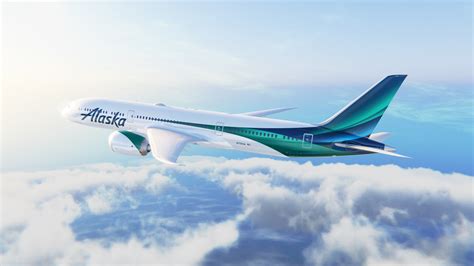
The Seattle-Narita market will become another major battlefield where Delta and Alaska compete directly. The two airlines already face each other on several long-haul international routes, including flights from Seattle to London, Seoul, and Rome. Adding Tokyo Narita creates another high-profile contest between the two carriers.
Delta Uses Airbus A330-900neo to Differentiate Its Tokyo Service
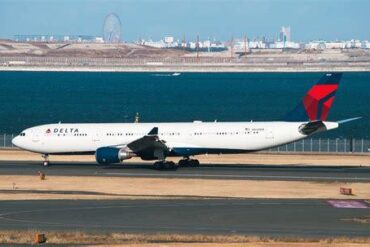
While Delta will operate both Seattle-Tokyo routes, the airline will use different aircraft types to separate the passenger experience. The Seattle-Narita service will use the Airbus A330-900neo, while the Seattle-Haneda route currently uses the Airbus A350-900.
The A330-900neo features Delta’s latest long-haul cabin products, including the premium Delta One business-class experience and Delta Premium Select premium economy cabin. The aircraft provides a three-class configuration with a total capacity of 281 passengers.
Delta One includes 29 lie-flat seats arranged in a 1-2-1 layout, allowing every business-class passenger direct aisle access. The Premium Select cabin offers 28 seats in a 2-3-2 arrangement, while the main cabin contains 224 seats in a 2-4-2 configuration. Additionally, 56 economy seats are marketed as Delta Comfort, offering additional legroom and upgraded positioning within the cabin.
This aircraft choice allows Delta to add substantial capacity while maintaining a premium-focused product for long-haul travelers. The A330-900neo has become an important part of Delta’s international fleet strategy because it combines fuel efficiency with modern passenger amenities.
Tokyo Remains a Critical Market for Delta’s Global Network
Japan continues to be one of Delta’s most important international markets. The airline has maintained a strong presence in the country for decades, largely influenced by Northwest Airlines’ historical Pacific network before its merger with Delta.
For Delta, Tokyo is more than just a destination. It serves as a strategic connection point for business travelers, multinational companies, and passengers traveling throughout Asia. By increasing Seattle-Tokyo capacity, Delta strengthens its ability to compete with other major global airlines operating across the Pacific.
The Seattle market is particularly valuable because of the region’s strong technology sector, international business connections, and large demand for travel between the United States and Asia. Companies headquartered in the Pacific Northwest have significant economic links with Japan, creating steady demand for premium international services.
Seattle’s International Future Will Be Shaped by Airline Competition
The renewed Delta-Seattle-Tokyo Narita route demonstrates how competitive the Pacific Northwest aviation market has become. Alaska Airlines remains Seattle’s largest airline, but Delta’s continued international expansion shows that it is unwilling to surrender strategic ground.
Both airlines are investing heavily in global connectivity. Alaska has announced plans to develop at least 12 long-haul international routes from Seattle by the end of the decade, while Delta continues using Seattle as a key Pacific gateway.
The return of Narita service will give travelers more choices, increase competition, and potentially reshape the balance of power at Seattle-Tacoma International Airport. As Delta and Alaska continue expanding their international networks, Seattle is emerging as one of the most closely contested aviation markets in the United States.