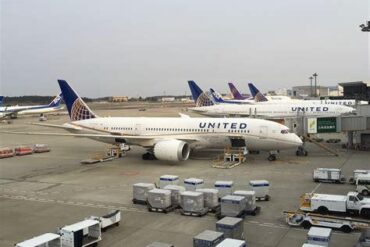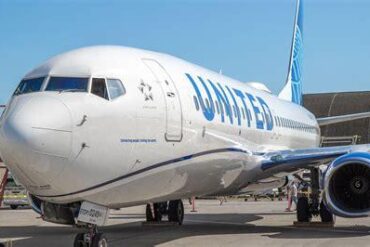
United Airlines has brought back its nonstop Chicago O’Hare (ORD) to Tokyo Narita (NRT) service, a roughly 14-hour journey from gate to gate that now stands as the only US carrier nonstop roundtrip on the route. The relaunch, which took effect on Saturday, is a deliberate move to reinforce United’s Asia-Pacific dominance before rival Delta Air Lines can gain a foothold in the trans-Pacific market. The reintroduction comes after United pushed for additional capacity at Tokyo Haneda (HND) but failed to secure more slots, making Narita the practical and strategically sound alternative.
Why United Chose Narita Again
The decision to reinstate ORD–NRT reflects a realistic reading of Tokyo’s constrained slot environment. Haneda is the preferred gateway for business travelers heading into central Tokyo, and United already operates a daily ORD–HND itinerary there. But with additional Haneda slots unavailable, Narita offers a distinct advantage that goes far beyond convenience: it is the anchor of United’s own fifth-freedom network, giving the carrier a web of regional routes it can operate with its own aircraft across Asia.
Line in the Sand: United Shores Up Its Dominance
From the United States, the carrier now connects to 27 airports, 36 routes, and more than 234,000 network miles across Asia-Pacific. Building on a legacy network that has long led the Big Three, United has widened its presence to capture travelers into 2026. The centerpiece is the ORD–NRT service, which complements Haneda and pushes United’s total daily flights to Japan from the United States to 13. The message is clear: United intends to hold its position as the deepest Asia-Pacific carrier in the market, and the added Narita capacity helps protect that market share as Delta’s Los Angeles–Hong Kong launch tests the competitive landscape.
Inside the Cabin: United’s Premiumized Dreamliner
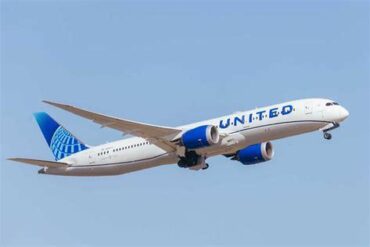
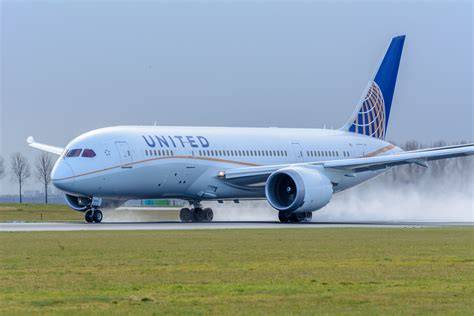
United is flying the route with the Boeing 787-8 Dreamliner, the smallest of the three next-generation widebodies and a fitting choice for a route that prioritizes comfort over density. The aircraft carries 243 seats in a deliberate four-tier layout. At the front sit 28 United Polaris business suites in a 1-2-1 configuration, giving every passenger direct aisle access, a fully flat bed, and Saks Fifth Avenue bedding. Behind Polaris, 21 United Premium Plus seats follow in a 2-3-2 layout, while 36 Economy Plus seats offer extra legroom for the long haul from the Great Lakes to Japan’s largest metropolis.
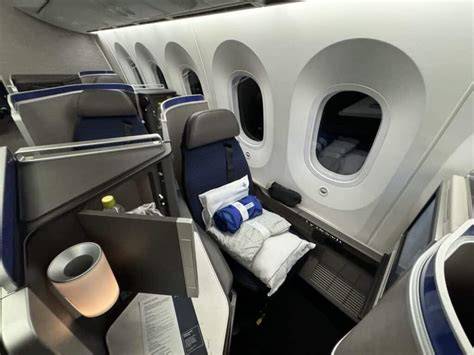
The Dreamliner’s physiology works in passengers’ favor regardless of cabin. Its lower cabin altitude, higher humidity, and circadian-rhythm LED lighting reduce the toll of jet lag, helping travelers reset faster on arrival. United’s less dense floor plan supports smoother, more personal cabin service, a detail that matters on flights exceeding a half-day in the air.
Beyond Tokyo: United’s Fifth-Freedom Network and ANA Partnership
From Narita, United operates its own aircraft to the Philippines, Taiwan, Mongolia, Saipan, and Palau, allowing a traveler to reach deep into the Indo-Pacific on a single carrier and a single ticket. That intra-Asia web is a rare asset—only five markets listed, but each opens onward travel that competitors must stitch together through partners. United also leans on its joint venture with All Nippon Airways (ANA), whose trunk routes extend reach toward virtually every major destination in the region.
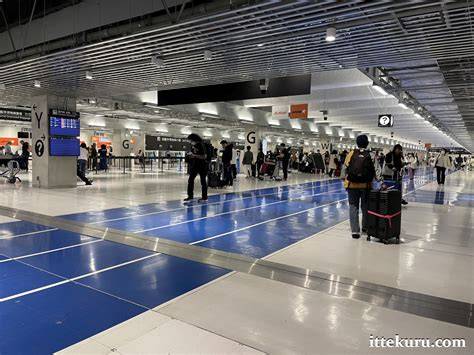
The partnership is more than an interline switch. United Premier members and Polaris flyers gain access to ANA’s premium lounges, and at both Haneda and Narita, the two carriers operate co-located facilities—no terminal change, no immigration clearance, no luggage recheck between a United long-haul arrival and an ANA connection. The reach is extensive: direct to Ho Chi Minh City and Hanoi; onward to Kuala Lumpur, Jakarta, Phnom Penh, Manila, and Cebu; plus Kaohsiung, Busan, Mumbai, and Delhi for East and South Asia. The list goes on.
What the Route Means for Travelers This Winter
For Americans planning Japan and Asia travel this winter, United’s restored Narita service adds daily, year-round capacity without sacrificing schedule flexibility. The 14-hour sector is long, but the 787-8’s comfort-focused configuration and the broader Narita hub make the connection less about distance and more about what awaits on the other side. As Delta builds its own trans-Pacific story through Los Angeles, United’s answer is a route that is unmatched from the Midwest and an Asia network that remains the widest among US carriers.