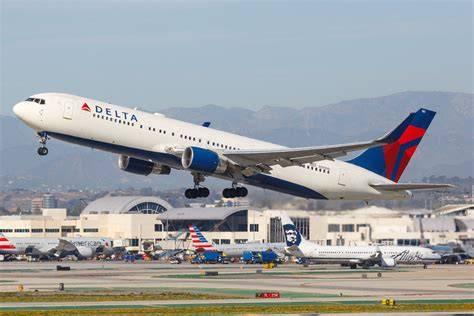
Delta Air Lines has quietly reshaped a significant slice of its Boeing 767 network, stripping the widebody from twelve routes across four continents and nine U.S. airports. Cirium schedule data shows the carrier removed the 767 from four international and eight domestic services during 2026, replacing it with Airbus widebodies on long-haul links and narrowbody jets on short-haul ones. The result is a smaller, more concentrated 767 footprint — and a noticeable change in cabin experience for passengers who booked expecting a widebody.
Why Delta Air Lines Cut Boeing 767 Flying Across Its Network
The 767 has been the backbone of Delta’s transatlantic and domestic trunk flying for decades, but the type is now in its retirement era. Delta has ordered the Airbus A330neo and A350-900 to absorb long-haul demand, while domestic trunk routes such as Atlanta–Detroit no longer need widebody capacity on every departure. Cirium’s data captures that shift route by route: the 767 did not vanish overnight but slipped out of schedules in stages, with February, March, May, July, and August 2026 each marking a fresh round of removals.
The pattern is clear. Where Delta had surplus Airbus widebody capacity, the 767 left first. Where the route was purely a domestic shuttle, narrowbody jets took over as soon as schedules allowed. Atlanta to Detroit (DTW) was the largest single change, with 125 Boeing 767 departures logged between January and August before the widebody was pulled. Atlanta to Orlando (MCO) followed in August after 54 departures, while Atlanta to Tampa (TPA) lost the 767 in July after 16 widebody flights.
Delta’s Four International Routes That Lost the Boeing 767
New York (JFK) to Brussels (BRU) was the shortest-lived holdout, producing only three departures before Delta ended the nonstop in January. Brussels is now served by Delta solely from Atlanta, though Brussels Airlines still flies to JFK and United operates from Newark. Boston (BOS) to Lisbon (LIS) switched to Airbus A330-300 and A330-900 aircraft in March after 40 767 departures, and Atlanta to Dublin (DUB) followed in May after 39.
The most significant long-haul upgrade was Atlanta to Buenos Aires (EZE), where Delta replaced the 767 with a mix of A330-200, A330-300, and A350-900 jets in March, ending 47 widebody departures. For passengers, that translates into newer cabins, more premium seating, and updated inflight entertainment on a route where the 767 had become the oldest equipment in the fleet.

The Eight Domestic Routes Now Served by Narrowbody Jets
Beyond the headline changes, smaller routes tell a consistent story. Detroit to Tampa (TPA), Detroit to Minneapolis (MSP), and Minneapolis to Tampa each lost 767 service in February, logging eight, three, and three departures respectively. Atlanta to San Diego (SAN) lost its widebody in May after just ten flights. New York (JFK) to Las Vegas (LAS) surrendered the 767 in May after seven departures, leaving American Airlines and JetBlue to compete for that nonstop market with their own equipment.
What the Schedule Changes Mean for Delta Passengers
Anyone who booked a Delta flight on the assumption of a widebody cabin should recheck their seat map before departure. Routes that once offered Delta One suites on the 767 may now fly narrowbody jets with domestic first class, altering lie-flat availability on longer domestic segments. The upside is real: the Airbus replacements bring newer interiors, improved lighting, and larger overhead bins, and the A350-900 serving Buenos Aires is among the most modern aircraft Delta operates. Travelers should also watch for schedule depth changes, since frequency can shift alongside equipment swaps.
The Bottom Line for Delta’s Boeing 767 Fleet
Twelve routes, one aircraft type, and a year of steady attrition. Delta’s 767 remains in service, but its network role is shrinking fast as Airbus widebodies dominate long-haul flying and narrowbodies absorb domestic trunk capacity. Passengers flying Atlanta, JFK, Boston, Detroit, and Minneapolis hubs should expect the Boeing 767 to appear less often on their booking screens — and when it does, to look at the seat map with fresh eyes.