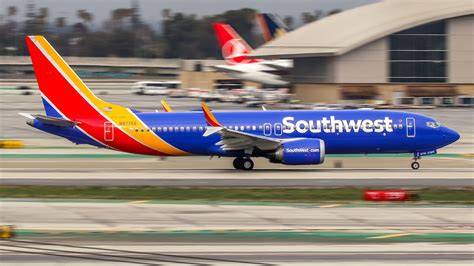
Southwest Airlines has signed a new interline agreement with French long-haul carrier French bee, opening single-ticket connections from its domestic network to Paris-Orly and French Polynesia through Los Angeles, Miami, and San Francisco. The deal takes effect immediately and marks the twelfth international airline partnership Southwest has assembled in under two years, extending the Dallas-based carrier’s global reach without requiring it to fly a single widebody aircraft.
What the Southwest and French bee Interline Partnership Actually Delivers
Under the agreement, travelers can book a combined itinerary on both airlines as one transaction, with coordinated connections and checked baggage handled through to the final destination. French bee becomes the long-haul leg of journeys that begin in dozens of US cities Southwest already serves, while Southwest supplies the domestic feeder traffic that fills those flights. Bookings are already live through French bee, travel agents, and third-party platforms, though interline tickets cannot yet be purchased on Southwest.com.
Southwest Executive Vice President and Chief Commercial Officer Justin Jones framed the deal around shared commercial values rather than aircraft or networks. “French bee shares our philosophy of pairing value with a welcoming travel experience, and this partnership opens new possibilities for travelers to connect across oceans on a single ticket,” he said. The emphasis is deliberate: Southwest built its brand on low fares and warm service, and it is choosing partners that can credibly claim the same positioning on the far side of the Atlantic.
Interline Is Not a Codeshare, and the Difference Matters to Passengers
The distinction is easy to blur but carries real consequences at the booking and check-in desk. A codeshare allows airlines to market seats on each other’s flights under their own flight numbers, making a French bee A350 look like a Southwest flight in the reservation system. An interline agreement stops short of that: each carrier keeps its own flight numbers, and Southwest simply coordinates connections and baggage acceptance with its new partner. Passengers get the convenience of one itinerary and one ticket; they do not get the illusion of a single airline.
Nor does the arrangement extend to loyalty programs. Reciprocal earning and redemption of points between Southwest Rapid Rewards and French bee’s program are not part of this agreement. That omission sets the French bee deal apart from Southwest’s Icelandair relationship, which was expanded in October to include reciprocal points earning and redemption beginning in spring 2027. Frequent flyers treating Southwest and French bee as one seamless network will be disappointed until a similar loyalty extension arrives.
French bee: An All-A350 Carrier Built for Long, Thin Routes
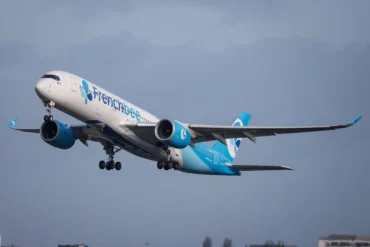
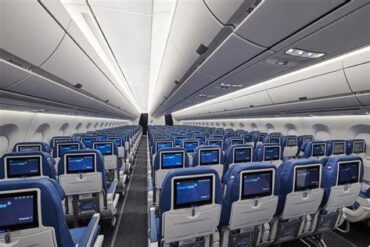
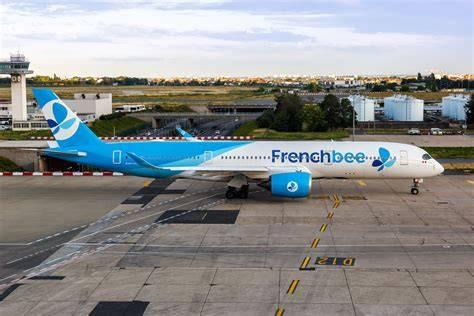
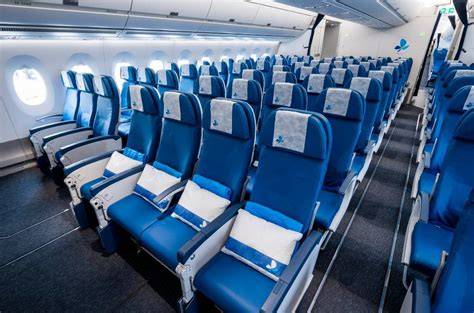
French bee, owned by Groupe Dubreuil, operates an all-Airbus A350 fleet from its base at Paris-Orly and has built a reputation for long-haul service at aggressive fares. Its existing network reaches Newark, Los Angeles, Miami, San Francisco, Montreal, Réunion Island, and Tahiti, giving the airline an unusual footprint that spans both North America and the Indian Ocean. It has also earned a place in aviation trivia as the operator of the world’s longest nonstop domestic route, flying 5,048 nautical miles—5,810 statute miles, or 9,349 kilometers—from Paris to Roland Garros Airport in Saint-Denis de la Réunion.
That aircraft efficiency and route discipline explain why three US gateways already exist in the French bee network. The airline has spent years finding markets large enough to sustain nonstop A350 service to France but competitive enough that low fares can win market share. Southwest’s domestic breadth gives French bee something it could not build on its own: access to travelers whose journeys start in Albuquerque, Nashville, or Kansas City rather than at the gate.
New Asian Routes Extend the Value of the Connection
The partnership arrives as French bee prepares to enter two new markets. On December 19, the carrier will launch service to the Maldives and Sri Lanka, initially using a triangular Orly–Malé–Colombo–Orly routing, with dedicated nonstop Paris-Colombo flights following on January 11, 2027. Combined with its San Francisco–Papeete and Paris-Orly–Saint-Denis services, those additions turn the Southwest connection into a gateway well beyond France itself.
For a traveler departing from a Southwest city, the practical value multiplies. A single ticket can carry them across the United States to Los Angeles, Miami, or San Francisco and onward to Paris, then to Tahiti, Réunion, Malé, or Colombo. No other Southwest partner offers that specific map, and few mid-market carriers anywhere can promise the Indian Ocean and French Polynesia from a single domestic booking.
| French bee Route | Destination | Status |
|---|---|---|
| Los Angeles – Paris-Orly | France | Existing |
| Miami – Paris-Orly | France | Existing |
| San Francisco – Paris-Orly | France | Existing |
| San Francisco – Papeete | French Polynesia | Existing |
| Paris-Orly – Saint-Denis | Réunion | Existing |
| Paris-Orly – Malé | Maldives | Starts December 19 |
| Paris-Orly – Colombo | Sri Lanka | Starts December 19, initially via Malé |
Why Both Airlines Gain From the Southwest–French bee Deal
Southwest gains reach it cannot otherwise offer. Its all-Boeing 737 fleet has no role on transatlantic missions, and the airline has repeatedly declined to acquire widebody aircraft. Interlining delivers international connectivity at a fraction of the cost and risk of launching long-haul flights, letting Southwest answer customers who want Europe without abandoning its operating model.
French bee gains feeder traffic that matters disproportionately to a small long-haul operator. Improving load factors and reducing dependence on passengers who originate in its three US gateway markets are strategic priorities for an airline of its size. Travelers connecting from Southwest’s domestic system fill seats that might otherwise fly empty on off-peak days. Aviation Week reports that French bee is examining additional US and Asian destinations to smooth seasonal demand swings, and strong feeder support could strengthen the case for cities such as Las Vegas and Orlando, where Southwest holds substantial presence.
Inside Southwest’s Fast-Growing International Partner Network
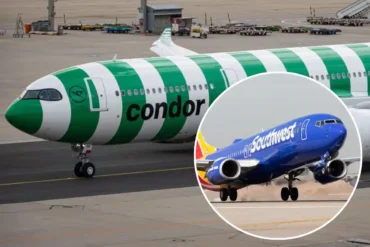
Southwest’s overseas strategy began with Icelandair in January 2025, and service under that agreement launched the following month. Since then, the carrier has signed partners across Asia and Europe at a pace few expected, including Turkish Airlines and Singapore Airlines. The roster now spans Air Premia, All Nippon Airways, China Airlines, Condor, EVA Air, French bee, Icelandair, LOT Polish Airlines, Philippine Airlines, Singapore Airlines, TAP Air Portugal, and Turkish Airlines, each tied to designated US connecting airports.
| Partner Airline | Connecting US Airports |
|---|---|
| Air Premia | Honolulu, Los Angeles, San Francisco |
| All Nippon Airways | Honolulu, Los Angeles, San Francisco, Seattle |
| China Airlines | Los Angeles, Ontario, San Francisco, Seattle |
| Condor | Boston, Las Vegas, Los Angeles, Portland, San Francisco, Seattle |
| EVA Air | Los Angeles, San Francisco, Seattle |
| French bee | Los Angeles, Miami, San Francisco |
| Icelandair | Baltimore, Denver, Nashville, Orlando, Pittsburgh, Raleigh-Durham |
| LOT Polish Airlines | Los Angeles, Miami, San Francisco |
| Philippine Airlines | Honolulu, Los Angeles, San Francisco, Seattle |
| Singapore Airlines | Los Angeles, San Francisco, Seattle |
| TAP Air Portugal | Boston, Los Angeles, Miami, San Francisco |
| Turkish Airlines | Atlanta, Boston, Denver, Detroit, Los Angeles, Miami, San Francisco, Seattle |
The pattern reveals a clear playbook. Southwest concentrates its international partners at a handful of coastal gateways—Los Angeles and San Francisco above all—where its domestic frequencies can reliably feed long-haul departures. Miami, Seattle, and Honolulu serve similar roles for Latin American, Asian, and Pacific traffic respectively.
Southwest is repositioning itself as a feeder airline for global carriers, capturing international demand without the capital expense and operational complexity of widebody operations. If the Icelandair loyalty expansion proves successful, further interline agreements could deepen into points partnerships and eventually codeshares. For now, the French bee deal is a measured step: broader reach, one ticket, and three airports where Texas travelers can begin a journey that ends in Paris.