Southwest Airlines has taken another decisive step toward becoming a significant player in international aviation through a new interline agreement with Japan’s All Nippon Airways (ANA). The partnership allows passengers traveling with either airline to book seamless connecting itineraries on a single ticket, marking a substantial shift in Southwest’s long-standing operational model. Known historically for its domestic focus and point-to-point network, the Dallas-based carrier is now rapidly constructing a global partnership ecosystem that links its vast U.S. network to major international routes.
The agreement enables travelers to connect between the two airlines with through-checked baggage and simplified transfers, eliminating the inconvenience of separate bookings. For passengers flying between the United States and Japan, the collaboration introduces a smoother travel experience and significantly expands routing flexibility. The move also reflects Southwest’s broader strategy to establish what industry analysts increasingly describe as a “virtual long-haul network.”
At the center of the new partnership are six key U.S. gateway airports where the route networks of Southwest and ANA intersect. These hubs will serve as the operational bridge between Southwest’s domestic reach and ANA’s extensive services throughout Japan and across Asia.
- Chicago O’Hare (ORD)
- Honolulu (HNL)
- Los Angeles (LAX)
- San Francisco (SFO)
- Seattle (SEA)
- Washington Dulles (IAD)
By linking these strategic airports, the agreement dramatically expands travel possibilities. A passenger from Austin, Denver, or Las Vegas, for example, can connect via Los Angeles or Seattle onto ANA flights bound for Tokyo Haneda, Tokyo Narita, or Osaka, all booked within a single itinerary. The operational simplicity behind such journeys represents a meaningful improvement compared with traditional multi-ticket international trips.
A Rapidly Expanding Network of Global Airline Partnerships
The ANA partnership is the seventh international alliance Southwest has established since its strategic shift toward global cooperation began in 2024. That transformation started with an agreement with Icelandair, a moment widely interpreted as the airline’s first serious step onto the international stage.
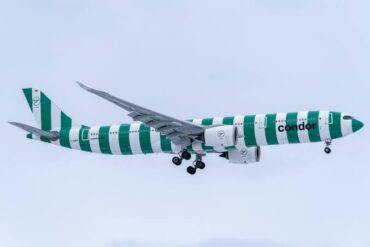
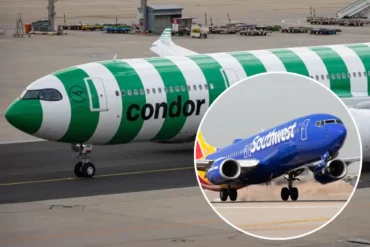
Since then, the airline has moved swiftly to broaden its network. Partnerships with China Airlines, EVA Air, Philippine Airlines, Condor, and Turkish Airlines followed in rapid succession. Together, these alliances extend Southwest’s reach across Asia, Europe, and the Middle East, creating a network that spans much of the world without requiring the airline to operate its own long-haul aircraft.

The addition of ANA significantly strengthens Southwest’s Asian connectivity. ANA operates one of the region’s most comprehensive domestic networks within Japan, alongside a robust portfolio of long-haul routes across Asia, Europe, and North America. For Southwest passengers, this means access to destinations ranging from Sapporo and Fukuoka to Singapore and Bangkok, all reachable through ANA’s hubs.
Industry observers view this approach as both financially disciplined and strategically clever. Operating long-haul widebody aircraft requires enormous capital investment, specialized crews, and complex global logistics. By building partnerships instead, Southwest gains international reach while maintaining its highly efficient single-fleet Boeing 737 model.
Transforming Southwest’s Traditional Business Model
For decades, Southwest Airlines operated with a clear philosophy: focus on short-haul domestic travel with minimal complexity. The airline avoided alliances, avoided long-haul routes, and largely avoided the global aviation chessboard.
That philosophy is evolving rapidly.
Through interline partnerships, Southwest can now act as a feeder carrier, funneling passengers from hundreds of domestic routes into long-haul flights operated by partner airlines. In aviation economics, this concept is powerful. Airlines with strong domestic coverage often generate substantial traffic for international partners, creating mutually beneficial passenger flows.
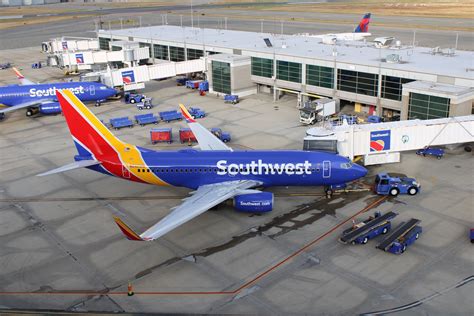
The partnership with ANA illustrates this dynamic perfectly. Southwest brings massive domestic connectivity across the United States, while ANA contributes transpacific long-haul expertise and an extensive Asian network. Together, the two airlines create travel options that neither could deliver alone.
Southwest executives have also hinted that the agreement could soon expand beyond basic interline cooperation. Future developments may include Rapid Rewards loyalty redemption opportunities, allowing customers to use Southwest points for ANA flights. If implemented, that step would further integrate the partnership and enhance its value for frequent travelers.
A Growing Global Footprint Without Widebody Aircraft
What makes Southwest’s strategy particularly fascinating is the way it reshapes the airline’s global presence without altering its fleet structure. Unlike legacy carriers such as Delta or United, Southwest continues to operate exclusively Boeing 737 narrowbody aircraft. Those planes are ideal for domestic and short-to-medium-haul routes but unsuitable for long transoceanic journeys.
Instead of purchasing widebody aircraft—an investment that could cost billions—the airline is building a distributed international network through alliances. Each partner effectively extends Southwest’s reach into another region of the world.
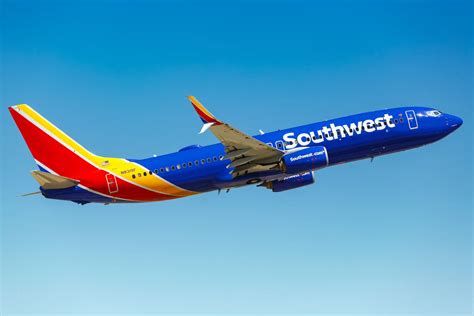
With ANA now joining its roster, Southwest’s network touches key aviation markets across Europe, the Middle East, and Asia. Analysts increasingly view the model as a hybrid between traditional low-cost operations and global alliance connectivity.
More Partnerships Likely on the Horizon
Southwest leadership has signaled that the airline’s partnership expansion is far from complete. Company representatives have publicly suggested that additional international agreements are already in development, though specific airline names have not yet been disclosed.
One region frequently mentioned by industry watchers is South America. Southwest maintains a strong operational footprint in Florida, particularly at Fort Lauderdale and Orlando, both of which serve as natural gateways to Latin America. A future alliance with a major Latin American carrier could unlock new travel corridors linking North America to cities such as São Paulo, Bogotá, or Lima.
As these partnerships accumulate, Southwest Airlines is steadily evolving from a purely domestic low-cost carrier into something far more ambitious: a globally connected airline built on cooperation rather than long-haul aircraft ownership. The new agreement with ANA represents another milestone in that transformation, strengthening links between the United States and Japan while demonstrating how strategic partnerships can reshape the competitive landscape of modern aviation.