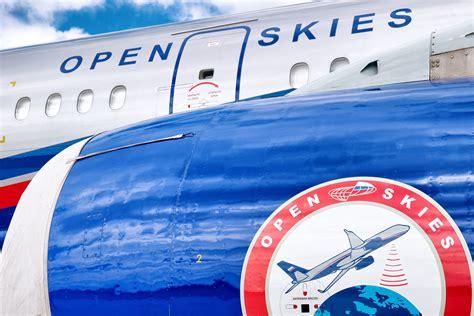
Southwest Airlines has taken a pivotal step toward expanding its operations beyond the Americas. In a formal submission to the U.S. Department of Transportation (DOT), the Dallas-based carrier filed for authority to transport passengers, cargo, and mail between the United States and nations with which it holds Open Skies agreements. This development signals a major strategic pivot for an airline long associated with its point-to-point model and domestic dominance.
The Open Skies framework provides bilateral or multilateral aviation agreements between countries that liberalize rules and minimize government intervention in commercial air travel. These agreements allow airlines to make decisions about routes, capacity, and pricing without significant regulatory interference. Southwest’s filing not only includes nations currently under such agreements — spanning Europe, Latin America, parts of Asia, and Africa — but also preemptively covers any future Open Skies partners the United States may negotiate with.
A Long-Awaited Strategic Expansion
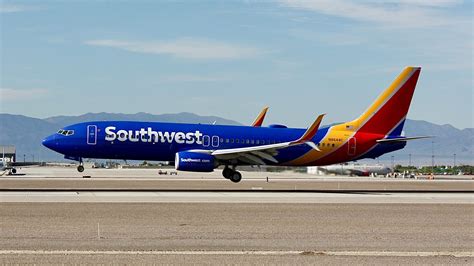
This move marks one of the most significant turning points in the history of Southwest Airlines. Historically known for its focus on high-frequency short-haul routes across the United States, and select destinations in Mexico, Central America, and the Caribbean, the company has largely stayed away from long-haul international markets. The application filed with the DOT is a preliminary regulatory step, but its implications stretch far beyond paperwork — it symbolizes Southwest’s readiness to evolve into a global network carrier.
Though the company has not disclosed a concrete timeline for initiating intercontinental flights, the use of the DOT’s “streamlined regulatory procedures” underscores a tactical approach to remain nimble in a fluctuating travel market. The streamlined process, introduced to simplify licensing for U.S. and foreign air carriers, removes bureaucratic friction and enables rapid response once agreements are in place and aircraft assets are ready.
A Departure from Southwest’s Traditional Identity
Southwest’s origins are firmly rooted in Texas, where it launched in 1971 by connecting Dallas, Houston, and San Antonio. Its early business model rejected industry norms: it adopted an all-economy cabin, minimized fees, and famously never charged for the first two checked bags. But as it steps into the global arena, the airline is gradually shedding its foundational identity.
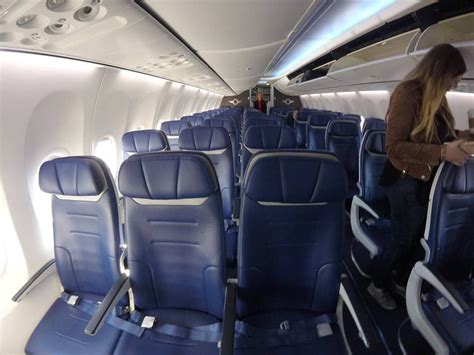
One of the most striking signals of this evolution is the shift toward assigned seating, a departure from the company’s open boarding system that has long differentiated it from competitors. Additionally, beginning this year, checked baggage fees will be introduced, ending one of its last iconic customer perks. Such changes are aimed at better aligning operations with international norms and traveler expectations.
The Icelandair Partnership: A Tactical Foothold in Transatlantic Travel
Earlier in 2025, Southwest quietly laid the groundwork for international connectivity through a partnership with Icelandair. This collaboration allows passengers to book tickets combining both airlines, creating seamless itineraries between Icelandair’s transatlantic routes and Southwest’s extensive U.S. domestic network. Initially facilitated through Baltimore/Washington International Thurgood Marshall Airport, this cooperation expanded to include Denver and Nashville as connection points in April.
These partnerships allow Southwest to gauge market demand, test logistics, and familiarize its staff and systems with international operations. By offering connectivity to Europe without operating its own long-haul fleet, Southwest collects valuable market data and builds brand familiarity among global travelers. The Icelandair partnership has proven instrumental in Southwest’s low-risk entry into the transatlantic ecosystem.
Challenges Ahead in a Soft Travel Market
Despite these ambitions, the airline’s timing comes with inherent risk. Travel demand has shown signs of weakening as inflationary pressures and economic uncertainty persist across U.S. households. Southwest’s own statements confirm a slower growth forecast in 2025, aligning with broader industry trends of cautious expansion. Legacy carriers are also recalibrating international routes, with many trimming underperforming long-haul flights in response to rising operational costs.
Entering new international markets requires substantial upfront investment — in aircraft certification, pilot training, ground services, marketing, and regulatory compliance. Southwest has not publicly confirmed whether it will acquire wide-body aircraft for long-haul flights or modify existing Boeing 737 MAX models with extended-range capabilities. Either route entails significant capital allocation, adding complexity to its traditionally low-cost operating model.
Regulatory and Geopolitical Considerations
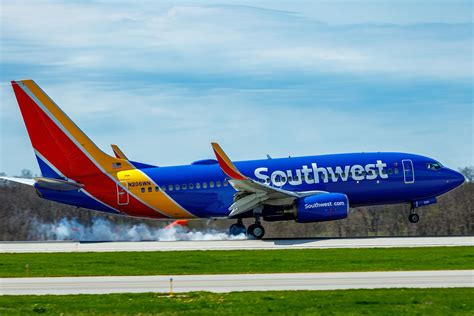
By applying for blanket approval to serve all current and future Open Skies countries, Southwest is hedging against regulatory delays. Such flexibility allows it to enter a market as soon as an agreement is signed, without needing to file anew. However, not all Open Skies agreements are created equal. Bilateral provisions vary by country, and market access can be influenced by aviation safety ratings, airport slot availability, and diplomatic considerations.
For example, while the Open Skies agreement between the U.S. and the European Union is robust and time-tested, others — particularly with countries in Africa or emerging parts of Asia — may come with more volatile political or economic conditions. Southwest’s operational success abroad will depend as much on diplomatic relations as on load factors and revenue per available seat mile (RASM).
Fleet and Infrastructure Readiness for Global Reach
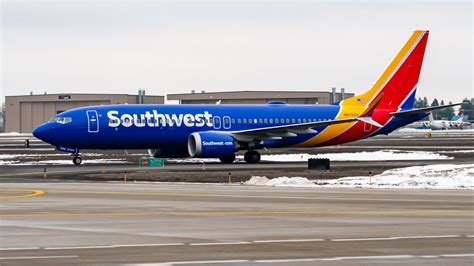
One of the most pressing questions surrounding this strategic shift is whether Southwest’s existing fleet is capable of sustaining intercontinental operations. The airline currently operates an all-Boeing 737 fleet, which serves it well on domestic and short-haul international routes. However, the range of the 737 MAX 8 and MAX 7 — the most advanced versions in its fleet — is limited for longer transoceanic flights.
If Southwest intends to fly directly to Europe or Asia, it may need to invest in narrow-body long-range aircraft such as the 737 MAX 10 (still under FAA certification) or consider ordering Airbus A321XLRs or even wide-bodies like the Boeing 787 Dreamliner. Yet such fleet diversification would depart sharply from its lean, standardized operations, raising questions about maintenance complexity, crew training, and operational cost structure.
Implications for the U.S. Airline Industry
Southwest’s entrance into the global stage has wide-reaching implications for the competitive dynamics of the U.S. airline industry. If executed successfully, the airline could provide a low-cost alternative to international travelers, forcing legacy carriers like United, Delta, and American Airlines to revisit pricing strategies and international market segmentation. The move may also influence smaller low-cost carriers, such as JetBlue and Spirit, to seek their own global alliances or strategic partnerships.
Furthermore, travelers may benefit from increased connectivity and fare competition, particularly for routes that are currently underserved. For airports like Denver, Nashville, and Baltimore, which already serve as Southwest strongholds, expanded international traffic could drive additional infrastructure investments, job creation, and broader economic ripple effects.
Conclusion: A Calculated Leap Toward Global Relevance
Southwest Airlines has always operated with an eye toward disruption — first in Texas, then across the United States, and now, potentially, around the world. Its permit filing with the DOT may seem procedural on the surface, but the broader context reveals a calculated transformation. It is a move designed not merely to expand its reach, but to redefine what Southwest represents in the global aviation ecosystem.
The airline’s boldness, tempered by strategic alliances and regulatory foresight, suggests that Southwest is preparing not just to enter the international stage — but to compete, challenge, and reshape it. The coming months and years will reveal how well the carrier balances ambition with execution, and whether its low-cost legacy can truly thrive on the world’s longest runways.