Philippine Airlines is preparing to deepen its footprint in North America with plans to introduce a new nonstop route between Manila (MNL) and Chicago O’Hare (ORD) beginning in the summer 2026 IATA season. The carrier has formally filed an application with the U.S. Department of Transportation (DOT) seeking approval to operate regularly scheduled service on the ultra long-haul sector, signaling a decisive step in its post-pandemic expansion strategy.
At approximately 8,132 miles, the Manila–Chicago flight would rank among the world’s longest commercial routes, placing it roughly within the top 25 globally by distance. Such a mission underscores both the technical capability of the airline’s evolving fleet and the commercial confidence behind the move. Philippine Airlines is reportedly requesting expedited review in order to open ticket sales as soon as regulatory clearance is granted, targeting a launch window between late March and late October 2026.
The proposed service aligns squarely with the existing air service agreement between the Philippines and the United States. That bilateral framework authorizes Philippine carriers to operate flights from the Philippines via intermediate points to key U.S. gateways including Honolulu, San Francisco, Los Angeles, Guam, Saipan, and four additional U.S. cities selected by the Philippine government. Chicago is poised to become one of those designated additional points, expanding the airline’s mainland reach into the American Midwest.
Strategic Expansion of Philippine Airlines’ U.S. Network
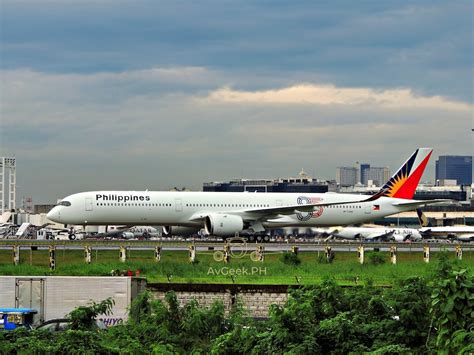
Chicago would join an already substantial U.S. network that includes Guam (GUM), Honolulu (HNL), Los Angeles (LAX), New York (JFK), Saipan (SPN), San Francisco (SFO), and Seattle (SEA). Seattle, launched in late 2024, marked the airline’s most recent American addition and demonstrated renewed long-haul ambition after a period of restructuring.
The Chicago decision is neither symbolic nor speculative; it is rooted in measurable demand. The metropolitan area ranks among the largest Filipino population centers in the United States, following Los Angeles, San Francisco, New York, and Honolulu—cities already served nonstop. By entering Chicago, Philippine Airlines captures a sizable diaspora market while offering Midwest travelers a direct gateway to Southeast Asia.
Fleet Modernization Powers Ultra Long-Haul Growth
The timing of the Chicago proposal reflects the carrier’s broader transformation. In 2021, Philippine Airlines entered bankruptcy protection amid pandemic-driven disruption, significantly reducing fleet size and restructuring operations. The recovery phase, however, has been defined by disciplined renewal. In 2023, the airline placed an order for nine Airbus A350-1000 aircraft, a move that followed the retirement of certain Airbus A350-900 units.
The A350-1000 is purpose-built for high-capacity, long-range performance, making it ideally suited for missions such as Manila–Chicago. With improved fuel efficiency, extended range, and enhanced passenger comfort features, the aircraft enables routes that would previously have strained operational economics. The Chicago service is widely expected to be operated by this next-generation widebody, reinforcing the airline’s premium positioning on transpacific sectors.
Competitive Positioning Without Alliance Constraints
Unlike many global long-haul competitors, Philippine Airlines operates outside the three major global alliances. This independence allows flexibility in pricing and partnership strategy but also places greater emphasis on point-to-point demand and competitive fares. Historically, the airline has been known for attractive transpacific pricing, particularly for passengers connecting beyond Manila to other destinations in the Philippines and across Asia.
Chicago’s addition strengthens the airline’s role as a bridge between North America and Southeast Asia, while diversifying revenue streams beyond traditional West Coast strongholds. The route also reduces reliance on coastal gateways, offering travelers in the central United States a more direct alternative to connecting itineraries.
A Calculated Bet on Resilient Transpacific Demand
The planned Manila–Chicago route is more than a network expansion; it is a declaration of strategic confidence. It leverages fleet modernization, diaspora demographics, and bilateral traffic rights in a single, carefully calibrated move. If approved on schedule, Philippine Airlines will add another critical node to its U.S. map in 2026, further restoring its stature as a serious transpacific competitor.
As global aviation continues recalibrating after years of turbulence, this proposed ultra long-haul link illustrates how legacy carriers can combine structural reform with targeted growth. For Philippine Airlines, Chicago is not merely a new destination—it is a calculated extension of a revitalized long-haul vision.