Every day, thousands of American travelers board flights bound for Bangkok, and every one of them changes planes along the way—in Tokyo, Seoul, Hong Kong, Taipei, Doha, or Dubai. In a world where nonstop passengers can already fly from Los Angeles to Singapore, New York to Auckland, and San Francisco to Bangalore, the absence of a single nonstop link between the United States and Thailand stands out as one of the strangest gaps in the global route map. Thailand welcomed more than 35 million international visitors in 2024, and American interest in its temples, beaches, food, and affordable luxury keeps climbing. Yet no US carrier has ever operated a scheduled nonstop service to Bangkok, and the reasons stretch from Washington regulatory offices to the fuel tanks of long-retired jets.
Thailand’s Category 2 Safety Rating and the FAA Ban
The most direct explanation is regulatory. In 2015, following an audit that found Thailand’s aviation oversight fell short of International Civil Aviation Organization standards, the US Federal Aviation Administration downgraded Thailand to Category 2, a rating that effectively barred Thai carriers from launching new services to the United States and forbade code-sharing arrangements that would have let them sell US-bound seats. For nearly a decade, the question of a nonstop flight had no American answer either, because US airlines had quietly concluded the route made no financial sense. Thailand’s Deputy Prime Minister and Transport Minister, Suriya Jungrungreangkit, repeatedly expressed confidence that the country would regain its Category 1 status, and in April 2025 that restoration finally arrived, reopening the door after a ten-year closure.
What Changed After April 2025
The diplomatic thaw produced immediate movement—but not the movement travelers hoped for. United Airlines, seizing on Thailand’s restored standing, announced a one-stop service from Los Angeles (LAX) to Bangkok Suvarnabhumi (BKK) via Hong Kong (HKG), which launched in October 2025 with the carrier’s Boeing 787-9 and now operates daily. At the same announcement, United revealed new services to Ho Chi Minh City and Adelaide, framing the expansion around access rather than speed. Patrick Quayle, United’s SVP of Global Network Planning & Alliances, described the strategy as “changing the way people think about where they travel,” connecting customers to “sought after destinations and opportunities to explore new, vibrant cities.” Note the word via. Even with the regulatory barrier gone, the airline chose a Hong Kong stopover over a nonstop gamble.
Low-Yielding Traffic on an Ultra-Long-Haul Route
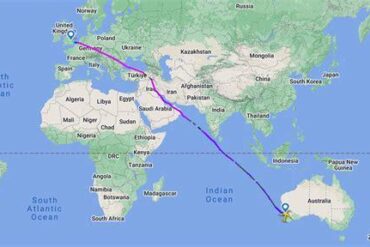
The economics are unforgiving. Nonstop routes survive on premium demand—business travelers and wealthy leisure passengers willing to pay a substantial fare premium for time saved. Singapore generates that traffic through its financial and corporate sector, which is why Singapore Airlines can sustain an ultra-long-haul service from Singapore to New York JFK using its Airbus A350-900ULR, and why Qantas flies nonstop between London Heathrow and Perth. Thailand’s US-bound traffic, by contrast, is dominated by leisure travelers and people visiting friends and relatives, two segments among the most price-sensitive in aviation. These passengers happily accept a longer one-stop itinerary if it saves several hundred dollars, which strips the nonstop of the fares needed to justify it.
Distance compounds the problem. The Los Angeles to Bangkok distance of 8,269 miles places the route firmly in the ultra-long-haul category, where fuel burn, crew costs, and aircraft downtime all climb steeply. A jet committed to an 18-hour round trip is unavailable for revenue flying for most of a day. Ultra-long-haul flying rarely works outside major business corridors, and Los Angeles to Bangkok is not one.
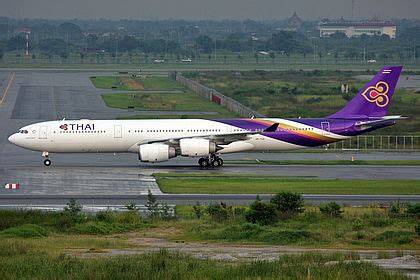
Thai Airways Once Flew These Routes Nonstop
There is a historical counterpoint that often surprises travelers: nonstop flights between the two countries did exist, just never on a US carrier. From Bangkok Suvarnabhumi, Thai Airways operated direct services to both Los Angeles and New York JFK using Airbus A340-500s configured with extra legroom throughout, a layout that made an 18-hour journey surprisingly comfortable. But the A340 was thirsty on fuel, and the airline reportedly lost money on every flight. The New York route ended in 2008; the Los Angeles service was rerouted through Seoul Incheon in 2012 and canceled entirely by 2015. Thai Airways today flies far more efficient Boeing 787s and Airbus A350-900s, and its fleet is growing with additional A321neos, 787-9s, and 787-10s—aircraft theoretically suited to a US nonstop. The technology has caught up; the market has not.
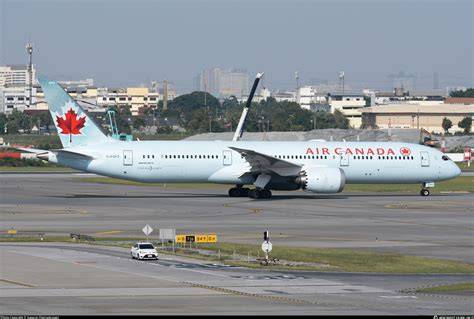
The Air Canada Precedent: A North American Nonstop That Works
The sole nonstop currently linking North America to Thailand is operated by Air Canada, which flies its Boeing 787-9 between Vancouver (YVR) and Bangkok three times weekly in summer and daily in the peak winter season. Launched in December 2022, the route remains operational, indicating genuine profitability. Three factors explain its success. Vancouver to Bangkok is 7,344 miles—nearly a thousand miles shorter than the Los Angeles equivalent—and Vancouver’s cooler, less congested market lacks the fierce Southeast Asian competition that saturates Los Angeles. Singapore Airlines, meanwhile, exited Vancouver in October 2023 citing falling demand and financial pressure, removing a formidable rival. Air Canada’s 787 carries just 30 business seats among 298 total, a lean premium cabin that matches the route’s leisure-heavy profile.
Plenty of One-Stop Options Already Serve the Market
The abundance of existing connecting itineraries further undercuts the case for a nonstop. Travelers can reach Bangkok on any number of daily services through Tokyo Narita and Seoul Incheon aboard All Nippon Airways, Japan Airlines, Korean Air, and Asiana; through Manila on Philippine Airlines, which serves the price-sensitive end of the market; and through Hong Kong, Singapore, and Taipei on Cathay Pacific, Singapore Airlines, and EVA Air’s extensive premium networks. Gulf giants Emirates, Qatar Airways, and Etihad funnel passengers through Dubai, Doha, and Abu Dhabi, while most major European carriers serve Bangkok directly. United’s Los Angeles–Hong Kong–Bangkok routing simply joins a crowded, well-served field.
Will a US Airline Ever Launch Nonstop to Thailand?
If any carrier breaks the pattern, United Airlines is the likeliest candidate, largely because its Star Alliance membership aligns with Thai Airways, enabling onward connections across Thailand and Southeast Asia. A nonstop would most plausibly originate from Los Angeles, home to the largest Thai diaspora in the United States, or from San Francisco, United’s transpacific stronghold with exceptional domestic feeding. The shift toward premium experiences—amplified by Thailand’s starring role in television series such as The White Lotus—may gradually create a higher-yielding passenger mix. Until enough travelers are willing to pay a premium for those final 1,000 miles of convenience, the nonstop will remain an idea on the whiteboard rather than a line on the timetable.