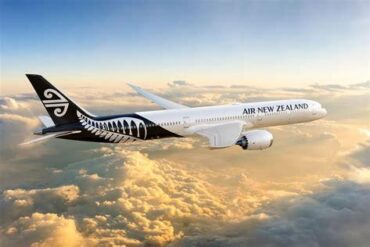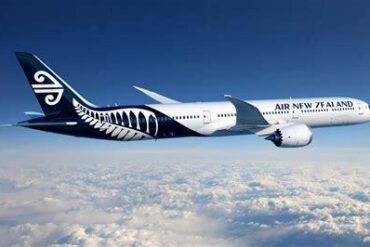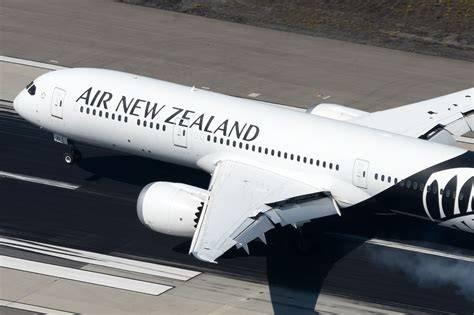
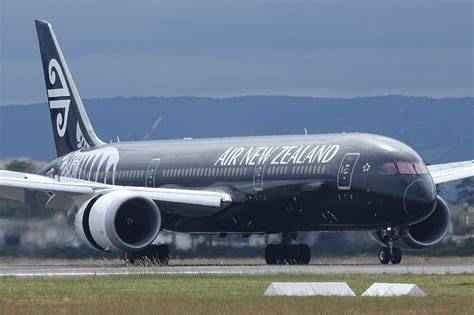
Air New Zealand occupies an unusual position in global aviation: it is a mid-sized carrier anchored to a small national market at the far edge of the South Pacific, yet it operates some of the longest nonstop passenger flights on earth. In 2026 its fleet reflects that tension more clearly than ever. A compact long-haul core of Boeing 787-9 Dreamliners and Boeing 777-300ERs stretches toward New York, Chicago, and Singapore, while a dense regional network of ATR 72-600s and De Havilland Canada Dash 8-300s threads communities together across mountainous islands where jets simply cannot make economic sense. The result is a 115-aircraft fleet engineered around geography rather than fashion—one that treats a 40-minute hop from Wellington to Nelson with the same strategic seriousness as Auckland to Los Angeles.
Why the South Pacific Dictates Every Fleet Decision
Geography is the Kiwi carrier’s first constraint and its defining opportunity. New Zealand sits at the bottom of the South Pacific, by far the largest Polynesian nation in the world, and it carries the largest Polynesian population anywhere. That demographic weight shapes the airline’s network: New Zealand is home to Māori communities, alongside large immigrant Polynesian populations from Niue, the Cook Islands, and beyond, whose numbers sometimes exceed those who remain on their home islands. The Realm of New Zealand, encompassing the Cook Islands, Niue, and Tokelau with New Zealand proper, is a constitutional arrangement often compared to Denmark’s relationship with Greenland—and Air New Zealand is the practical thread that binds those far-flung places to Auckland.
Routes to Niue, Samoa, Tonga, the Cook Islands, and French Polynesia range from busy multi-daily corridors to paper-thin services no competitor will touch. The weekly Niue flight is the tiny island country’s only connection to the outside world. Adding to the complexity, New Zealand also administers the Chatham Islands, populated outlying islands that are part of New Zealand proper. Air New Zealand does not serve them: the archipelago of roughly 620 residents is reached exclusively by independently owned Air Chathams, which operates two ATR 72-500s and six Saab 340 turboprops under a formal domestic interline partnership. Stewart Island, the country’s third-largest island, is likewise absent from the mainline network, served instead by Stewart Island Flights from Invercargill. Understanding these omissions is as revealing as understanding the routes: Air New Zealand optimises for volume and connectivity, and leaves genuine micro-markets to specialist partners.
The 2026 Fleet at a Glance
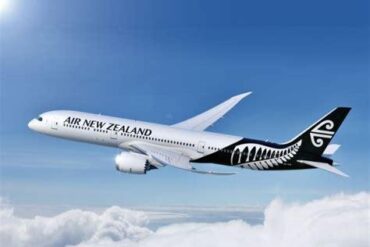
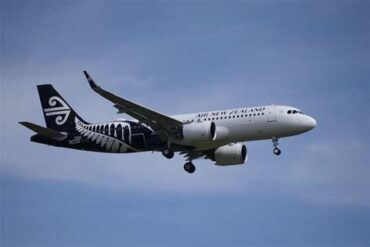
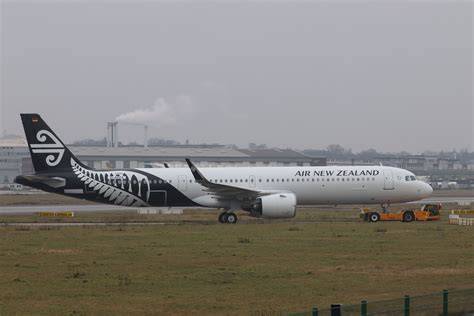
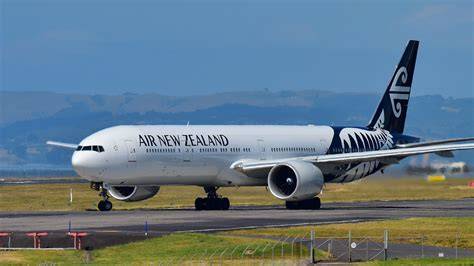
The current fleet comprises six types across two broad missions. The ten Boeing 777-300ERs, averaging 14.1 years, remain the powerhouse for the heaviest long-haul demand. The fourteen Boeing 787-9 Dreamliners, averaging 9.5 years, are the airline’s most efficient long-range asset and the focus of its biggest retrofit programme. On the short-haul international and domestic side, seventeen domestically configured Airbus A320ceos average 12.2 years, while twenty A320neo and A321neos average just 5.6 years—the youngest, most efficient block in the fleet. Regionally, 31 ATR 72-600s at 8.6 years handle most turboprop domestic work, complemented by 23 Dash 8-300s averaging a venerable 19.3 years. Fourteen aircraft remain on order: ten Dreamliners spanning the 787-9 and 787-10, plus four additional A321neos.
Turboprops, the Unlikely Backbone
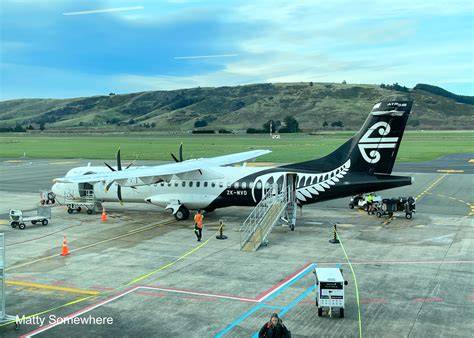
What sets Air New Zealand apart from peer carriers is its extraordinary commitment to turboprops. It is the world’s largest operator of the Dash 8-300, a type most airlines retired years ago. The logic is brutally simple: New Zealand’s regional cities generate passenger volumes too thin to justify jets, and turboprops burn dramatically less fuel on the short hops that cross the country’s mountainous terrain. A Q300 climbing out of a Windward-side provincial airport half-full still returns a margin that an A320 could never match. The ATR 72-600 takes the middle tier—larger than the Dash but cheaper than a jet—and together the two prop types give Air New Zealand a domestic network density no jet-only strategy could replicate.
Auckland: The South Pacific’s Most Strategic Hub
Auckland Airport is the airline’s undisputed centre of gravity and one of the major hubs of the South Pacific. From there, the fleet fans out with deliberate type-matching: Airbus A321neos to New Caledonia, Samoa, and Niue; A320s to Fiji, Tonga, and the Cook Islands; Dreamliners and 777s to Fiji, French Polynesia, Hawaii, and Samoa on higher-demand services. Fiji stands out as a multi-daily, contested market, while Niue exemplifies the opposite extreme—a route flown only because New Zealand is the sole lifeline for roughly 2,000 people. Auckland competes for Pacific hub status with Brisbane, Nadi, Honolulu, and Nauru, each with overlapping and sometimes unique networks. Papua New Guinea and Vanuatu, meanwhile, lie beyond the airline’s reach, served by other carriers.
Christchurch, Wellington, and the Trans-Tasman Reality
Christchurch is the South Island’s largest gateway and the country’s clear second international entry point, though far smaller than Auckland. Beyond Australia, its international reach extends to Hong Kong, Singapore, Guangdong, and Fiji—yet those routes are frequently flown by foreign airlines, including Fiji Airways’ sole operation on the Fiji link. Wellington mirrors this pattern: Fiji Airways handles Fiji and Air Chathams handles the Chathams, leaving Australian east-coast cities as its only mainline international service. Trans-Tasman flying from Auckland, Wellington, Christchurch, and Queenstown takes only three to four hours, and in practice the Australia market is the largest single share of Air New Zealand’s international network—legal international flying that functions economically much like domestic flying in the United States or intra-European markets. Queenstown, an alpine resort town, exists internationally purely as a trans-Tasman gateway, connecting only to Australia.
The 787 Retrofit and Ultra-Long-Haul Ambition
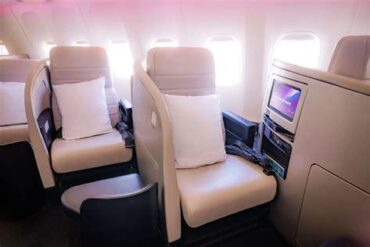
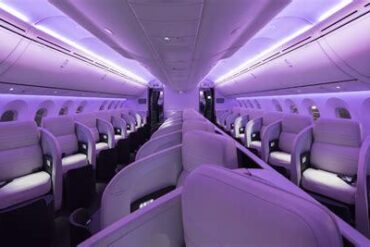
The defining project of 2026 is the Dreamliner cabin harmonisation, retrofitting every existing 787-9 to a single configuration and completing the transition by the end of the year. At its heart sit the new Business Premier Luxe suites, and a recently introduced long-range 787-9 trim offers 219 seats—eight Business Premier Luxe, 34 Business Premier, 52 Premium Economy, and 125 Economy. Because retrofits temporarily reduce available capacity, Air New Zealand is shifting more A321neo flying onto Australian and Pacific Island routes to absorb growth that the Dreamliner fleet cannot carry during the programme.
A Quiet Innovator With a Proud Safety Culture
Air New Zealand’s reputation rests as much on product and culture as on hardware. It has produced some of commercial aviation’s boldest cabin concepts—the Skycouch, the Skynest, and the pioneering Premium Economy cabin—while leaning unapologetically into New Zealand’s rugby passion and the Lord of the Rings and Hobbit franchises, having been among the first carriers to release high-quality themed safety videos. AirlineRatings.com has consistently awarded it among the highest safety ratings in the world. When the 2011–2012 Puyehue-Cordón Caulle volcanic ash cloud grounded Qantas, Jetstar, and Virgin Australia trans-Tasman services, Air New Zealand flew lower beneath the ash, accepting a fuel penalty in exchange for keeping passengers moving. Domestically, the 1996 Single Aviation Market opened New Zealand’s trunk routes to Australian carriers, and Jetstar’s arrival ensured genuine competition on the Auckland–Wellington–Christchurch–Queenstown corridors, while Air New Zealand retains most or all service to regional towns and its close relationship with Virgin Australia.
The fleet entering 2026 is therefore not simply a list of registrations. It is a carefully calibrated response to isolation, scale, terrain, and a uniquely Polynesian geography—one that keeps the Kiwi carrier competitive on the world’s longest routes while never forgetting the 500-person island whose only lifeline departs once a week.