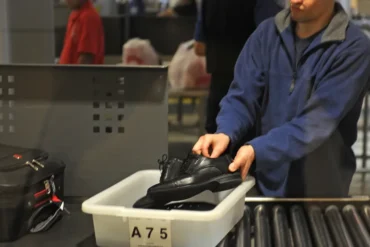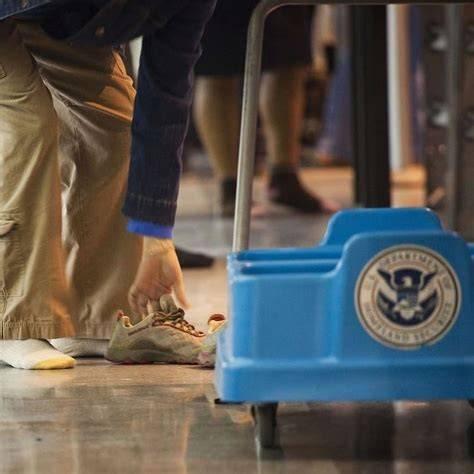
For nearly two decades, the phrase “shoes off” was the unofficial anthem of American air travel. Travelers shuffled barefoot or in socks across grimy terminal floors, balancing on one leg while wrestling with laces, all because one man boarded a transatlantic flight in December 2001 with explosives packed into the soles of his trainers. The ritual became so ingrained that it felt permanent, a tax on modern mobility that no amount of patience could soften. Then, without much warning, it ended. In July 2025, the Transportation Security Administration lifted the nationwide shoe-removal requirement, allowing most passengers at airports across the United States to walk through checkpoints fully shod. The decision stunned frequent flyers, delighted parents traveling with young children, and raised an obvious question: what actually changed after almost twenty years?
The Uneven Aftermath of the Richard Reid Shoe-Bomb Plot
The rule’s origin story is impossible to tell without Richard Reid, the British national who attempted to bring down American Airlines Flight 63 on December 22, 2001, barely three months after the September 11 attacks. He arrived at Charles de Gaulle Airport in Paris looking disheveled, carrying a green knapsack, a passport, and a Koran. Security officers and airline agents noticed something deeply off about him. As documented in “Terrorism Since 9/11: The American Cases,” the thirteen witnesses interviewed about the inspection described Reid as filthy, very unkempt, and emotionless, showing no curiosity about why he was being searched. Despite those red flags, authorities lacked a legal reason to detain him, and he boarded the following day.
Beneath his footwear, Reid had hidden roughly 100 grams of pentaerythritol tetranitrate, or PETN, a compound used in military-grade plastic explosives. He had trained in al-Qaeda camps in Pakistan and Afghanistan, including Khalden, under the so-called master bomb maker Midhat Mursi. Mid-flight, he tried to ignite a fuse connected to the device. Passengers noticed, doused him with water, and overpowered him. Had he succeeded, the blast could have torn a hole through the fuselage and potentially sent the aircraft into the Atlantic. The plot failed, but its aftershocks reshaped airport security for a generation.
The United States responded with sweeping changes. The TSA, created in November 2001, required passengers flying out of American airports to remove their shoes between August 13 and 14, 2006, expanding a policy first tested at select locations in 2006 after a foiled liquid-explosive plot prompted a broader rethinking of what passengers could carry. From that point forward, shoe removal was not merely a precaution but a permanent fixture of the checkpoint choreography, applied to every traveler regardless of age, status, or destination.
What Actually Changed Inside the Screening Lane
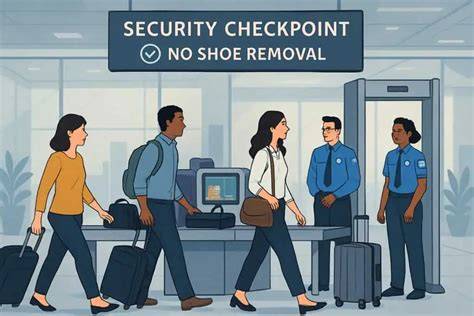
When former Department of Homeland Security Secretary Kristi Noem announced the change on July 8, 2025, she framed it as a deliberate trade rather than a surrender. “TSA will no longer require travelers to remove their shoes when they go through our security checkpoints,” she said, adding that the agency wanted to improve the travel experience while maintaining safety standards. She also noted that shoe removal would not disappear entirely: passengers flagged for unpredictable additional measures, or whose identification raised questions, could still be asked to take off their footwear.
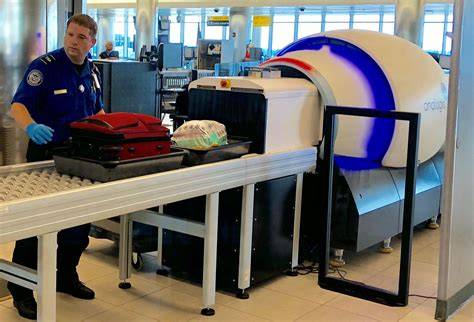
The shift rests on a stack of interlocking technologies. The first is computed tomography, or CT, baggage scanning, which produces three-dimensional images of carry-on bags instead of the flat, jumbled silhouettes of traditional X-ray machines. Operators can rotate a digital model, slice through it, and identify explosives or prohibited items hidden inside cluttered luggage with far greater confidence. The second is advanced imaging technology, a body-scanning platform capable of detecting both metallic and nonmetallic threats concealed beneath clothing, including the kind of molded or sheet explosive that a shoe bomb would contain.
Those machines do not operate in isolation. The TSA has layered additional personnel at checkpoints, enforced REAL ID identity standards that verify who is actually flying, and leaned on a national network of fusion centers where local, state, tribal, territorial, and federal partners share threat intelligence. The agency’s own description calls this network essential to receiving, analyzing, gathering, and sharing threat-related information, ideally identifying real or potential threats long before a traveler reaches an airport. In practical terms, the shoe check was one tiled layer in a much thicker floor. Once the other layers matured, stripping millions of pairs of sneakers every day stopped being proportionate.
How the Change Plays Out at the Checkpoint
For leisure travelers and business flyers alike, the practical effect is measured in minutes and tempers. The old process forced passengers to untie, slip off, stack shoes in bins alongside wallets and laptops, watch them roll into the machine, then juggle socks and loose footwear on the far side while the queue behind them pressed forward. Parents with small children endured a particular circle of chaos, trying to guard toddlers from wandering while simultaneously pulling on their own boots. That specific frustration is now largely gone for passengers without complicating factors.
The new routine still demands attention, though. Shoes pass through the metal detector or body scanner worn, which means bulky boots with metal hardware, thick soles, or hidden compartments may still be examined separately. Agents retain discretion, and travelers should expect occasional requests to remove footwear when a bag triggers an alarm, an identity check falters, or a secondary screening is warranted. The policy shift is a change in default posture, not a promise that every shoe glides through untouched. Most passengers, however, will notice only that the checkpoint moves faster and requires one less awkward balancing act.
TSA PreCheck and the Math of a Smoother Security Line
Even with shoes permitted on, TSA PreCheck retains its own distinct appeal. The program grants expedited screening at more than 200 American airports to travelers the government deems low risk, allowing them to keep light jackets on, leave laptops in bags, and skip much of the physical undressing that standard lanes demand. Enrollment data cited by Investopedia suggests that 99 percent of PreCheck passengers wait less than ten minutes to clear security, a figure that matters enormously when catching a dawn flight before a client meeting.
The cost is modest relative to the benefit. A five-year membership runs between $79.75 and $85.00 depending on the enrollment provider, which works out to roughly $16 to $17 per year. For a traveler taking six round trips annually, that amounts to about 60 checkpoint visits over the membership period, or roughly $1.40 per passage. The return is not simply money; it is predictability. Knowing that security will consume minutes rather than an hour changes how early a business traveler must rise, how tightly connections can be scheduled, and how much of the journey remains within one’s control.
Getting enrolled requires a few deliberate steps. U.S. citizens, nationals, and lawful permanent residents who meet the program’s security eligibility requirements can begin the application through the TSA website by selecting an authorized enrollment provider. Applicants submit basic biographical information online, schedule an appointment, and then visit an enrollment center in person with identity and citizenship or immigration documents. Fingerprints and a photograph are captured at the appointment, and the fee is paid on site. Approvals typically arrive within weeks, and renewals can now be completed online through participating providers for a lower price.
The New Normal Without the Plastic Bin Shuffle
The end of mandatory shoe removal signals something larger than one less chore at the checkpoint. It marks a maturation moment for airport security, in which the TSA has decided that its detection capabilities and intelligence pipeline are strong enough to retire a blanket restriction born of a single, terrifying improvisation. The agency is not abandoning vigilance; it is redistributing it. The threat once embodied by Richard Reid’s trainers is now addressed by scanners that see through clutter, body imaging that reveals concealed objects, identity verification that confirms who is standing in line, and intelligence that flags danger before it arrives.
For travelers, the practical takeaways are straightforward. Most passengers can now walk through security with shoes on, a change that eliminates a small but persistent source of friction from every domestic journey. Those who want speed and consistency beyond the default can weigh PreCheck against their flight frequency, and frequent business flyers will almost certainly find the five-year fee easy to justify. Travelers should still keep footwear reasonable, keep documents current, and expect the occasional request for additional screening. The shoes may stay on, but the rules of readiness remain intact.