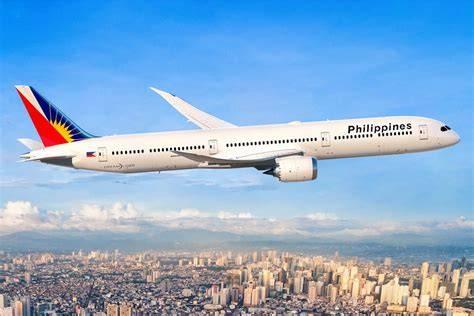
Philippine Airlines has signed definitive contracts with Boeing for 15 787-10 Dreamliners, together with purchase rights for five additional aircraft, bringing the potential total to 20 widebodies. The agreements, announced on November 15, were signed on November 10 and convert a commitment first unveiled at the Farnborough International Airshow in July into binding contracts. It stands as the largest widebody purchase in the history of the Philippine flag carrier, a milestone that reshapes its long-term international ambitions. Reuters estimated the headline value at $3.4 billion if all 20 jets are acquired, based on post-discount pricing estimates detailed in July, although neither Boeing nor Philippine Airlines has disclosed the finalized contract value. The firm commitment covers 15 aircraft; the remaining five are not firm orders and carry no guaranteed delivery slot.
Fifteen Aircraft Firmly Ordered, Five More Held as Purchase Rights
The November contracts formalize Philippine Airlines’ July commitment for 15 Boeing 787-10s and the opportunity to acquire five more. The five additional aircraft remain purchase rights, not guaranteed deliveries, and would only bring the total to 20 airframes if the carrier chooses to exercise them. GE Aerospace’s GEnx-1B engines are written into the agreements, giving the jets a confirmed propulsion supplier from the outset. The selection extends a partnership between GE and Philippine Airlines that spans more than five decades, and the GEnx family already powers Boeing 787 variants flown by international carriers worldwide. That established platform means the airline can fold the engine into its existing maintenance planning rather than introducing an entirely new type into its technical operations. Deliveries are scheduled across the next decade, though the latest announcement did not provide a detailed timetable. Reuters reported in July that deliveries were expected to begin in 2031, while Philippine Airlines’ November announcement used the broader timeframe. The airline has not identified individual delivery years or specified when the five purchase rights might be exercised.

A Long-Term Commitment Rather Than an Immediate Capacity Increase
Because the first aircraft will not arrive until the early 2030s, the order functions as a long-term strategic commitment rather than a near-term capacity injection. Philippine Airlines will need to plan aircraft financing, crew training pipelines, maintenance arrangements, and fleet transitions well ahead of the first arrival. That lead time matters for an order of this scale, since pilot type ratings, cabin crew familiarization, and ground handling readiness all require years of preparation before a new widebody type enters revenue service. The purchase also signals confidence in the carrier’s medium- and long-haul growth trajectory at a moment when Southeast Asian aviation is recovering strongly from the pandemic era. For Boeing, the finalized purchase adds a significant widebody customer commitment in a strategically important region, reinforcing the 787 program’s momentum in Asia-Pacific markets.
The 787-10 Adds Capacity to Philippine Airlines’ Widebody Fleet
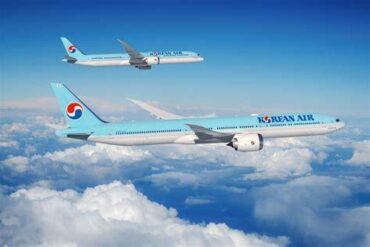
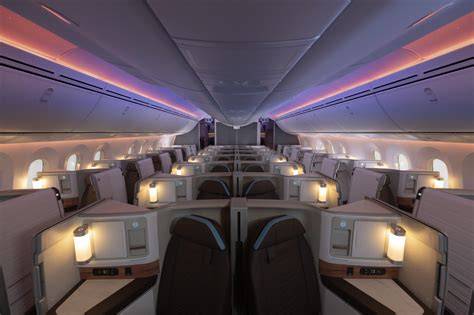
As the largest member of the 787 family, the 787-10 is designed to carry more passengers than the smaller 787-8 and 787-9. Boeing lists a typical passenger capacity of 300 to 375, depending on cabin configuration, and its composite airframe and modern systems are engineered to improve fuel efficiency compared with older-generation widebodies. Boeing says the 787 family uses approximately 25% less fuel than the airplanes it typically replaces, though actual savings depend on route length, passenger load, cabin layout, and operating conditions. Improved efficiency can nevertheless help airlines reduce costs on fuel-intensive international services. The aircraft also offers passenger features associated with the Dreamliner family, including larger dimmable windows, higher cabin humidity, and systems designed to reduce the effects of turbulence. The 787-10’s larger capacity makes it particularly relevant to routes with substantial demand, but it does not have the same range capability as the smaller 787-9. Philippine Airlines will therefore need to match the aircraft to suitable markets rather than assume it can serve every long-haul destination in its network. The airline has not announced which routes will receive the new type or disclosed its planned seating configuration.
Fleet Renewal Extends Beyond the Boeing Order
Dreamliners will form part of a broader modernization strategy as Philippine Airlines prepares to replace older widebody aircraft and support international growth. The carrier currently operates Boeing 777s alongside Airbus A330s and A350s, and adding the 787-10 will introduce another widebody type. Its capacity and efficiency could provide a replacement option for older jets as they approach the end of their service lives or lease agreements. The Boeing purchase also follows Philippine Airlines’ July announcement of a separate agreement with Airbus. The airline signed a memorandum of understanding for nine A350-1000s, with purchase rights for five additional aircraft. That proposal is separate from the finalized Boeing contract and is intended to strengthen the carrier’s ability to serve its longest international routes. The two programs suggest a differentiated fleet strategy: the 787-10 can provide substantial capacity on medium- and long-haul services, while the larger-range A350-1000 is suited to longer intercontinental operations. This approach gives Philippine Airlines options for matching aircraft size and performance to different markets rather than relying on one widebody model. Beyond the aircraft deliveries, the Boeing agreement also reinforces an 80-year relationship between the manufacturer and the Philippine flag carrier. For Philippine Airlines, the aircraft will represent a major investment in its next-generation fleet, although the full benefits will not materialize until deliveries begin in the 2030s.