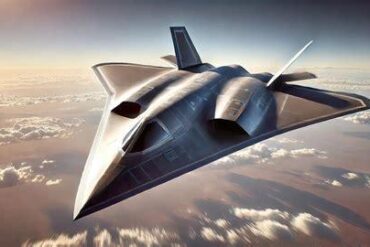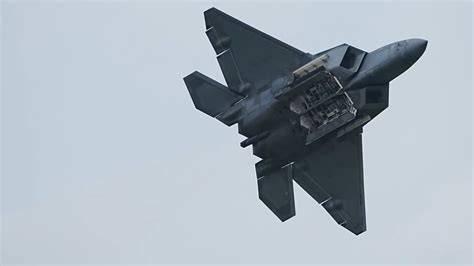
The Jet Age arrived when Germany fielded the Messerschmitt Me 262, the first operational production jet fighter, yet its modest success owed less to propulsion than to Allied air superiority, supply shortages, and wartime chaos. The underlying technology, however, proved sound, and today’s turbofans still follow the same fundamental cycle. Pulse jet engines represent a different branch of that story, one that never reached a fighter runway. The only experimental pulse jet fighter, the Messerschmitt Me 328, arrived earlier than the Me 262 but never entered production. The reason is simple: efficiency.
The Fuel Economy Gap That Ended Fighter Pulse Jets
A pulse jet generates thrust intermittently, in rhythmic bursts rather than a continuous stream, and that pulsating combustion carries a punishing cost: dreadful gas mileage. A pulse jet burns roughly 3 to 4 pounds of fuel for every pound of thrust it produces. A modern turbofan needs only 0.3 to 0.4 pounds for the same output. That tenfold gap explains why no air force has ever sent a pulse jet into combat as a fighter. Fighters demand sustained thrust, rapid throttle response, and endurance over long sorties, and a pulse jet fails all three tests while exhausting fuel at rates no operational budget could justify.
Where Pulse Jets Actually Succeeded
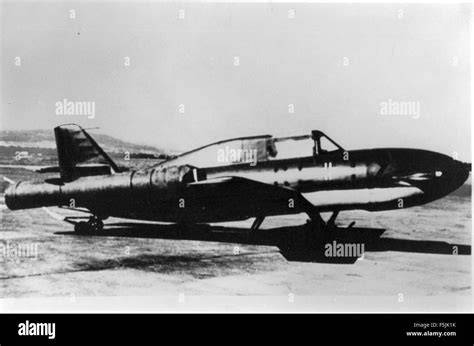
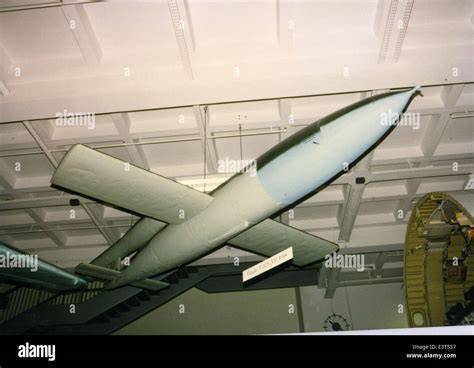
Pulse jets did find one celebrated wartime role. The V-1 flying bomb, the world’s first cruise missile, flew on an Argus As 109-014 pulse jet engine. Though overshadowed by the V-2, which used a liquid-fueled rocket engine, the V-1 demonstrated that pulse propulsion could work reliably at scale. The practice simply did not continue, because later cruise missiles adopted turbojets and turbofans. The technology was proven but never preferred, since missiles and fighters alike prize range and predictability over cheap construction.
Why Uncrewed Aircraft May Revive Pulse Jet Propulsion
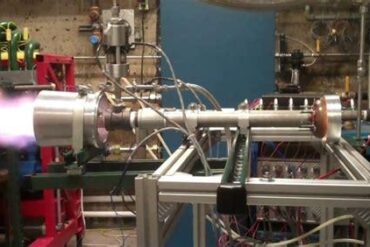
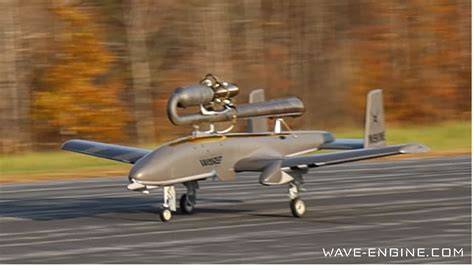
Pulse jets suit expendable platforms far better than crewed fighters. In 2024, Wave Engine Corp. tested a prototype pulse jet engine designed to power one-way attack drones and other uncrewed aircraft. The test paired a Scitor-D drone with an experimental engine producing 50 pounds of thrust, achieving a Thrust-Specific Fuel Consumption below 2 lbs./lbf per hour, which the company described as comparable to turbine-based engines. That figure matters because it narrows the efficiency gap considerably, at least for short-lived airframes where absolute fuel burn is measured in minutes rather than hours.
The Decoy Market Pulse Jets Could Capture
Wave Engine’s work with Kratos and its Versatile Air-Launched Platform (VALP) points toward a Miniature Air-Launched Decoy (MALD) role, a mission currently flown by turbojet-powered platforms. With competitive efficiency, such vehicles could become inexpensive, easily operated systems capable of electronic warfare jamming, releasing chaff to shield nearby crewed aircraft, or deploying other countermeasures. Pulse jet engines have not reached full production, but the economics of attritable aircraft make that prospect increasingly plausible. Fighters will keep their turbofans; drones may yet give the pulse jet its second life.