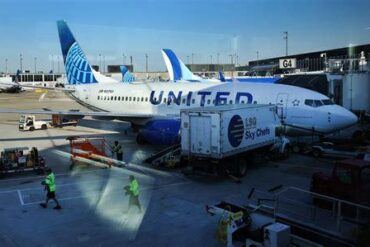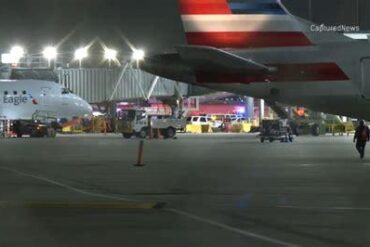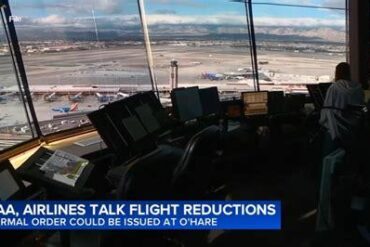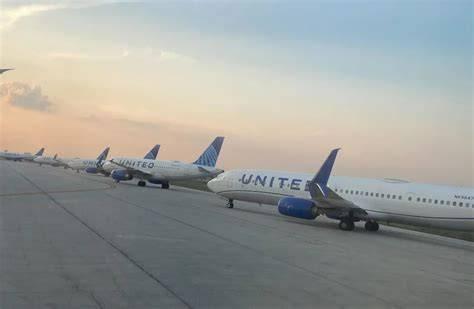
When US aviation froze on Friday afternoon under the longest nationwide ground stop since September 2001, the crisis did not unfold only in the sky. It played out on the concrete apron of Chicago O’Hare International Airport (ORD), where United Airlines passengers sat inside sealed cabins for seven and even eight hours, waiting for a clearance that never came. What should have been a routine two-hour hop to Washington became an endurance test, and the fallout exposed how thin the safety net is when the entire national airspace system halts at once.
United Passengers Trapped Onboard O’Hare Tarmac for Nearly Seven Hours
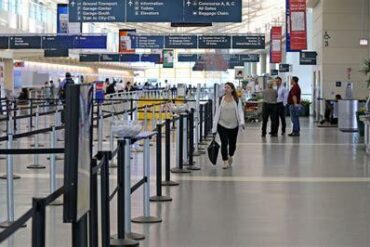
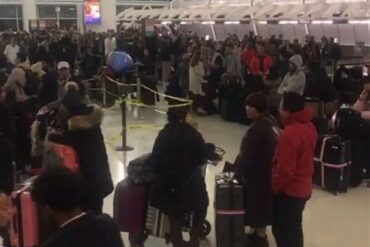
Abdul Sankoh boarded a United flight from ORD to Washington Dulles International Airport (IAD) scheduled to depart at 2:21 PM on Friday. The aircraft never left the gate area in any meaningful sense. Instead, it sat as the ground stop rippled across the country, and it was only after 9:00 PM — nearly seven hours later — that Sankoh was finally able to step off the plane, according to reporting by the Chicago Sun-Times. His ordeal did not end at the jet bridge. Sankoh returned to O’Hare on Saturday to rebook his trip and spent another four hours standing in line, turning a single failed departure into a weekend-consuming disruption.
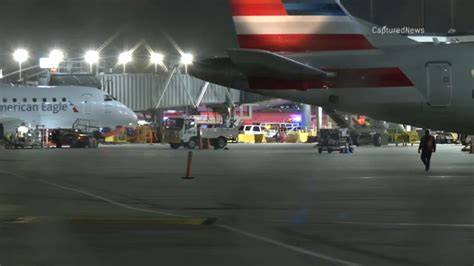
Bryson Moser fared even worse. CNN reported that his flight from ORD to Charleston, South Carolina, endured an eight-hour ground delay before it was ultimately canceled and he could disembark. Throughout the ordeal, Moser said, “our pilot did his best to tell us what he could,” but the captain was eventually cut off, and United Airlines gave no answers to his calls. The gap between a cockpit crew doing its utmost and a carrier failing to communicate is precisely the kind of breakdown that turns a delay into a public relations wound.
FAA Tarmac Delay Rules and the Three-Hour Deplaning Threshold
Federal rules exist to prevent exactly this scenario. US carriers are required to give passengers the chance to disembark after a three-hour ground delay on domestic flights, or four hours ahead of an international service. Those guidelines carry additional obligations. Airlines must inform passengers of the delay’s status after 30 minutes, with further updates left to the carrier’s discretion, lavatories must remain operational, medical aid must be available to anyone who needs it, and by the two-hour mark the airline must provide adequate food — typically a snack rather than a full meal — along with drinking water.
United Airlines publishes its own “Tarmac Delay Contingency Plan,” built on its core4 service standards of Safe, Caring, Dependable and Efficient, developed in coordination with the Transportation Security Administration and Customs and Border Protection. Yet the rules allow exceptions. Passengers may be kept aboard if deplaning would create a safety or security risk or could disrupt other airport operations, and a system-wide ground stop is precisely the environment in which those exceptions multiply.
United’s Monday System Outage Compounded a Brutal Weekend
United hoped for a calmer start to the week after Friday’s chaos and the knock-on delays and cancellations that bled into Saturday and Sunday. Instead, Monday, November 16 brought a separate and widespread grounding of its own, triggered by a system outage. The failure temporarily halted all of the carrier’s departing flights that evening, though aircraft already airborne and flights operated by regional feeder partners under the United Express banner were unaffected. The problem was resolved within roughly an hour, but the timing could hardly have been worse: a carrier still recovering public trust from a weekend of tarmac purgatory found itself explaining a fresh technical failure.
Why Passengers Remained Caged in the Cabin Instead of the Terminal
The deeper problem is structural. A ground stop of national scope removes the two things that normally relieve a tarmac delay: an available gate and a functioning departure slot. Aircraft pushed away from the gate to preserve their place in the queue cannot simply return, because terminal gates are occupied and airport operations depend on predictable flow. Airlines therefore lean on the safety and operational exceptions built into the tarmac delay rules, and passengers absorb the cost in hours of stale cabin air, limited lavatory access, and diminishing information. Sankoh’s seven hours and Moser’s eight hours were not anomalies of incompetence alone; they were the predictable output of a system with few escape valves when everything stops simultaneously.
What the O’Hare Tarmac Ordeal Means for Travelers Booking United
For travelers, Friday’s events carry a practical lesson that airline policy pages rarely articulate. When a nationwide ground stop is declared, the three-hour domestic deplaning clock is not a guarantee — it is a target subject to safety and operational override, and the carrier retains wide latitude in deciding when an aircraft can safely return to a gate. Passengers booked through ORD on United should expect that long tarmac delays will first produce silence, then apologetic announcements, and only later a concrete plan. Sankoh’s four-hour rebooking queue on Saturday suggests that recovery infrastructure lags well behind the disruption itself, and that the real toll of a ground stop extends far past the moment the engines finally spool down.
A National System Stretched to Its Breaking Point
The O’Hare tarmac saga is a portrait of what happens when a single command decision — the FAA’s decision to halt the national airspace — meets an industry optimized for throughput rather than resilience. Sankoh and Moser became shorthand for the passengers who paid the highest price, but they represent thousands who waited in cabins, queues, and terminals with little information and fewer alternatives. As US aviation stabilized in the days that followed, the question it left behind was not whether the ground stop was necessary, but whether airlines and airports are prepared to treat passengers like people rather than cargo when the whole system goes dark.