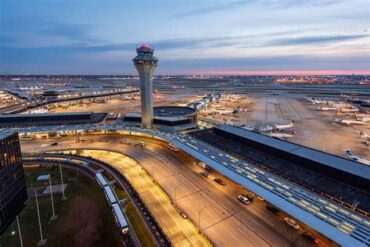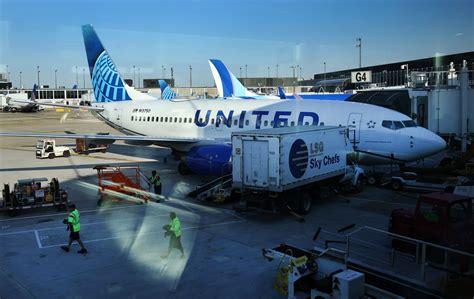
Chicago O’Hare International Airport has once again become the stage for a high-stakes rivalry, as American Airlines reclaims three critical gates while United Airlines relinquishes the same number, signaling a notable shift in momentum between the two aviation giants. This latest development underscores how operational strategy, regulatory frameworks, and calculated risk-taking continue to shape dominance at one of the world’s busiest aviation hubs.
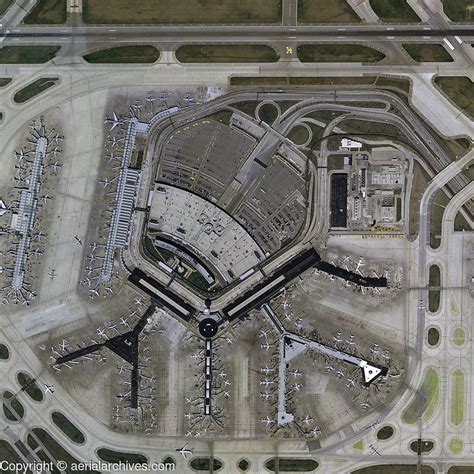
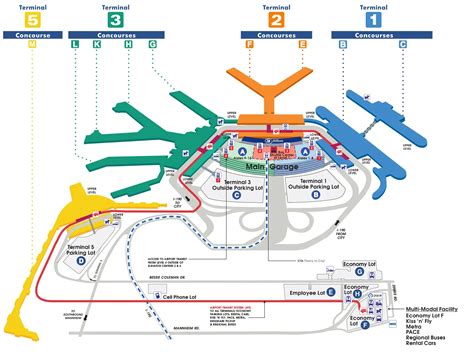
At the heart of this redistribution lies O’Hare’s “use it or lose it” gate allocation policy, a mechanism designed to ensure airlines actively utilize their assigned infrastructure. In a market where every departure slot can translate into millions in revenue, underperformance carries tangible consequences. American’s recent growth in flight operations has positioned it to benefit directly from this policy, while United’s earlier aggressive expansion appears to have backfired under current constraints.
The contrast with last year’s allocation cycle is striking. Previously, United gained five gates while American lost four, reinforcing United’s dominance. This year’s reversal not only rebalances the competitive landscape but also highlights how quickly fortunes can change in an environment dictated by efficiency and utilization rather than legacy status.
A Calculated Gamble That Didn’t Fully Land
United Airlines’ recent gate losses can be traced back to a bold—but ultimately imperfect—strategy. The carrier had flooded O’Hare with additional flights, aiming to trigger lease clauses that would pressure American into scaling back its hub presence. The logic was straightforward: overwhelm the system, secure more gates, and force a competitor into retreat.
However, the execution revealed cracks. Many of these added routes were reportedly unprofitable or marginal at best, suggesting that the expansion prioritized strategic positioning over financial sustainability. At the same time, FAA-imposed limits on aircraft movements began to restrict how effectively United could maintain its inflated schedule.
American, by contrast, adopted a more measured approach. Rather than chasing volume alone, it focused on consistent utilization and targeted growth, aligning more effectively with O’Hare’s allocation rules. The result is a quieter but more durable gain—three gates that could support long-term expansion rather than short-lived tactical wins.
Why O’Hare Remains a Battleground
O’Hare’s significance extends far beyond Chicago. As one of the busiest airports globally by aircraft movements, it represents a critical node in domestic and international networks. Its central geographic position makes it an ideal connecting hub, but that same advantage also creates intense congestion.
Delays are a persistent challenge, prompting the FAA to introduce caps on departures and stricter scheduling oversight. These constraints add another layer of complexity to airline strategy. It’s no longer enough to schedule more flights; airlines must ensure those flights are operationally viable within regulatory limits.
Recent tensions illustrate this dynamic vividly. American has accused United of overscheduling beyond FAA limits, while United has had to delay the launch of several regional routes due to capacity restrictions. Both carriers are now facing summer caps that will eliminate hundreds of flights, forcing a recalibration of priorities.
The Numbers Behind the Rivalry
Data reveals just how dominant—and intertwined—American and United are at O’Hare. Out of approximately 39,800 scheduled departures in a single month, a staggering 34,947 flights are operated by these two airlines alone. United leads with around 19,565 departures, while American follows with 15,382, leaving competitors like Delta far behind.
Route dynamics further illustrate their strategic focus. United’s most frequent route connects O’Hare to New York LaGuardia, emphasizing high-frequency business travel. Yet in terms of seat capacity, longer-haul routes such as San Francisco and Newark take precedence, reflecting a balance between frequency and yield.
American, meanwhile, anchors its network around Dallas/Fort Worth, a cornerstone hub that feeds traffic efficiently into its broader system. This approach highlights a key philosophical difference: United leans into network breadth and frequency, while American emphasizes hub-to-hub strength and connectivity.
A Rivalry Rooted in Identity and Ambition
The competition at O’Hare is not merely about gates or schedules—it’s deeply tied to corporate identity. United Airlines has long considered Chicago its home turf, with headquarters in the city and a historical presence that cements its status as the airport’s largest operator.
American Airlines, however, has spent years challenging that dominance, steadily expanding its footprint and reinforcing its position as a formidable second player. The latest gate reallocation strengthens its ability to compete more aggressively, narrowing the operational gap between the two carriers.
There’s an almost chess-like quality to their moves. Every added route, every adjusted schedule, and every reclaimed gate represents a calculated step in a larger game of positioning. And like any good rivalry, momentum shifts quickly—sometimes with consequences that linger far longer than expected.
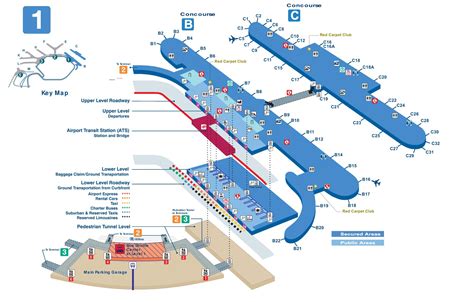
What This Shift Signals for the Future
American’s regained gates may seem modest in number, but their strategic value is anything but small. Each gate enables additional departures, improved scheduling flexibility, and stronger hub connectivity. In a constrained environment like O’Hare, incremental gains can compound into significant competitive advantages.
For United, the loss serves as a reminder that scale alone doesn’t guarantee control. Efficiency, compliance, and profitability are increasingly decisive factors, particularly as regulatory oversight tightens. The airline remains the dominant player, but its margin for error has clearly narrowed.
Looking ahead, the rivalry is unlikely to cool. If anything, the combination of FAA constraints, evolving demand patterns, and strategic recalibration will make future allocation rounds even more consequential. Both airlines are too deeply invested in O’Hare to concede ground easily.
In the end, this latest chapter reinforces a simple truth: at Chicago O’Hare, every gate tells a story—and every move reshapes the balance of power.