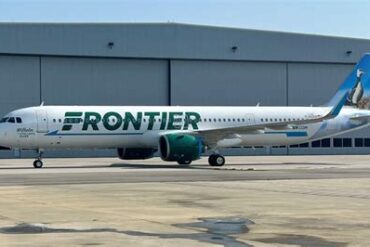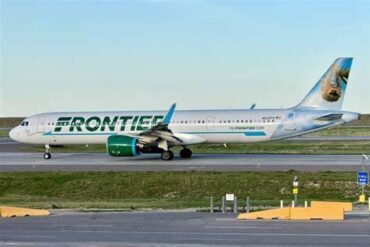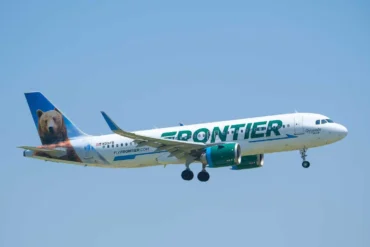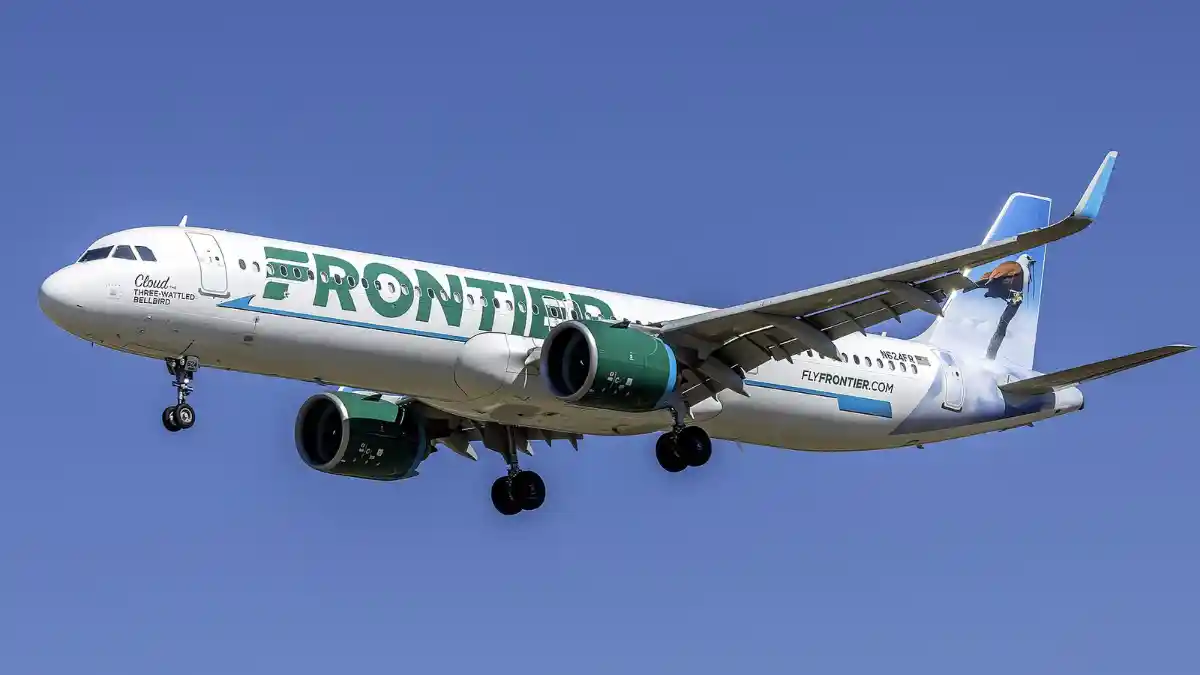
Frontier Airlines flight F9-3566, the carrier’s daily Denver-to-Detroit service, left Denver International Airport (DEN) at 11:02 AM local time on November 11 with an Airbus A321neo registered N688FR at the controls. For roughly the first hour of the two-to-two-and-a-half-hour scheduled sprint across the Midwest, it was an entirely routine operation, level at 33,000 feet with the flight crew handling radio frequencies and cabin crew working the aisles. Then, over eastern Iowa, a forward lavatory faucet failed, and the water it released began pooling on the floor of the passenger cabin.
What followed was not a cleanup call to the airline’s maintenance control. The pilots broadcast a mayday to air traffic control, the highest urgency signal available in aviation, and requested an immediate diversion to Chicago O’Hare International Airport (ORD). Passenger video later shared widely on social media, and cited by CBS, showed the leak was anything but a trickle: water had escaped the lavatory entirely and spread across the aisle floor, saturating the surrounding area while passengers scrambled to keep bags and shoes clear.
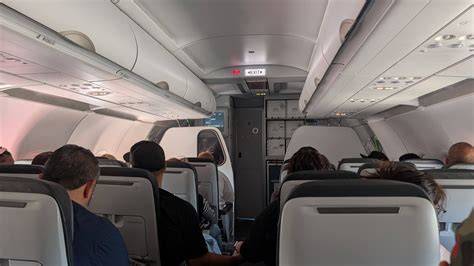
The aircraft descended through 24,000 feet as it turned toward Illinois, and the pilots were blunt with controllers about their reasoning. They told ATC they were “worried about electronics.” That single phrase explains why a leaky faucet became a safety event rather than an inconvenience, and why the flight was handled under emergency protocol for the remainder of its cruise.
Why Water Below an A321neo’s Cabin Floor Is a Legitimate Emergency
The leak mattered because of where an A321neo keeps its nervous system. Beneath the passenger cabin floor sit avionics, wiring bundles, electrical distribution panels, and environmental control systems — the components that translate pilot inputs into control surface movement, navigation data, cabin pressurization, and communications. Water that seeps through floor panels or runs along cable runs reaches hardware that is neither designed to be submerged nor easy to inspect in flight. Short circuits, corrosion, and spurious fault warnings are the realistic outcomes of soaked electronic bays, and in the worst case, a fault in the wrong system at the wrong altitude demands far more than a diversion.
Aviation regulators treat this threat with corresponding seriousness. The FAA issued an airworthiness directive numbered 2026-02-10, superseding AD 2024-01-01, after undetected leaks from Boeing 787 faucet modules traced downward below the cabin floor and into electronics bays. That directive involves a different airframe than the A321neo, but the hazard is identical in principle: an unpressurized water line leak is an electrical fire risk and a systems reliability risk rolled into one. Frontier’s own statement to ABC7 Chicago confirmed the physical sequence — “The faucet in the forward lavatory sprung a leak, which caused water to flow along part of the aircraft floor.”
N688FR: A Two-Month-Old A321neo That Nearly Grounded Itself
The most striking detail is the aircraft’s age. According to ch-aviation, N688FR first flew on August 21 and was delivered to Frontier on September 3, making it roughly three months old from its first flight and just over two months in revenue service when the faucet failed. A brand-new jet is no immunity to a plumbing fault; lavatory faucets are mechanical valves that cycle hundreds of times a week, and a single faulty cartridge, loose fitting, or mis-set flow restrictor is enough to undo the reliability calculus of a fresh airframe.
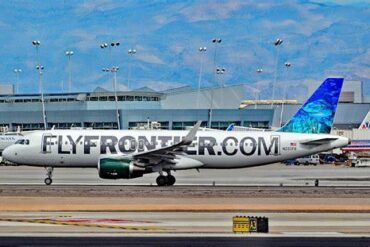
Frontier flies an all-Airbus fleet: six A320-200s, 62 A320neos, 21 A321-200s, and 70 A321neos. The A321neo is the carrier’s high-density workhorse, and every one of those aircraft carries the same lavatory water system, the same cabin floor structure, and the same routing beneath it — which is why a one-off leak on a two-month-old jet can prompt a wider fleet inspection conversation.
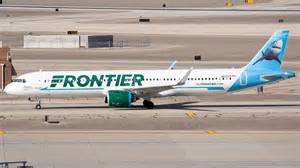
Landing at O’Hare and the Recovery Operation
Air traffic controllers cleared F9-3566 into Chicago O’Hare without incident, and the jet landed safely with no injuries reported among passengers or crew. With the aircraft on the ramp, Frontier mobilized a recovery plan: a replacement A321neo, registered N655FR, was dispatched to fly the stranded Detroit-bound customers onward. Per The Aviation Herald, that aircraft delivered them to Detroit Metropolitan Wayne County Airport (DTW) at just after 8:00 PM local, roughly four and a half hours behind schedule.
As for N688FR, the airline kept it out of service for the remainder of the day, a sensible interval allowing maintenance teams to dry, inspect, and test the forward lavatory, the cabin floor panels, and the electronic equipment bays below before any return to flight. The jet re-entered commercial service on November 12, a quick turnaround that suggests inspections found the water had not reached critical avionics.
A Pattern of Cabin Incidents for Frontier
This was the latest episode in a busy stretch for Frontier’s cabin safety record. Earlier in the year, an event documented by Simple Flying saw multiple flight attendants fall ill, with a cabin crew member reporting that “All my flight attendants have headaches” — leading to hospital treatment and grounded aircraft. More recently, passengers pushed toward the exit door and clashed with crew after a jet bridge failure left them aboard with no air conditioning.
Wednesday’s diversion, by contrast, is a textbook precautionary landing: a mechanical fault in a lavatory, a mayday called out of respect for the systems beneath the floor, and a safe outcome delivered in under an hour. For travelers, the takeaway is that a cabin faucet is not cabin furniture — it is aircraft plumbing, and a 33,000-foot leak is a reason to put the aircraft on the ground fast.