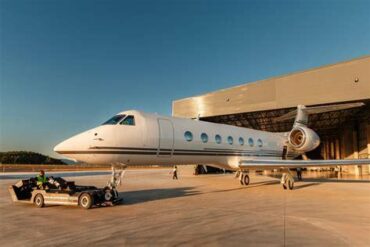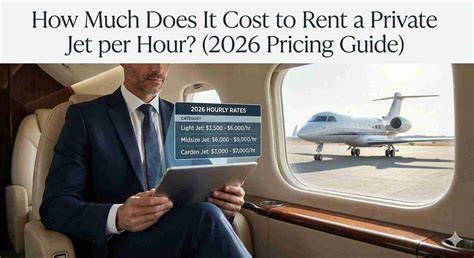
The first thing most people picture when someone says “private jet” is a gleaming Gulfstream on a sunlit apron, a steward in a tailored uniform, and a bill that arrives without numbers attached. That mental image is partly why private aviation pricing is one of the least understood corners of travel in 2026. Commercial travelers can pull up economy, premium economy, business, and first-class fares side by side in seconds. Charter customers cannot. Ask ten experienced travelers what an hour of private flying costs and you will get everything from roughly $2,000 to more than $20,000, and every one of those answers can be accurate. The number depends entirely on which aircraft is rolling down the runway, how far it has to fly before it reaches you, and when you want to leave.
The hourly charter rate is the number quoted in nearly every advertisement, and it is also the number most likely to mislead. In 2026, an entry-level turboprop can be hired for about $2,000 to $3,000 per flight hour, while an ultra-long-range flagship such as the Gulfstream G650ER commands $18,000 to $20,000 per hour or more on the open market. Between those poles sit light jets, midsize cabins, and super-midsize workhorses, each with its own economics. Taxes, segment fees, positioning legs, hangar and handling charges, de-icing, crew expenses, and peak-season surcharges then layer on top of the headline rate, and the final invoice can land 20% to 40% above the quoted figure on a short domestic trip, and considerably higher on complex international itineraries.
Understanding how those layers stack up matters because private aviation is no longer only a trophy purchase. For a family of six on a winter holiday routing, or a leadership team booking three days before a board meeting, a charter can occasionally land within striking distance of premium commercial seats, and knowing where that crossover point sits is exactly what smart operators and their principals calculate before they sign anything.
Private Jet Charter Rates in 2026 Depend First on the Aircraft Category
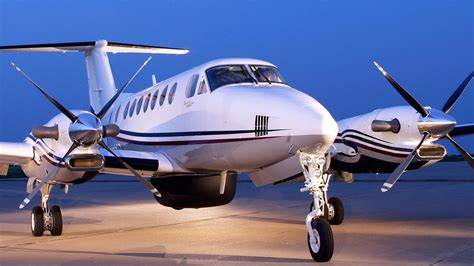
Aircraft category is the single largest variable in any charter quote, and the pricing spread is far wider than the gap between a regional turboprop ticket and an international first-class suite. Turboprops such as the Beechcraft King Air 350i and the Pilatus PC-12 represent the most accessible entry point to private travel, carrying six to nine passengers on missions up to roughly 1,500 miles at $2,000 to $3,000 per hour. These aircraft are popular for short regional routes where runway length, fuel burn, and simplicity matter more than raw speed, and they are the reason charter can sometimes match fully flexible business-class fares when the cabin is full.
Very light jets and light jets form the next tier. The Citation Mustang and Phenom 100 seat four to five and typically run $2,500 to $3,500 per hour, while the Citation CJ3+ and Learjet 75 seat six to eight and quote $3,000 to $4,500 per hour. These aircraft cruise measurably faster than turboprops and can reach 2,000 miles, which makes them the default choice for same-day business connections between cities that commercial airlines serve poorly. Owners and operators note that the light jet segment is where first-time charter customers most often discover the difference between a rate card and a real invoice, because the smaller cabin leaves less margin for cost recovery on a short leg and operators must pass through fixed charges more bluntly.
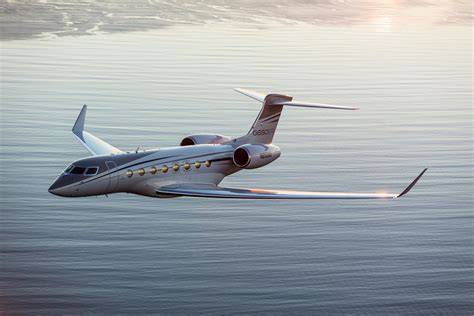
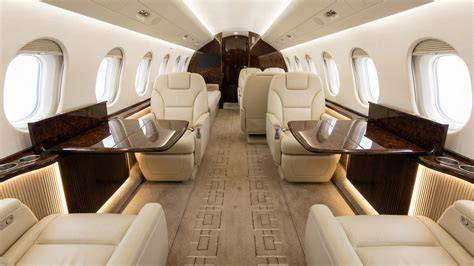
Midsize jets such as the Hawker 800XP and Citation XLS+ seat seven to nine, stretch range to roughly 2,500 miles, and price at $4,000 to $6,000 per hour. Super-midsize aircraft, including the Challenger 350 and Citation Latitude, occupy the heart of the corporate market with stand-up cabins, generous baggage capacity, and ranges approaching 3,500 miles, typically quoting $6,000 to $8,000 per hour. Heavy jets like the Gulfstream G450 and Falcon 900EX carry ten to fourteen passengers for up to 5,000 miles at $8,000 to $15,000 per hour, while the ultra-long-range class, crowned by the Gulfstream G650ER and Bombardier Global 7500, handles intercontinental missions with twelve to nineteen seats and hourly rates starting around $18,000 to $20,000. The prestige of those flagships is real, but so is the cost of feeding four engines or two very large ones, maintaining a cabin that behaves like a small apartment, and keeping a crew on standby wherever the aircraft happens to be.
Why the Advertised Hourly Rate Rarely Matches the Final Invoice
Charter pricing borrows a trick from airline fare construction: the attractive number at the top of the page is rarely the number you pay. In the United States, the Federal Excise Tax (FET) adds 7.5% to the charter cost on domestic flights, and the segment fee structure adds a fixed charge per passenger per takeoff and landing. International itineraries bring a different tax and duty regime, along with customs, immigration, and handling costs that vary widely by country.
Beyond taxes lie the operational charges that catch customers off guard. Airport handling fees cover the fixed-base operator services, ramp access, and passenger processing at both ends of a trip and can run from a few hundred dollars at a quiet regional field to several thousand at a congested international hub during a major event. Crew overnight expenses appear on any itinerary that keeps a captain and first officer away from home for a night, covering hotel, per diem, and transportation. De-icing is seasonal but unavoidable on winter departures from cold-weather airports and is often billed at actual fluid consumption, which can climb into the thousands of dollars on a heavy snow day. Fuel surcharges have become a standard line item as operators insulate themselves from volatile jet-A pricing, and they move with the market rather than with the operator’s mood.
Positioning Fees and Empty Legs Shape the Real Cost of a Charter Flight
Positioning is the structural reason two flights of identical length can quote very differently. Charter aircraft are not a scheduled fleet moving along a timetable; they live where the last customer left them. If your departure airport sits hundreds of miles from the aircraft’s base, the operator must fly the jet empty to reach you, and that repositioning leg burns fuel, crew hours, and maintenance allowance without generating revenue. Some operators absorb a portion of that cost to win the booking, many pass it through in full, and the rest quote a blended figure that hides positioning inside a higher hourly rate. This is why a Wednesday afternoon departure between two secondary cities can quote higher than a Friday evening transcontinental flight: the first aircraft may have to cross three states before pickup.
The mirror image of positioning is the empty leg, a repositioning flight that must happen anyway and is therefore sold at a steep discount. Operators recover part of the cost by offering the leg to other travelers, and discounts commonly range from 40% to 75% below standard charter pricing. A repositioning leg that would normally be priced near $20,000 can appear for $10,000 or less, and short European hops sometimes trade at a fraction of list price. Real-world examples are easy to find: late-availability platforms regularly list one-way offers such as a Frankfurt to Vienna repositioning flight where the entire aircraft is available for a four-figure sum instead of the usual figure, and when split across three or four passengers the per-person cost can undercut even a last-minute business-class ticket on the same route.
The trade-off is rigidity. Empty legs depart when the aircraft needs to move, not when the traveler prefers, and they can be rescheduled or cancelled if the underlying charter itinerary shifts. Travelers who can leave at short notice, accept a fixed route, and treat the departure time as a suggestion rather than a contract can genuinely access private aviation at prices that approach premium commercial cabins. Everyone else should treat empty legs as a bonus rather than a planning assumption.
Peak Demand Can Add 30% or More to Private Jet Charter Costs
Charter markets behave like airline markets during high-demand periods, because the underlying problem is identical: capacity is finite and demand is not. The Christmas and New Year window, Thanksgiving week, and the busiest summer weekends reliably exhaust available aircraft, and event-driven demand can be even sharper. Formula 1 races, the Super Bowl, Art Basel, Davos, and major international sporting competitions all pull enormous numbers of aircraft into a handful of airports over a few days, and operators responding to scarcity routinely apply peak surcharges of 10% to 30%.
Unlike an airline, a charter operator cannot simply add another departure when the market tightens. Each aircraft can fly a limited number of legs per day, crew duty limits cap the day, and the most desirable large-cabin jets are often committed weeks or months ahead. When availability shrinks, customers either pay a premium for the remaining inventory or step up into a larger aircraft than they intended simply because it is the only one on the ramp. Seasonal pricing has become more pronounced as private aviation demand has settled well above pre-pandemic levels, driven by corporate travel that values schedule control and by leisure groups who split the cost of a cabin and treat the charter bill as a shared expense rather than a personal luxury.
Passenger Count Is the Variable That Decides Whether Charter Makes Financial Sense
The most common error in comparing private aviation with commercial travel is measuring a charter against a single airline ticket. A charter buys the entire aircraft, so the headline rate is the cost of the cabin, not of one seat, and dividing it across passengers transforms the economics. A turboprop flying eight people on a 400-mile regional hop can work out to a per-person cost that competes directly with a fully flexible commercial business fare, especially when the alternative involves a connection through a distant hub. A super-midsize jet moving a team of eight across the country can sometimes match the combined price of eight last-minute premium tickets, and it does so while departing from a smaller airport, avoiding security lines measured in hours, and landing closer to the actual destination.
The fixed-cost logic is what makes occupancy so decisive. Whether four or eight passengers sit in the cabin, the aircraft still burns the same fuel, carries the same crew, and pays the same landing fees. Empty seats are therefore pure waste, and filling them is the most effective cost-reduction tool available to any charter customer. A group of four flying a light jet is paying a substantial premium per head; the same aircraft filled to capacity may deliver a per-person figure that looks almost rational beside commercial alternatives.
Solo travelers rarely find private aviation economical against any airline product, and a single seat in Emirates First Class, Singapore Airlines Suites, or Delta One will almost always cost far less than renting a whole jet. The comparison becomes genuinely interesting at six or more travelers, and it becomes compelling when the group is booking late, traveling to a destination without convenient nonstop service, or needs to protect a tight schedule where a delayed connection carries real business cost.
The True Hourly Cost of a 2026 Private Jet Flight Is the Full Invoice Divided by Flight Hours
The industry’s headline rates are useful as a starting point and dangerous as a planning tool. The figure that matters is the all-in cost divided by the mission profile, and that figure is shaped by aircraft choice, distance, taxes, positioning, airport fees, seasonal surcharges, and how many people share the cabin. A turboprop on a short regional mission may come in near $2,500 per hour on the rate card and land near $3,500 per hour once taxes and fixed charges are counted. A Gulfstream G650ER on an intercontinental leg may quote $19,000 per hour and bill closer to $22,000 once international handling, crew days, and fuel surcharges are applied. Neither number is dishonest; they simply answer different questions.
For operators, brokers, and travel planners in 2026, the practical discipline is straightforward: request quotes that itemize positioning, taxes, segment fees, crew expenses, and handling separately rather than accepting a single blended rate, and compare those quotes on the same route with the same passenger count. For customers, the discipline is equally simple: choose the smallest aircraft that meets the mission, fill every seat, book as early as the schedule allows for peak dates, and watch empty-leg inventory for one-way legs where flexibility exists. Private aviation will always carry a premium over commercial travel, but in 2026 that premium is a number that can be calculated, negotiated, and occasionally beaten rather than a mystery to be accepted on faith.