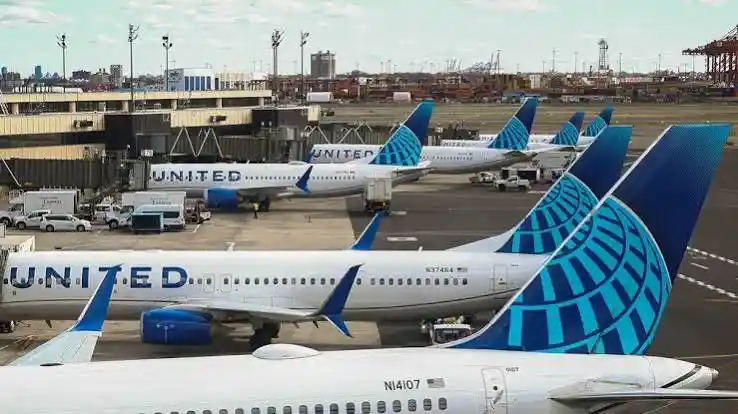
United Airlines grounded every departing mainline flight across its network on Monday evening after a widespread system outage disabled the software that calculates aircraft weight and balance, stranding thousands of travelers at the gate and adding a second moment of disruption to a week in which American aviation had already endured its most severe nationwide ground stop since the September 11 attacks. The carrier said the technology issue was resolved by 6:00 PM EST, roughly an hour after it began, and that departures could safely resume, though residual delays rippled through the evening schedule.
What the United System Outage Disrupted and What It Spared
The malfunction struck the weight and balance system, the operational backbone that tells dispatchers and pilots how much an aircraft weighs and where that weight sits along the fuselage before departure. Until those calculations are complete and certified, no airliner is legally cleared to push back, which is why the outage translated so directly into grounded planes rather than merely sluggish check-in lines. Every departing mainline flight in United’s fleet was held at the gate, and pilots reportedly asked air traffic controllers to keep them there until the fault cleared, according to accounts from NBC Chicago and CBS News. Flights already airborne were untouched, because their weight and balance figures had been locked in before departure, and United Express regional services operated without disruption.
United’s Official Response and Statement on Cybersecurity
United moved quickly to characterize the incident, publishing a notice on X that directed passengers to the airline’s website and mobile app for live flight status. In its statement to Simple Flying, a spokesperson confirmed the resolution and drew a firm boundary around the cause: “We have resolved a technology issue that delayed flight departures. While some flights were delayed, there was no impact on flights in progress, or on United Express flights. There is no indication that this was a cybersecurity-related issue.” The airline also apologized for the disruption, acknowledging the widespread nature of the outage and thanking travelers for their patience as teams worked to restore service.
How the Outage Sits in a Week of US Aviation Failures
Timing did the airline no favors. Only three days earlier, a contractor’s maintenance work had paralyzed the American airspace system: L3Harris was performing upkeep at a radar route site in El Dorado, Arkansas, where discrepancies in radar data surfaced after copper cabling was upgraded to fiber optic, triggering a ground stop on all flights to, from, and within the United States. That halt became the longest nationwide ground stop since 9/11, and the system was still clawing back to “largely normal” status while displaced aircraft and crews continued to generate cancellations. United’s outage was confirmed by the carrier to be entirely unrelated to that FAA event. Nor did it share any connection to simultaneous failures at major US banks, including Chase, Bank of America, US Bank, and Wells Fargo, where customers struggled to access personal account information. Three unrelated technology failures in three days inevitably invite scrutiny, but United’s incident was contained to its own departure process and cleared within an hour.
The Scale of the Network United Had to Restore
United, a Star Alliance member, carries more than 175 million passengers annually across a global network spanning more than 350 destinations on all six inhabited continents. It operates the largest commercial fleet in the world and ranks as the third-largest US carrier by passengers carried, behind American Airlines. An hour of grounded departures at that scale compounds fast: aircraft slip out of sequence, crews approach duty limits, and connecting banks at hub airports lose their rhythm long after the software comes back online. United’s guidance to travelers to check the app reflected precisely that reality, since recovery from a brief stoppage can stretch well beyond the stoppage itself.
Departure Delays, Recovery, and Passenger Guidance
With the system restored before 6:00 PM EST, gates reopened and departure formalities resumed across the network, though the airline forecast delays through the remainder of the evening as the operation absorbed the backlog. For passengers, the practical checklist is straightforward: verify flight status through the United app or website before leaving for the airport, allow extra connection time, and retain receipts if rebooking or an overnight stay becomes necessary. The episode’s real lesson sits in its architecture—modern airlines run on layered software systems, and a single failure in the departure chain can halt an entire fleet on the ground even when nothing is wrong with the aircraft themselves.