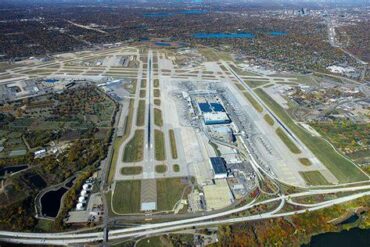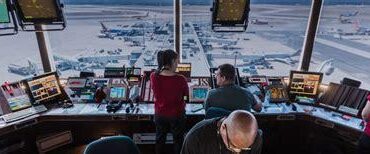
Operations at Minneapolis-Saint Paul International Airport (MSP) returned to normal after a major air traffic control outage temporarily disrupted flights across a large portion of the Midwest. The incident forced the Minneapolis Air Route Traffic Control Center (ARTCC) to declare an “ATC Zero” condition, meaning controllers lost the ability to provide normal radar and radio services for surrounding airspace.
The outage affected aircraft traveling across nine states, including Minnesota, Missouri, Kansas, South Dakota, North Dakota, Wisconsin, Michigan, Nebraska, and Iowa. Although the disruption lasted approximately two hours, the impact continued throughout Thursday evening as airlines worked to recover schedules, reposition aircraft, and manage delayed passengers.
At around 2:00 PM local time, the Minneapolis ARTCC experienced a failure involving critical telecommunications and navigation equipment. The loss of these systems prevented controllers from safely managing traffic in one of the busiest sections of the central United States airspace. The Federal Aviation Administration (FAA) restored services later that afternoon and launched an investigation into the cause of the malfunction.
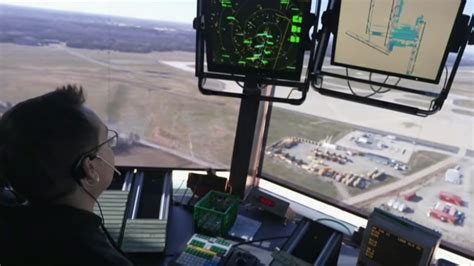
ATC Outage Creates Widespread Midwest Flight Disruptions
The Minneapolis ARTCC controls a massive region covering nearly 400,000 square miles, making it a key part of the national aviation network. When the facility went offline, airlines immediately faced restrictions on departures, arrivals, and aircraft movements throughout the region.
Flights already airborne were not left without safety protections, but pilots had to adjust routes, communicate through alternative systems, and in some cases divert to airports outside the affected airspace. Aircraft waiting on the ground faced significant delays as airlines paused operations until air traffic control services returned.
At Minneapolis-Saint Paul International Airport, one of the largest airports affected, the outage resulted in dozens of delayed departures. According to local reports, MSP recorded 87 departure delays as airlines attempted to recover from the temporary shutdown. Some delays continued for several hours because aircraft and flight crews were no longer positioned according to their original schedules.
The FAA confirmed that services were fully restored and flights gradually returned to normal operations. However, the agency continued investigating why the telecommunications and navigation systems failed and whether additional improvements are needed to prevent similar incidents.
MSP’s Hub Structure Helps Speed Recovery
The outage highlighted the importance of MSP’s role as a major aviation hub, particularly for Delta Air Lines, which operates its second-largest global hub at the airport. Delta controls roughly 70% of MSP’s passenger traffic, giving the airport a relatively concentrated airline structure compared with airports served by many competing carriers.

That concentration helped simplify recovery efforts after the outage. Instead of multiple airlines independently managing disconnected aircraft networks, a dominant carrier could coordinate aircraft movements, crew assignments, and passenger recovery through centralized operations.
During the communication failure, aircraft systems provided important backup capabilities. The Aircraft Communications Addressing and Reporting System (ACARS) allowed pilots and airline operations teams to maintain communication even when traditional FAA radio and radar services were unavailable.
Aircraft also relied on onboard safety technology, including the Traffic Collision Avoidance System (TCAS), which helps prevent conflicts between aircraft when normal air traffic control support is limited. The disruption mainly affected high-altitude en route airspace rather than every phase of flight.
Once aircraft entered MSP Tower’s controlled airspace, normal landing procedures remained available, allowing flights to safely arrive once restrictions eased.
Broader Twin Cities Infrastructure Problems Add Complexity
The aviation outage occurred during a wider communications disruption affecting parts of the Twin Cities region. Reports indicated that some internet and cellular services were also affected during the same period, raising questions about whether multiple systems were connected to a broader infrastructure failure.
Other public services experienced temporary interruptions as well. Some government technology systems were disconnected, and Dakota County 911 services were reportedly unavailable for about an hour. Minnesota IT Services stated that there was no indication the outage was caused by a cybersecurity breach.
The overlap between the airport disruption and regional communication problems has increased attention on infrastructure reliability. Modern aviation depends heavily on interconnected digital networks, making resilient communication systems essential for safe and efficient operations.
FAA Investigation Could Influence Future ATC Upgrades
The FAA is expected to examine whether aging equipment, telecommunications failures, or other technical issues contributed to the Minneapolis ARTCC outage. The incident comes as the agency continues a nationwide effort to modernize America’s air traffic control infrastructure.

One possible outcome could be faster upgrades to backup communication systems, including improvements to technologies such as ACARS and other aircraft-to-ground communication platforms. While existing safety systems prevented the outage from becoming a dangerous event, the disruption demonstrated how quickly regional aviation networks can be affected by a single technical failure.
For passengers traveling through MSP, normal operations have resumed, and officials expect typical flight schedules going forward. However, the outage serves as another reminder that reliable air traffic control infrastructure remains critical to maintaining the stability of the U.S. aviation system.