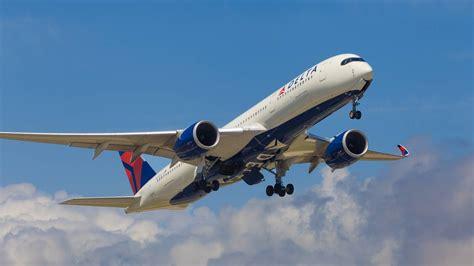
Delta Air Lines is reportedly preparing to establish an Airbus A350 base at Minneapolis–St. Paul International Airport (MSP) in early 2027, a move that could significantly reshape the carrier’s long-haul operation from one of its most important U.S. hubs. The plan would give Delta a more permanent A350 presence in the Upper Midwest rather than relying primarily on aircraft positioned from other hubs.
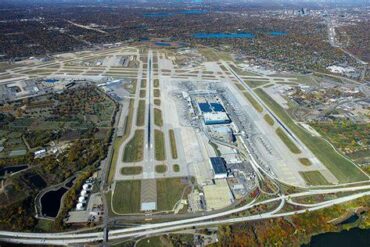
Minneapolis is already one of Delta’s largest and most strategically important hubs, with the airline operating a dominant share of flights at MSP. Its fleet there includes the Airbus A220, A321, and A330, alongside other aircraft used for the carrier’s extensive domestic network. Establishing an A350 base would add a considerably larger and more capable long-haul aircraft to that mix, potentially creating opportunities for both additional international service and upgraded aircraft on existing routes.
The reported plan was disclosed internally in February, according to aviation insider JonNYC. Delta has not publicly confirmed the proposal, and an airline spokesperson was reportedly not immediately available for comment. If implemented, however, the move would represent a logical development as Delta continues expanding its A350 fleet and looks for opportunities to deploy the aircraft across its major hubs.
More Delta A350 Flights Could Come to Minneapolis
Delta already operates the A350-900 at MSP on selected international services, including flights to Seoul Incheon, Tokyo Haneda, and Amsterdam during peak periods. However, the aircraft’s current presence is not equivalent to a permanent Minneapolis base. A dedicated A350 operation could provide Delta with greater flexibility to schedule the aircraft around local demand and potentially sustain more long-haul flying throughout the year.
MSP currently connects Delta passengers with major international destinations including Copenhagen, Dublin, London Heathrow, Paris Charles de Gaulle, Reykjavik, Rome, Seoul, and Tokyo Haneda. The airport’s international network combines several Delta widebody aircraft types, meaning an A350 base could give the airline another tool for adjusting capacity on markets where demand is particularly strong.
The scale of Delta’s Minneapolis operation makes the airport particularly important. Between June 2025 and May 2026, Delta carried more than 24.6 million passengers through MSP, accounting for roughly 71% of the airport’s market share. Sun Country Airlines was the next-largest carrier, with approximately 3.7 million passengers during the same period.
MSP Is Already a Major Delta Hub
Delta’s dominance at Minneapolis extends across both domestic and international flying. The airline serves the airport’s major domestic markets, including Denver, Chicago, Phoenix, Atlanta, Orlando, Seattle, Las Vegas, Los Angeles, Dallas/Fort Worth, and Fort Myers. Internationally, Amsterdam, Cancun, Paris, Toronto, Seoul, Dublin, Calgary, Tokyo, London, and Winnipeg rank among the airport’s leading markets.
That broad network provides a substantial feeder system for long-haul flights. An A350 departing MSP does not depend solely on passengers originating in Minnesota; Delta can also connect travelers from numerous smaller Midwestern markets through Minneapolis. This hub structure is particularly valuable for a large widebody because connecting passengers can help fill seats across multiple cabin classes.
MSP has also maintained annual passenger volumes of roughly 34 to 35 million since the pandemic recovery period. A permanent A350 presence would therefore fit into an airport that already supports a substantial international operation rather than creating a long-haul network from scratch.
Why the Airbus A350 Matters to Delta’s Minneapolis Network
The A350 is Delta’s flagship widebody aircraft and is designed for long-distance international operations with substantially improved efficiency compared with older-generation aircraft. The type delivers approximately 25% better fuel efficiency than older-generation aircraft, making it attractive for routes where range, capacity, and operating economics all matter.
Delta currently has more than 40 active A350 aircraft, with another 18 on order, while also planning to acquire 20 larger A350-1000s. As more aircraft arrive, Minneapolis becomes a natural candidate for additional deployment because of its established international demand and enormous domestic connecting network.
The passenger experience also gives the A350 a distinctive role within Delta’s long-haul fleet. Delta One Suites provide private enclosed spaces with full-height doors and lie-flat beds, while Delta Premium Select offers up to 38 inches of seat pitch and seven inches of recline. Main Cabin passengers receive seatback entertainment, high-speed Wi-Fi, USB-C connectivity, and AC power.
What an A350 Base Could Mean for MSP
A permanent A350 base would not automatically guarantee a wave of new international routes. Instead, Delta could use the aircraft in several ways, including adding long-haul destinations, increasing seasonal capacity, replacing smaller widebodies, or upgrading existing international services.
The timing is also notable because Delta continues to expand its A350 fleet. With more aircraft becoming available, establishing a Minneapolis base could allow the airline to position its newest-generation widebodies closer to the substantial demand generated by its Upper Midwest hub.
For Minneapolis, the significance would extend beyond the aircraft itself. An A350 base would strengthen MSP’s role in Delta’s global network and potentially give passengers in the region access to more long-haul capacity without first connecting through Atlanta, Detroit, New York, or another major Delta hub. If the reported early 2027 timeline proceeds, the coming fleet changes could make the A350 an increasingly familiar sight at Minneapolis–St. Paul.