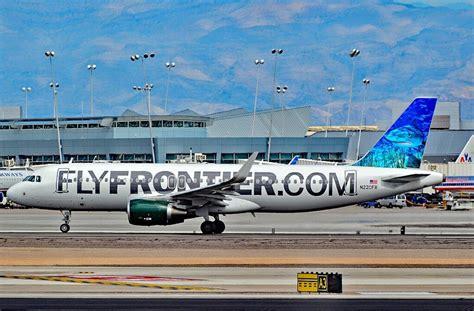
Denver-based Frontier Airlines has filed a lawsuit against American Airlines, seeking more than $100,000 in damages following a March 7, 2024 ground collision at Miami International Airport (MIA). The legal action, lodged in the U.S. District Court for the Southern District of Florida, escalates what initially appeared to be a routine apron mishap into a broader dispute over accountability, operational discipline, and alleged systemic safety shortcomings.
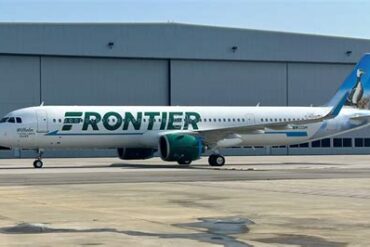
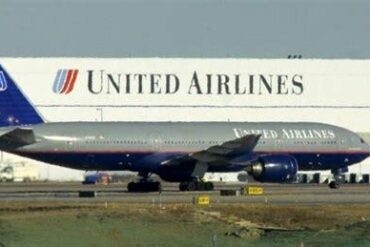
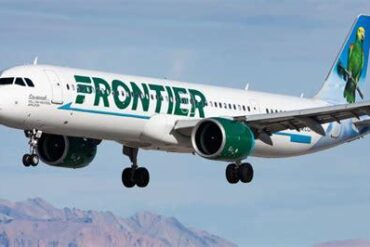
At the center of the dispute is a contact event between an American Airlines Boeing 777-300ER and a parked Frontier Airbus A321neo. While no passengers were injured, the financial and operational consequences have proven substantial. Frontier claims the widebody aircraft, operated by American, struck the vertical stabilizer of its nearly new A321neo during pushback from a gate in a constrained parking environment.
The March 7 Incident at Miami International Airport
The American Airlines 777-300ER was preparing for departure to São Paulo/Guarulhos International Airport (GRU) when the incident occurred. Positioned in what has been described as a “narrow alleyway” between parked aircraft, the widebody jet initiated pushback procedures. Nearby, Frontier’s A321neo was stationary at the gate and subject to a ground delay program.
According to the lawsuit, the Boeing 777 breached a required safety buffer zone during its maneuver. The result was a direct strike to the vertical stabilizer—the tail fin structure—of Frontier’s aircraft. In commercial aviation, even seemingly minor structural damage can trigger prolonged inspections and component replacements due to stringent airworthiness standards.
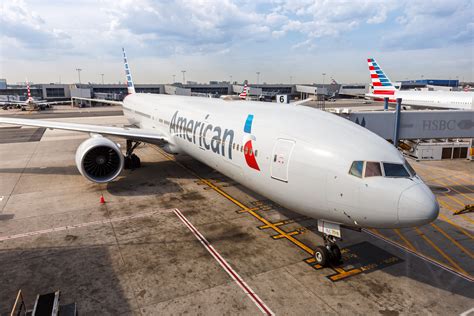
The aircraft involved were identified as N736AT, a Boeing 777-323ER delivered to American Airlines in March 2016, and N630FR, a Frontier Airbus A321-271NX delivered in October 2023. Notably, the Frontier aircraft had entered service only months earlier, making the grounding particularly disruptive for an airline that relies heavily on high daily utilization of its narrowbody fleet.
Structural Damage and Six-Month Grounding
Following the collision, Airbus conducted an inspection of the damaged A321neo. The vertical stabilizer was determined to be beyond repair, necessitating complete removal and replacement. For a modern airliner, such a structural intervention is neither quick nor inexpensive. Vertical stabilizer replacement involves complex composite materials, precise alignment, and regulatory oversight to ensure structural integrity and aerodynamic performance.
Frontier’s aircraft remained out of service for more than six months, ultimately returning to operations in September 2024—after the peak summer travel season. For an ultra-low-cost carrier, this timing was especially consequential. Summer represents a revenue-intensive window, and the inability to deploy a high-demand aircraft during that period amplified financial strain.
While American Airlines reportedly agreed to cover direct repair costs, Frontier contends that compensation did not extend to lost revenue, projected profits, and ongoing lease obligations incurred during the downtime. Aircraft leasing contracts do not pause simply because a jet is grounded. Lease payments continue regardless of utilization, turning grounded aircraft into cost centers rather than revenue generators.
Allegations of “Gross Negligence” and Non-Compliant Maneuvering
The lawsuit goes further than a standard property damage claim. Frontier alleges “gross negligence”, asserting that negligent training and supervision contributed to the out-of-compliance maneuver. The claim emphasizes that the pushback was conducted in a manner that violated established apron safety margins.
Ground operations at congested hubs like Miami require precise choreography. Widebody aircraft such as the 777-300ER possess expansive wingspans and significant tail heights, making them particularly sensitive to spatial limitations. Deviations from clearance procedures can result in contact events even at minimal speeds.
Frontier’s legal filing characterizes the maneuver as “out of compliance”, arguing that required separation buffers were not maintained. The airline maintains that the contact was preventable and symptomatic of broader operational deficiencies.
Financial Impact Beyond Repair Costs
The financial implications extend beyond the visible structural repair. Frontier is seeking compensation that accounts for:
- Loss of aircraft use during peak travel months
- Forecasted lost profits tied to scheduled routes
- Operational disruptions and rescheduling costs
- Mandatory lease payments during the grounding period
For an ultra-low-cost model, aircraft utilization is paramount. Each A321neo typically operates multiple sectors daily, maximizing seat-mile revenue. Removing one aircraft from rotation forces schedule adjustments, aircraft swaps, and sometimes route cancellations—each eroding margin in a business built on efficiency.
The requested damages exceed $100,000, though the precise total sought could climb depending on how lost-profit calculations are evaluated in court.
Broader Safety Concerns and the Boston Reference
Frontier’s complaint references another 2024 incident involving the two airlines—this time at Boston Logan International Airport (BOS). On November 25, an American Airlines Boeing 777-200ER reportedly struck the winglet of a Frontier A321neo while taxiing into a gate.
By invoking this separate occurrence, Frontier signals concern over what it describes as potential “systemic deficiencies” in American’s ground handling or procedural oversight. The lawsuit calls for American Airlines to be placed “on notice,” suggesting that recurring incidents warrant closer scrutiny.
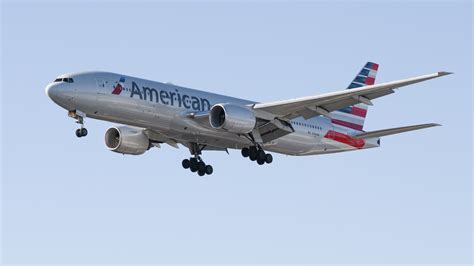
Whether these events represent isolated operational lapses or indicative trends remains to be seen. Major carriers operate thousands of daily ground movements without incident, yet apron collisions—though statistically rare—carry outsized financial and reputational consequences.
Legal and Industry Implications
American Airlines has not yet filed a formal response to the lawsuit. The outcome could influence how liability is assessed in gate-area collisions, particularly when both aircraft are stationary or moving under coordinated ground control supervision.
The case also underscores the complex interplay between airlines, airport authorities, and ground handling providers. Pushback operations typically involve flight crews, tug operators, ramp agents, and clearance coordination. Establishing accountability can require dissecting procedural chains in meticulous detail.
If Frontier’s claims gain traction, the litigation could prompt renewed attention to ground handling standards, training protocols, and spatial risk management at congested U.S. hubs. In an industry where margins are thin and fleet availability is strategic capital, even a low-speed contact event can cascade into months of financial aftershocks.
For now, the Miami collision stands as a reminder that aviation risk does not end at touchdown. Sometimes, the most expensive moments occur at walking speed on the tarmac.