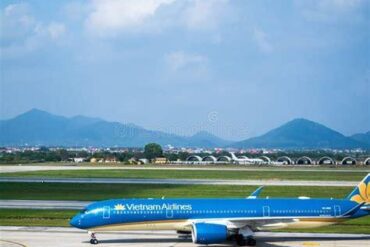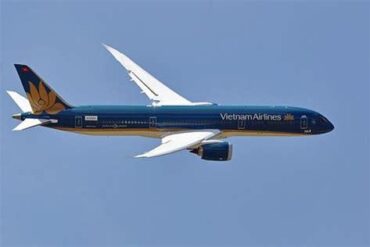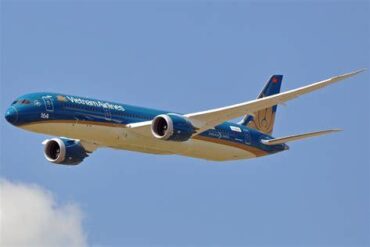
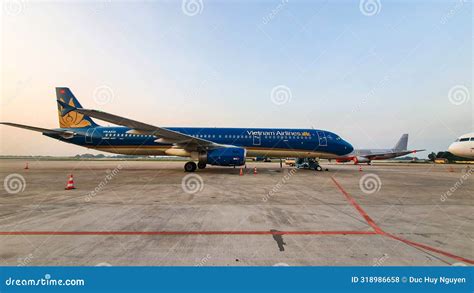
On June 27, 2025, a serious ground collision occurred at Noi Bai International Airport in Hanoi, involving two Vietnam Airlines aircraft: a Boeing 787-9 and an Airbus A321. The incident transpired as the Boeing 787 was taxiing for takeoff to Ho Chi Minh City, inadvertently colliding with the tail of a stationary Airbus A321 that was preparing to depart for Dien Bien. Fortunately, all 386 passengers aboard both planes emerged unharmed from this alarming event.
The collision incident unfolded during routine ground operations when the Boeing 787 struck the Airbus A321. Initial reports indicate that the right wingtip of the Boeing sustained damage after colliding with the vertical stabilizer (tail fin) of the Airbus, resulting in significant structural harm to both aircraft. Debris was left scattered across the taxiway, prompting immediate safety measures from airport staff and air traffic control. In light of the collision, Vietnam Airlines swiftly grounded both aircraft to conduct essential safety inspections.
Immediate Actions Taken by Vietnam Airlines
In response to this incident, Vietnam Airlines acted decisively, suspending four pilots—two from each flight crew—as part of an internal investigation. The airline also announced its collaboration with the Civil Aviation Authority of Vietnam (CAAV) to thoroughly investigate the cause of the collision. Preliminary findings suggest that the Airbus A321 was not parked at its designated holding point on taxiway S3, which may have contributed to the collision as the Boeing 787 began its taxiing process near the stationary Airbus. The CAAV has classified this incident as a “Level B” serious occurrence, indicating a significant breach of safety protocols during ground operations.
Investigators have commenced reviewing cockpit voice recordings, conducting on-site inspections, and interviewing both flight crews and air traffic controllers who were present during the incident. The primary aim is to ascertain the precise sequence of events that led to the collision, ensuring that all contributing factors are identified.
Commitment to Passenger Safety
Despite the severity of the collision, Vietnam Airlines prioritized the safety and well-being of its passengers. All individuals were safely evacuated from both aircraft without injury. To minimize disruption, the airline promptly arranged for replacement flights, ensuring that travelers were not left stranded due to the incident. Vietnam Airlines expressed its full commitment to cooperating with aviation authorities to uncover the complete cause of the accident and to implement necessary measures to prevent similar occurrences in the future.
In its ongoing efforts to bolster operational safety, Vietnam Airlines has pledged to enhance crew training and operational protocols, particularly focusing on ground procedures during taxiing. Furthermore, the airline acknowledged the importance of improving communication systems between air traffic control and ground operations at Noi Bai International Airport. Given the increasing complexity of modern aviation, effective and timely communication is essential to prevent accidents and ensure the safety of airport operations.
The Importance of Adhering to Standard Operating Procedures
The incident at Noi Bai International Airport serves as a crucial reminder of the significance of adhering to standard operating procedures (SOPs) during ground operations. Although the immediate outcome was fortunate regarding the absence of injuries, the collision raises broader concerns about aviation safety on the ground. Ground operations play a vital role in ensuring aviation safety, and mismanagement can lead to severe consequences.
Adherence to SOPs—such as precise taxiway parking, clear communication between flight crews and air traffic controllers, and continuous crew training—is essential to minimize the risk of accidents. As the investigation progresses, the lessons learned from this incident will likely contribute to global efforts aimed at enhancing aviation safety standards. Vietnam Airlines is committed to making necessary adjustments to its safety protocols to strengthen its operational framework and avoid similar incidents in the future.
Broader Implications for Aviation Safety
The collision at Noi Bai International Airport highlights the inherent risks associated with ground operations in aviation. Safety in aviation is an ever-evolving field that demands constant vigilance. There is a pressing need for strict adherence to safety protocols, timely communication, and comprehensive training for all airport personnel.
The ongoing investigation into the collision is expected to yield valuable insights into preventing similar incidents in the future. Investigators will meticulously examine all facets of the event, from the specific actions of the pilots and ground crew to the potential communication failures that may have contributed to the collision. Such thorough investigations are critical for advancing aviation safety worldwide.
As Vietnam Airlines collaborates with the CAAV to resolve the issues arising from this incident, the broader aviation community will be closely monitoring developments. Insights gleaned from this incident may inspire changes in safety regulations or procedures at airports globally, with the ultimate goal of preventing similar occurrences in the future.
Conclusion: A Call for Enhanced Safety Measures
The collision between a Boeing 787-9 and an Airbus A321 at Hanoi’s Noi Bai International Airport on June 27, 2025, serves as an important reminder of the inherent risks involved in aviation ground operations. Although the outcome was fortunate in terms of avoiding injuries, the incident has prompted rapid responses from Vietnam Airlines and the Civil Aviation Authority of Vietnam. The ongoing investigation will provide essential insights into the causes of the incident and lead to measures aimed at enhancing safety protocols for future operations.
Vietnam Airlines remains steadfast in its commitment to ensuring the safety of its passengers and crew. The airline is actively taking steps to review and enhance its operational procedures. By working closely with aviation authorities and adopting improved safety measures, Vietnam Airlines aims to prevent future incidents and reinforce its dedication to passenger safety.